Rotator Cuff Injury: The Silent Shoulder Problem Athletes Ignore

Rotator Cuff Injury Physiotherapy: Early Signs Athletes Ignore

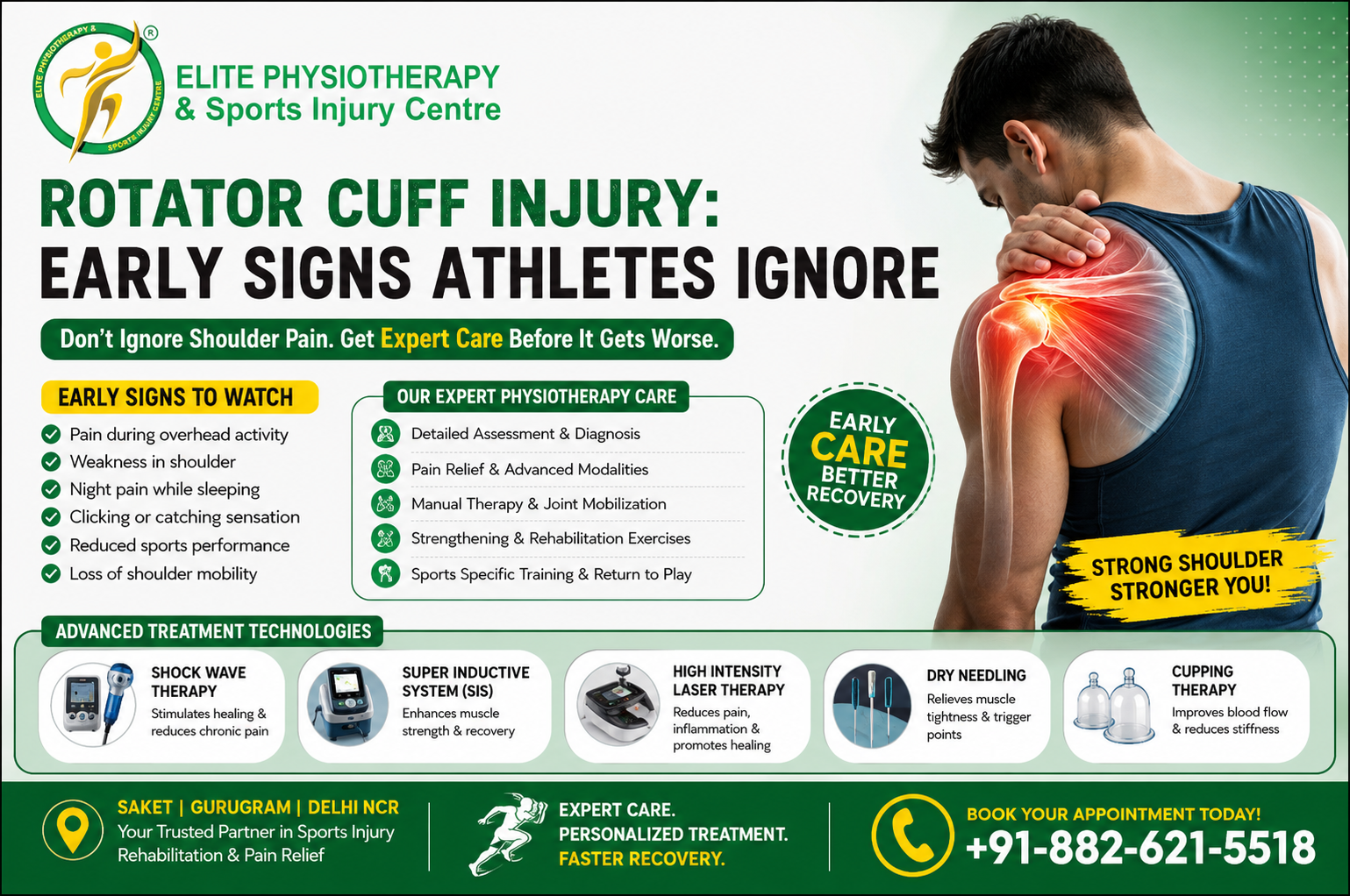
  • Athletes who engage in repetitive overhead motions frequently sustain shoulder problems. Sports that put a lot of strain on the shoulder joint include wrestling, swimming, cricket, tennis, badminton, weightlifting, and throwing. Rotator cuff injuries are among the most often disregarded of these injuries.
  • Despite early shoulder soreness, many athletes keep up their training. They frequently view discomfort as typical muscle soreness. Ignoring these warning indicators, however, can eventually harm shoulder structures and impair athletic performance.
  • Physiotherapy for rotator cuff injuries is crucial for early diagnosis, pain control, strength restoration, and a safe return to sports. We at Elite Physiotherapy and Sports Injury Centre offer athletes in Delhi NCR cutting-edge sports physiotherapy treatments. Instead of only treating symptoms, our method concentrates on determining the underlying cause of shoulder issues.
  • One of the human body’s most movable joints is the shoulder. However, the stability that muscles and tendons provide is necessary for this motion. During strong motions, the rotator cuff group keeps the shoulder under control. Weakness, inflammation, or tears may occur when these muscles are overworked.
  • Minor shoulder issues can be prevented from developing into serious injuries with early physical therapy intervention.

What is a Rotator Cuff Injury?

  • When one or more rotator cuff muscles or tendons become irritated, inflamed, strained, or torn, it results in a rotator cuff injury.
  • The four muscles that surround the shoulder joint are called the rotator cuff. These muscles aid in shoulder movements and offer dynamic stability.
  • The following are the four rotator cuff muscles:
  1. Supraspinatus
  2. Infraspinatus
  3. Teres Minor
  4. Subscapularis
  • Internal rotation and anterior shoulder stability are produced by the subscapularis.
  • These muscles work together to firmly attach the shoulder blade to the upper arm bone. They enable athletes to maintain exact shoulder control while producing strength.
  • Injury may result from abrupt overload, inadequate mechanics, or recurrent stress on these tissues.

Why Do Athletes Ignore Rotator Cuff Injury Symptoms?

  • Athletes often delay treatment because early rotator cuff problems may appear mild.
  • Common reasons include:
    • Pain appears only during specific movements.
    • Athletes believe pain will disappear with rest.
    • Performance remains normal initially.
    • Shoulder discomfort is confused with muscle fatigue.
    • Competition schedules prevent proper recovery.
    • Athletes continue training through pain.
  • However, repeated stress without proper rehabilitation can increase tendon damage.
  • A small irritation can progress into:
    • Chronic tendinopathy
    • Shoulder impingement
    • Partial tendon tear
    • Complete tendon rupture
    • Loss of sports performance
  • Therefore, early assessment by a sports physiotherapist is important.

Causes of Rotator Cuff Injury

  • Rotator cuff injuries develop due to multiple factors. In athletes, repeated shoulder stress is the most common reason.
  1. Repetitive Overhead Activity
  2. Sudden Increase in Training Load
  3. Poor Shoulder Mechanics
  4. Muscle Imbalance
  5. Previous Shoulder Injury
  6. Age-Related Tendon Changes

Types and Classification of Rotator Cuff Injuries

  1. Rotator Cuff Tendinitis
    This is an early-stage injury where the tendon becomes irritated and inflamed.
  • Features include:
    • Mild pain during activity
    • Discomfort after training
    • Pain while lifting the arm
  • Early physiotherapy can usually resolve this condition effectively.
  1. Rotator Cuff Tendinopathy
    Tendinopathy occurs due to long-term repetitive stress.
  • The tendon undergoes structural changes.
  • Symptoms may include:
    • Persistent shoulder pain
    • Reduced strength
    • Poor exercise tolerance
  • Athletes commonly develop this condition due to repeated training loads.
  1. Partial Thickness Tear
    In a partial tear, some tendon fibers are damaged while the tendon remains partially attached.
  • Symptoms include:
    • Pain during overhead activity
    • Weakness
    • Difficulty performing sports movements
  1. Full Thickness Tear
    A complete tear occurs when the tendon separates completely.
  • Common features include:
    • Significant weakness
    • Difficulty lifting the arm
    • Reduced sports performance
    • Possible need for surgical consultation
  1. Acute Rotator Cuff Injury
    This occurs suddenly due to trauma.
  • Examples:
    • Fall on an outstretched arm
    • Heavy weightlifting injury
    • Sudden forceful shoulder movement
  1. Chronic Rotator Cuff Injury
    This develops gradually due to repetitive overload.
  • Common in:
    • Professional athletes
    • Throwing athletes
    • Weightlifters
    • Racquet sport players

Early Signs of Rotator Cuff Injury Athletes Should Not Ignore

  1. Shoulder Pain During Overhead Movements
  2. Pain at Night
  3. Weakness During Shoulder Movements
  4. Clicking or Catching Sensation
  5. Reduced Performance
  6. Loss of Shoulder Mobility
  7. Persistent Shoulder Discomfort After Training

Complications of Untreated Rotator Cuff Injury

  1. Chronic Tendon Degeneration
  2. Shoulder Impingement Syndrome
  3. Rotator Cuff Tear Progression
  4. Muscle Atrophy
  5. Reduced Athletic Performance

Physiotherapy Management of Rotator Cuff Injury

  • Physiotherapy for rotator cuff injuries aims to lessen discomfort, increase shoulder mobility, restore muscular strength, improve shoulder stability, and assist athletes in safely resuming their sport.
  • Our approach to sports physiotherapy at Elite Physiotherapy and Sports Injury Centre, Delhi NCR, is centered on determining the true cause of injury. We do more than just treat pain. By addressing muscle imbalance, movement errors, and sports-specific constraints, we enhance shoulder function.
  • The physiotherapist designs a personalized treatment plan after a detailed assessment.
  1. Guided Activity Modification
  2. Adjusting training intensity
  3. Soft Tissue Mobilization
  4. Joint Mobilization
  5. Mobility Exercises
  6. Isometric Rotator Cuff Exercises
  7. Resistance Band Exercises
  8. Progressive Strength Training
  9. Scapular Stabilization Training
  10. Proprioception and Neuromuscular Training
  11. Perturbation training

Advanced Physiotherapy Modalities for Rotator Cuff Injury

Return to Sports After Rotator Cuff Injury

  • Before returning, athletes should demonstrate:
  • Full pain-free shoulder movement
  • Restored rotator cuff strength
  • Good scapular control
  • Sport-specific confidence
  • Ability to tolerate training load

Why Choose Elite Physiotherapy and Sports Injury Centre?

  • At Elite Physiotherapy and Sports Injury Centre, we provide advanced physiotherapy in Delhi NCR for athletes and active individuals.
  • Our approach combines:
    • Sports injury assessment
    • Evidence-based physiotherapy
    • Advanced rehabilitation techniques
    • Athlete-specific exercise programs
    • Modern pain management technologies
  • Whether you are searching for physiotherapy near me, physiotherapy Saket, or expert sports rehabilitation in Delhi NCR, our team provides personalized care focused on long-term recovery.

Importance of Early Physiotherapy Intervention

  • Early physiotherapy helps:
    • Reduce pain
    • Restore shoulder mobility
    • Improve muscle activation
    • Prevent worsening of injury
    • Restore sports performance
  • Delaying treatment may increase rehabilitation duration.
  • At Elite Physiotherapy and Sports Injury Centre, our goal is to help athletes return stronger and safer.

Final Conclusion

  • Athletes frequently have rotator cuff problems, but many choose to disregard early warning indicators. If appropriate care is not given, mild shoulder discomfort might progressively worsen into a dangerous problem.
  • Recovery results can be greatly enhanced by early diagnosis and organized treatment for rotator cuff injuries.
  • We offer cutting-edge sports physiotherapy solutions at Elite Physiotherapy and Sports Injury Centre in Delhi-NCR, tailored to each athlete’s needs.
  • Our expert team combines detailed assessment, exercise-based rehabilitation, and advanced treatment techniques to help you recover faster and return to your sport confidently.
  • If you are searching for physiotherapy near me, physiotherapy Delhi, or physiotherapy Saket, visit Elite Physiotherapy and Sports Injury Centre for professional sports injury care.
  • Your shoulder strength matters. Start your recovery journey with Elite Physiotherapy and Sports Injury Centre today.

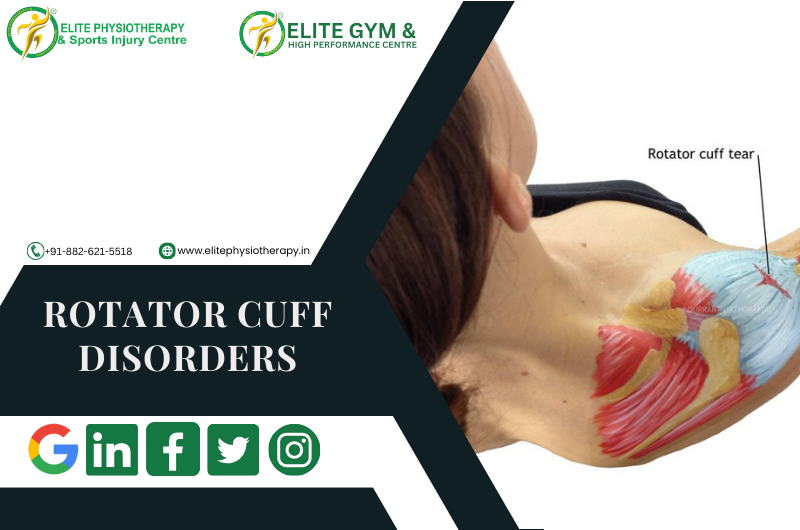
ROTATOR CUFF DISORDERS

Rotator cuff disorders are among the most common causes of shoulder pain and dysfunction in athletes and the general population. Our specialty at Elite Physiotherapy and Sports Injury Centre is the use of cutting-edge clinical evaluations and evidence-based therapies in the diagnosis and treatment of various disorders.

What Is the Rotator Cuff?

The four muscles that make up the rotator cuff are the subscapularis, infraspinatus, teres minor, and supraspinatus. In addition to facilitating arm motions like lifting and rotation, these muscles stabilize the shoulder joint. When overuse or damage causes these tendons to become irritated, inflamed, or torn, disorders result.

Causes of Rotator Cuff Disorders

Disorders of the rotator cuff can result from:

  • Repeated overhead motions (found in weightlifting, tennis, and swimming, for example)
  • Poor shoulder biomechanics or posture
  • Falling on an outstretched arm is an example of acute trauma.
  • Aging-related degenerative changes
  • Scapular dyskinesis or imbalances in the muscles
  • Poor training methods or inadequate warm-up

Clinical Features and Symptoms

Common signs and symptoms include:

  • Sharp or dull shoulder pain, particularly when performing overhead tasks
  • Arm weakness, especially during external rotation or abduction
  • Sleep is being disrupted by night pain, particularly while laying on the side that is affected.
  • restricted range of motion
  • Shoulder clicking or catching sensation
  • Atrophy of muscles in chronic conditions

Diagnostic Approach at Elite Physiotherapy

We use a comprehensive functional and physical evaluation to identify rotator cuff disorders. Our thorough assessment consists of:

  • Assessing posture to find scapular winging or changed shoulder mechanics
  • Testing for rotator cuff integrity using strength and range of motion
  • Checking for localized tenderness or swelling
  • Finding compensatory patterns using functional movement screening

These evaluations help us develop individualized and successful treatment programs.

Physiotherapy Management at Elite Physiotherapy and Sports Injury Centre

Our facility provides a thorough, superior physiotherapy treatment plan that is customized to the patient’s condition, objectives, and sport-specific requirements. Our main goals are tissue healing, functional restoration, muscle retraining, and pain alleviation.

1. Manual Therapy

  • Joint mobilizations to increase scapulothoracic and glenohumeral mobility
  • Release of soft tissues to lessen trigger points and tense muscles
  • Enhancing fascial mobility through myofascial release

2. Therapeutic Exercise Program

We design specific exercises for:

  • Stabilization of the scapula and neuromuscular control
  • Periscapular and rotator cuff muscle strengthening
  • Increasing proprioception and dynamic stability
  • Training in ergonomics and posture correction

To rebuild strength and endurance, we use bodyweight movements, weights, and bands in a gradual resistance training regimen.

3. Advanced Physiotherapy Modalities

We integrate cutting-edge technologies to accelerate healing and reduce recovery time:

  • Shock Wave Therapy: In chronic situations, shock wave therapy enhances tendon repair, lowers pain, and increases collagen formation.
  • CRET Therapy: Capacitive Resistive Electric Transfer, or CRET Therapy, promotes cellular regeneration and deep tissue healing, making it perfect for tendon disease.
  • Super Inductive System: The Super Inductive System (SIS) uses high-frequency electromagnetic fields to provide both functional stimulation and pain alleviation.
  • High Intensity Class 4 Laser Therapy: Encourages cellular regeneration and reduces inflammation without causing heat damage
  • Cryotherapy: In acute circumstances, cryotherapy decreases inflammation and offers instant pain relief.
  • Hydrotherapy: Promotes early mobility in a low-impact setting; particularly helpful in situations that are subacute or following surgery.

Depending on the patient’s state, each modality is applied strategically to provide the most possible benefit with no chance of aggravation.

4. Taping and Bracing

We use kinesiology taping for:

  • Relieving pain and providing proprioceptive feedback
  • When necessary, muscle contraction or activation
  • Assisting with shoulder motion during daily activities or sports

When to Seek Help

  • Consult our experts if you have ongoing shoulder pain, weakness, or trouble performing overhead tasks. Early intervention stops additional deterioration and speeds up healing.

Why Choose Elite Physiotherapy and Sports Injury Centre?

At Elite Physiotherapy and Sports Injury Centre, we offer:

  • Experienced sports physiotherapists with expertise in shoulder rehabilitation
  • Individualized treatment plans based on detailed assessment
  • Access to the most advanced physiotherapy equipment and modalities
  • A track record of successful outcomes in athletes and active individuals
  • Holistic care focusing on complete functional restoration

Conclusion

Rotator cuff disorders can significantly impact quality of life and athletic performance. Early diagnosis, detailed assessment, and expert physiotherapy management are key to optimal recovery. At Elite Physiotherapy and Sports Injury Centre, we combine manual therapy, targeted exercises, and advanced modalities to deliver exceptional care.

For appointments and detailed consultations, visit www.elitephysiotherapy.in. Let us help you regain full, pain-free shoulder function and return to your best performance.