



Introduction
- One of the most frequent overuse ailments affecting athletes, runners, and physically active people is Achilles tendinopathy. Even after experiencing brief relief, many patients have recurrent episodes of Achilles pain. Muscle imbalance, inadequate load management, incomplete recovery, or a hasty return to activity are frequently the causes.
- The goal of physiotherapy for Achilles tendinopathy is to restore tendon strength, flexibility, and function while determining the true source of tendon overload. Pain can be lessened and recurrence can be avoided with a systematic rehabilitation program.
- We offer cutting-edge, scientifically supported physiotherapy treatments for Achilles tendon issues at Elite Physiotherapy and Sports Injury Centre. To promote long-term healing, our team uses cutting-edge technologies, gradual strengthening exercises, and a thorough biomechanical examination.
- Elite Physiotherapy concentrates on addressing the underlying cause rather than just symptoms, and it offers specialized services for patients in Delhi, Saket, and Delhi NCR.
- When Achilles pain interferes with walking, jogging, or sports performance, many individuals look for physiotherapy near me. You can regain your confidence and safely resume your activities with the aid of an appropriate evaluation and personalized rehabilitation plan.
What Is Achilles Tendinopathy?
- Degeneration, inflammation, and decreased Achilles tendon capacity are all symptoms of Achilles tendinopathy. The human body’s strongest tendon is the Achilles tendon. It joins the heel bone (calcaneus) to the calf muscles (gastrocnemius and soleus).
- This tendon plays an important role during:
- Walking
- Running
- Jumping
- Sprinting
- Climbing stairs
- Sports movements
- The Achilles tendon is stressed with each step. The tendon typically responds to this stress by strengthening and recovering appropriately. However, the tendon’s capacity to heal itself may be exceeded by frequent, severe loading.
- The structure of the tendon varies with time. Collagen fibers become disjointed. The tendon may grow uncomfortable, weaker, and thicker.
- Achilles tendinopathy often develops gradually, in contrast to an acute tendon damage. Rather than a single catastrophic event, it develops as a result of ongoing stress.
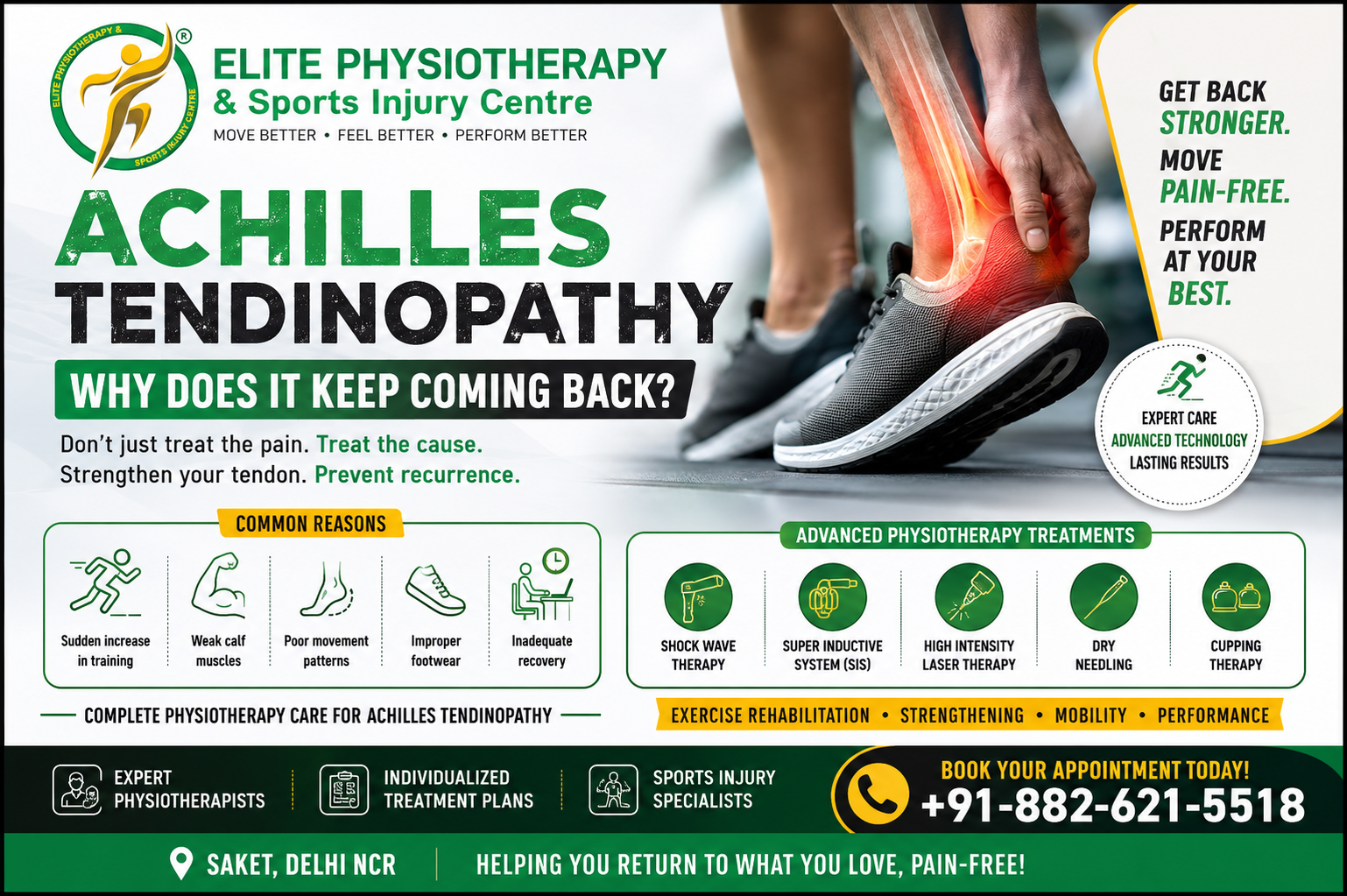
Why Does Achilles Tendinopathy Keep Coming Back?
- Because the main goal of treatment is to reduce pain, many people have recurrent Achilles pain. However, tendon capacity cannot be restored by pain treatment alone.
- Typical causes of recurrence include:
- Incomplete Rehabilitation
- Sudden Increase in Training Load
- Poor Calf Muscle Strength
- Limited Ankle Mobility
- Foot and Lower Limb Biomechanical Problems
Causes and Risk Factors of Achilles Tendinopathy
- There are several reasons why Achilles tendinopathy occurs. An imbalance between tendon stress and recuperation is typically the cause.
- Overuse and Repetitive Loading
- Sudden Activity Changes
- Age-Related Tendon Changes
- Muscle Tightness and Imbalance
- Improper Footwear
- Training Surface Changes
Clinical Features and Symptoms of Achilles Tendinopathy
- Achilles Tendon Pain
- Morning Stiffness
- Pain During Physical Activity
- Tendon Thickening and Swelling
- Reduced Calf Muscle Performance
- Tenderness Around the Achilles Tendon
- Altered Walking and Running Pattern
Complete Physiotherapy Management for Long-Term Recovery
- Enhancing tendon capacity, regaining muscle strength, addressing movement issues, and averting recurrence are the main goals of effective physiotherapy for Achilles tendinopathy.
- Because they simply treat the symptoms, many patients have recurrent Achilles discomfort. Rest, painkillers, and short-term relief may lessen discomfort. To restore strength and function, the tendon must be gradually loaded.
- Our method at Elite Physiotherapy and Sports Injury Centre blends comprehensive evaluation, evidence-based rehabilitation, cutting-edge physiotherapy techniques, and customized training regimens. Our objective is to enable patients to resume daily activities, sports, walking, and jogging without worrying about recurrence.
- Activity Modification and Load Management
Reducing sprint volume
Limiting excessive jumping
Temporarily reducing running distance
Avoiding sudden training increases - Pain Management Techniques in Physiotherapy
Extracorporeal Shock Wave Therapy (ESWT)
Super Inductive System (SIS) Therapy
High Intensity Laser Therapy (HILT)
Dry Needling
Cupping Therapy - Exercise-Based Physiotherapy Rehabilitation
Calf Muscle Strengthening Exercises
Eccentric Loading Exercises for calf muscle
Heavy Slow Resistance Training - Mobility Training
- Manual Therapy Techniques
Soft tissue mobilization
Myofascial release
Joint mobilization
Muscle stretching techniques - Balance and Proprioception Training
Single-leg standing
Balance board exercises
Dynamic stability drills - Running and Sports Rehabilitation
Running Progression
Plyometric Training
Sport-Specific Drills - Correction of Biomechanical Factors
The therapist addresses:- Foot mechanics
- Hip weakness
- Knee control
- Running technique
- Training errors
Why Choose Elite Physiotherapy for Achilles Tendinopathy Treatment?
- At Elite Physiotherapy and Sports Injury Centre, we combine modern technology with advanced rehabilitation principles.
- Our Achilles tendinopathy treatment approach includes:
- Detailed physiotherapy assessment
- Individualized exercise programs
- Sports injury rehabilitation
- Shock Wave Therapy
- Super Inductive System
- High Intensity Laser Therapy
- Dry Needling
- Cupping Therapy
- Whether you are an athlete, runner, or someone dealing with persistent heel pain, our expert team provides specialized physiotherapy Delhi NCR solutions.
- If you are searching for physiotherapy near me, Elite Physiotherapy offers advanced care at convenient locations with a focus on long-term recovery.
- Visit Elite Physiotherapy and Sports Injury Centre to restore strength, improve mobility, and return confidently to your active lifestyle.
Prevention Strategies for Achilles Tendinopathy
- Follow a Gradual Training Progression
- Maintain Regular Calf Strength Training
- Perform Proper Warm-Up Before Exercise
- Improve Ankle Mobility
- Choose Appropriate Footwear
- Manage Training Recovery
- Regular Physiotherapy Screening
Conclusion
- Achilles tendinopathy keeps coming back when the underlying cause is not addressed. Pain relief alone cannot restore tendon strength and function.
- A successful recovery requires a combination of:
- Accurate assessment
- Progressive tendon loading
- Muscle strengthening
- Movement correction
- Advanced physiotherapy techniques
- At Elite Physiotherapy and Sports Injury Centre, our goal is to provide complete Achilles tendon rehabilitation through advanced physiotherapy methods and personalized exercise programs.
- Our experienced physiotherapists combine modern technologies such as Shock Wave Therapy, Super Inductive System, High Intensity Laser Therapy, Dry Needling, and Cupping Therapy with scientific rehabilitation principles.
- If you are searching for physiotherapy near me, physiotherapy Delhi, or physiotherapy Saket, Elite Physiotherapy provides specialized sports injury care across Delhi NCR.
- Visit Elite Physiotherapy and Sports Injury Centre today and take the first step towards stronger movement, pain-free activity, and long-term recovery.
