Faster Recovery Secrets: Manual Therapy + Advanced Modalities

Introduction

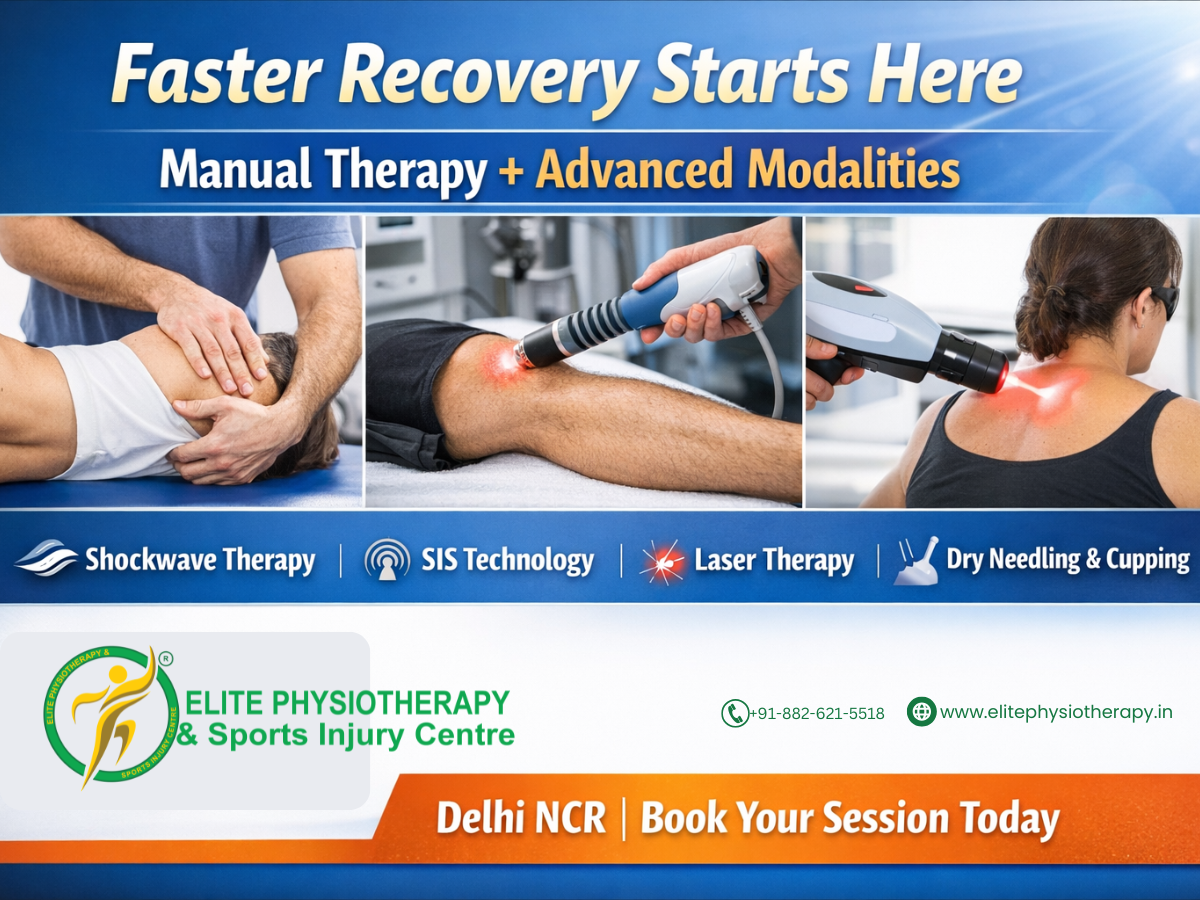
  • Combining technology and practical methods in modern rehabilitation produces better results. Our specialty at Elite Physiotherapy and Sports Injury Centre is using advanced physiotherapy modalities in conjunction with manual therapy to accelerate recovery and improve performance.
  • Compared to traditional approaches, this comprehensive approach accelerates tissue repair, lessens pain, and increases mobility more quickly. This cutting-edge model guarantees top-notch care whether you’re looking for physiotherapy in Saket, Delhi, or nearby.

What is Manual Therapy with Advanced Physiotherapy Modalities?

  • Skilled hands-on techniques are used in manual therapy. These consist of myofascial work, soft tissue release, joint mobility, and manipulation.
  • Advanced modalities include:
    • Shockwave Therapy
    • Super Inductive System (SIS)
    • High Intensity Laser Therapy
    • Dry Needling
    • Cupping Therapy
  • A potent synergy is produced when advanced physiotherapy modalities and manual treatment are combined. While modalities speed up tissue repair, manual treatment restores biomechanics.

Why Do Patients Need This Combined Approach?

  • When dysfunction is complicated or healing is slow, this strategy is crucial.
  • Common causes include:
  • Sports injuries (ligament tears, muscle strains)
  • Chronic pain syndromes
  • Tendinopathies
  • Post-surgical stiffness
  • Joint restrictions
  • Overuse injuries
  • Poor biomechanics
  • At Elite Physiotherapy, we often use this integrated methodology to treat athletes and active people from all around Delhi NCR.

Signs and Symptoms

  • Patients often present with:
    • Pain during movement
    • Restricted range of motion
    • Muscle tightness
    • Weakness
    • Swelling
    • Reduced performance
  • Chronic cases may show:
    • Stiff joints
    • Altered movement patterns
    • Persistent discomfort

Physiotherapy Management

  1. Manual Therapy Techniques
  • Manual therapy is the foundation of treatment.
  • Joint Mobilization
    • It improves joint play and reduces stiffness.
  • Soft Tissue Release
    • It targets tight muscles and fascia.
  • Myofascial Release
    • It improves tissue flexibility.
  • Manipulation
    • It restores joint alignment quickly.
  • These techniques reduce pain immediately and prepare tissues for advanced modalities.
  1. Shockwave Therapy
  • Shockwave therapy is highly effective in chronic conditions.
  • Benefits:
    • Breaks down calcification
    • Stimulates healing
    • Reduces pain
  • Common Uses:
    • Plantar fasciitis
    • Tennis elbow
    • Calcific tendinitis
  1. Super Inductive System (SIS)
  • SIS uses electromagnetic energy to stimulate muscles and nerves.
  • Benefits:
    • Deep tissue activation
    • Pain reduction
    • Improved neuromuscular control
  • It is ideal for:
    • Muscle inhibition
    • Joint stiffness
    • Neurological deficits
  1. High Intensity Laser Therapy
  • This therapy penetrates deep tissues.
  • Benefits:
    • Accelerates tissue healing
    • Reduces inflammation
    • Improves circulation
  • It is highly effective for:
    • Ligament injuries
    • Muscle tears
    • Chronic pain
  1. Dry Needling
  • Dry needling targets trigger points.
  • Benefits:
    • Releases muscle knots
    • Reduces pain
    • Improves mobility
  1. Cupping Therapy
  • Cupping improves blood flow and tissue recovery.
  • Benefits:
    • Reduces muscle tightness
    • Enhances circulation
    • Promotes healing

Why This Combination Works Faster

  • Manual therapy corrects mechanical issues.
  • Advanced modalities enhance biological healing.
  • Together, they:
    • Reduce recovery time
    • Improve function
    • Prevent recurrence
  • This is why athletes prefer Manual Therapy with Advanced Physiotherapy Modalities.

Conclusion

  • The future of rehabilitation lies in combining modern techniques with manual treatment. It produces results more quickly, safely, and effectively.
  • Visit Elite Physiotherapy and Sports Injury Center if you’re looking for physiotherapy in Saket, Delhi, or nearby. Get top-notch care that will speed up your recuperation.

Joint Mobilization: Unlocking Movement for Lasting Relief

Introduction

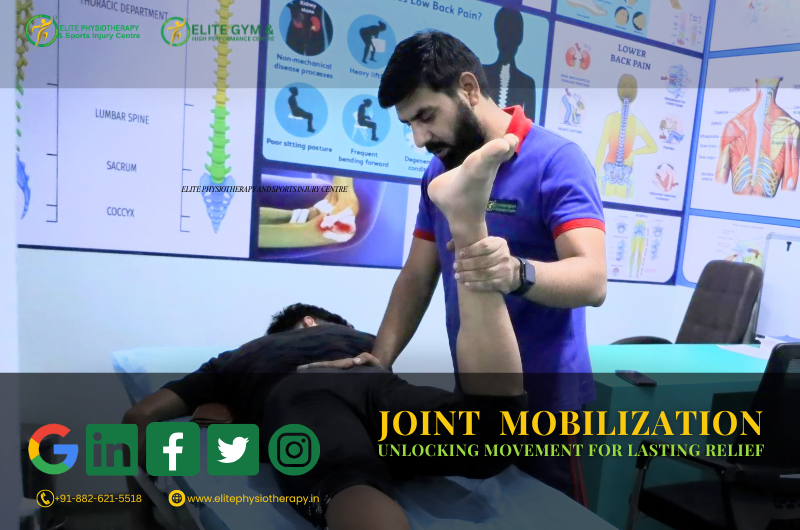
  • Joint mobilization is an expert, practical method. It enhances joint motion with soft, passive motions. Physiotherapists use tiny rhythms to guide the joint. As a result, stiffness is lessened and natural glide is restored.
  • In order to ensure a safe and efficient rehabilitation, we at Elite Physiotherapy and Sports Injury Centre customize joint mobilization for each patient’s needs.

Causes of Joint Movement Restriction

  • Injury or trauma to the joint
  • Post-surgical stiffness
  • Arthritis or cartilage degeneration
  • Capsular tightness
  • Immobilization after fracture
  • Muscle guarding due to pain

Types or Classification of Joint Mobilization

  • Grade I: Small oscillations to reduce pain
  • Grade II: Larger oscillations for pain relief
  • Grade III: Deep stretches to improve mobility
  • Grade IV: Small, high-velocity stretches to gain motion

Clinical Features / Signs & Symptoms

  • Pain at rest or movement
  • Stiffness and reduced range of motion
  • Muscle tightness around the joint
  • Functional limitations
  • Crepitus (joint noise)
  • Swelling or tenderness

Physiotherapy Management

  • At Elite Physiotherapy and Sports Injury Centre, we follow a structured plan:

Hands-On Techniques

  • Joint mobilization helps:
    • Increase joint glide
    • Reduce pain
    • Improve synovial fluid distribution
    • Restore biomechanics
  • Our therapists use precise pressure and rhythmic movements.

Therapeutic Exercises

  • We add:
    • Flexibility training
    • Strengthening drills
    • Proprioceptive retraining
    • Functional movement patterns
  • These exercises support sustained improvement.

Manual Therapy Progression

  • We adjust techniques based on response:
  • Soft tissue release
  • Stretching and mobilization
  • Functional joint loading

Advanced Modalities at Elite Physiotherapy

  • We integrate cutting-edge technologies:
    • Shock Wave Therapy
    • Super Inductive System (SIS)
    • High-Intensity Laser Therapy
    • Dry Needling & Cupping

Personalized Approach at Elite Physiotherapy, Delhi NCR

  • We at Elite Physiotherapy and Sports Injury Centre carefully evaluate each patient. Treatment is customized to goals and lifestyle. We securely restore motion, whether you’re an office worker or an athlete. Long-term outcomes and sophisticated joint treatment are our clinic’s areas of expertise.

Myofascial Release: Unlocking Pain-Free Movement

What Is Myofascial Release?

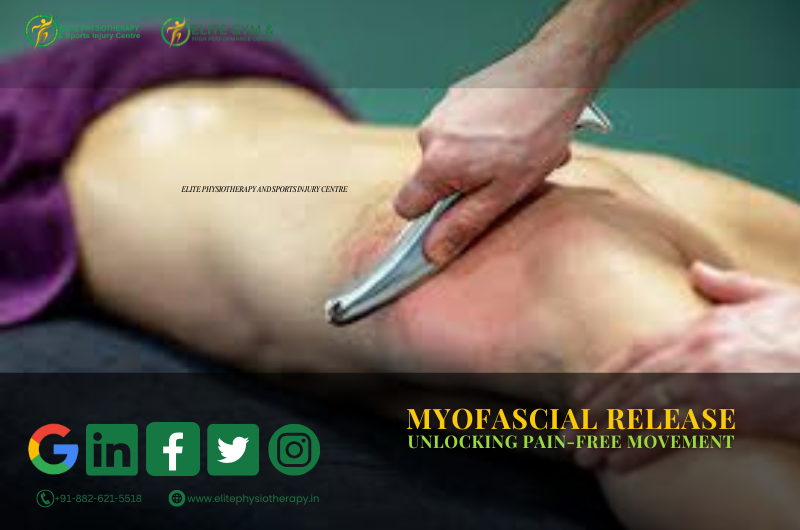
  • Myofascial Release (MFR) is a specialized hands-on physiotherapy technique. It focuses on limitations in the fascia that surrounds joints and muscles. A continuous network of connective tissue is called fascia. Pain and restricted movement are the results of fascia tightening. As a result, MFR restores normal biomechanics and tissue glide.
  • MFR is a key component of treatment at Elite Physiotherapy and Sports Injury Center. We incorporate it into individualized treatment plans.

Why Do Myofascial Restrictions Develop?

  • Fascial tightness is caused by a number of reasons.
  • First, Repetitive motions overwork the tissues.
  • Second, bad posture causes fascial tension to change.
  • Thirdly, adhesions are a result of prior injuries.
  • Additionally, dehydration and stress also have an impact on fascia health.
  • Sports injuries often accelerate these changes.

Types and Classification of Myofascial Dysfunction

Myofascial problems present in different forms.

  1. Myofascial Trigger Points
  • These nodules are localized and hyperirritable.
  • They cause referred pain patterns.
  1. Fascial Adhesions
  • These involve tissue layers sticking together.
  • They reduce muscle extensibility.
  1. Global Fascial Tightness
  • This affects movement chains.
  • It commonly appears in chronic pain conditions.

Clinical Features and Symptoms

  • Patients may describe a variety of symptoms.
  • Pain can be painful, mild, or deep.
  • After repose, stiffness increases.
  • It feels weighty or constrained to move.
  • It is possible for muscle weakness to occur without nerve injury.
  • Athletes frequently observe a drop in performance.

Physiotherapy Management of Myofascial Restrictions

  • Physiotherapy remains the gold standard for MFR.
  • Treatment focuses on pain relief and tissue normalization.

1. Manual Myofascial Release

  • Clinicians apply gentle, sustained pressure.
  • Clinicians progressively release the tissues.
  • This enhances neural input and circulation.

2. Instrument Assisted Myofascial Release

  • Special tools improve precision.
  • They enhance depth control and lessen the strain on therapists.

3. Stretching and Mobility Training

  • Active and assisted stretches follow the release.
  • This keeps the lengthened tissue intact.

4. Corrective Exercise Therapy

  • Strengthening restores muscle equilibrium.
  • Movement retraining prevents recurrence.

5. Advanced Modalities at Elite Physiotherapy

  1. Shock Wave Therapy
  2. Super Inductive System (SIS)
  3. High Intensity Laser Therapy
  4. Dry Needling
  5. Cupping Therapy

Why Choose Elite Physiotherapy and Sports Injury Centre?

  • We at Elite Physiotherapy provide physiotherapy care that is grounded in evidence.
  • Every program is athlete-focused and goal-oriented.
  • Cutting-edge technologies support expert clinical abilities.
  • Patients in Delhi NCR have faith in our outcomes.