Common Gym Injuries and How to Prevent Them

Common Gym Injuries: Train Hard, Stay Injury-Free

  • Strength, fitness, mobility, and performance are all enhanced by gym training. But every fitness enthusiast should be concerned about typical gym injuries and how to avoid them. Tissues can be overloaded by poor technique, heavy loads, insufficient recuperation, and abrupt training increases. As a result, slight discomfort can turn into a serious injury.
  • Our team at Elite Physiotherapy and Sports Injury Center is dedicated to figuring out what causes gym injuries. Movement, strength, flexibility, joint control, training method, and workload are all evaluated. For a safe recovery and long-term injury prevention, we then create customized physiotherapy regimens. Our strategy integrates cutting-edge rehabilitation technology with evidence-based physical treatment throughout Delhi NCR.
  • Injury avoidance is important regardless of your level of experience—beginner, recreational lifter, bodybuilder, athlete, or strength-training enthusiast. You may thus train regularly and confidently if you are aware of typical gym injuries and how to avoid them.

What Are Gym Injuries?

  • Musculoskeletal issues brought on by exercise, resistance training, repetitive motion, or insufficient recuperation are known as gym injuries.
  • They may involve:
    1. Muscles
    2. Tendons
    3. Ligaments
    4. Joints
    5. Bones
    6. Fascia
    7. Nerves
    8. The spine
  • Some injuries happen out of the blue. Others progressively worsen due to recurrent tissue overload.
  • An acute muscle strain, for instance, can result from lifting a large weight improperly. Heavy pressing that is done repeatedly might aggravate the elbow or shoulder. In a similar vein, excessive squatting can exacerbate the knee if there is insufficient strength and control over movement.
  • From little pain to severe tissue injury, the intensity ranges. As a result, accurate evaluation is still crucial.

Why Do Gym Injuries Happen?

  • Understanding the causes is the first step toward preventing common gym injuries and how to prevent them.
  1. Poor Exercise Technique
  2. Excessive Training Load
  3. Insufficient Warm-Up
  4. Muscle Weakness and Imbalance
  5. Poor Mobility
  6. Insufficient Recovery
  7. Repetitive Training
  8. Training Through Significant Pain

Types of Common Gym Injuries

  • Gym injuries can broadly be classified into acute injuries and overuse injuries.
  • Acute Gym Injuries
    • Muscle strains
    • Ligament sprains
    • Joint injuries
    • Dislocations
    • Acute tendon injuries
    • Fractures
  • Overuse Gym Injuries
    • Tendinopathy
    • Tennis elbow
    • Golfer’s elbow
    • Rotator cuff irritation
    • Patellar tendinopathy
    • Achilles tendinopathy
    • Shin pain
    • Persistent lower back pain

Physiotherapy Management for Common Gym Injuries

  • A key component of successful gym injury rehabilitation is physiotherapy.
  • Rather than offering short-term pain alleviation, the goal of treatment at Elite Physiotherapy and Sports Injury Center is to restore function. Clinical evaluation, manual therapy, exercise rehabilitation, movement correction, and progressive loading are all incorporated into our programs.

Pain Management

  • Relative rest
  • Activity modification
  • Cryotherapy
  • Manual therapy
  • Therapeutic exercise
  • Electrotherapy

Manual Therapy

  • Joint mobilization
  • Soft-tissue techniques
  • Myofascial release
  • Muscle energy techniques
  • Trigger-point techniques

Therapeutic Exercise

  1. Mobility Training
    Ankle dorsiflexion drills
    Hip mobility exercises
    Thoracic rotation
    Shoulder mobility
    Wrist mobility
  2. Isometric Training
    Progressive Strength Training
    Functional Training

Advanced Physiotherapy Modalities at Elite

  • Shock Wave Therapy
  • Super Inductive System
  • High Intensity Laser Therapy
  • Dry Needling
  • Cupping Therapy

How to Prevent Common Gym Injuries

  1. Warm Up Properly
  2. Master Exercise Technique
  3. Progress Gradually
  4. Strengthen Supporting Muscles
  5. Improve Mobility
  6. Respect Recovery
  7. Do Not Ignore Persistent Pain

When Should You See a Physiotherapist?

  • Seek professional assessment when you experience:
  • Persistent pain
  • Recurrent injuries
  • Significant swelling
  • Sudden loss of strength
  • Joint instability
  • Persistent movement restriction
  • Pain that affects training
  • Numbness or tingling
  • Pain that worsens despite modifying activity

Why Choose Elite Physiotherapy and Sports Injury Centre?

  • At Elite Physiotherapy and Sports Injury Centre, rehabilitation is designed around the individual’s needs.
  • Our Team combines:
    • Detailed physiotherapy assessment
    • Orthopedic special tests
    • Sports injury rehabilitation
    • Manual therapy
    • Therapeutic exercise
    • Strength and conditioning
    • Movement analysis
    • Advanced physiotherapy modalities
    • Return-to-sport testing
    • Injury prevention strategies
  • Our rehabilitation approach focuses on restoring mobility, strength, control, confidence, and performance.

Numbness in Hands: Could It Be a Nerve Problem?

  • Your ability to work, sleep, exercise, and participate in sports can all be hampered by numb hands. Physiotherapy can assist in determining whether symptoms of hand numbness originate from the wrist, elbow, shoulder, neck, or peripheral nerves. As a result, persistent numbness should never be disregarded.
  • When using a laptop, you could get tingling. Additionally, you can feel numb while you sleep. Symptoms can occasionally show up when using sports equipment or lifting weights.
  • Important clinical information is provided by the site of numbness. However, the precise reason cannot be determined by symptoms alone.
  • From the cervical spine, the nerve system extends to the arm and shoulder. After then, it travels throughout a number of anatomical areas before arriving at the hand.
  • As a result, nerve irritation might happen in many places.
  • Our strategy at Elite Physiotherapy and Sports Injury Center is to pinpoint the cause of symptoms. Based on the results of the patient’s evaluation, we next create a customized rehabilitation program.
  • Sports, neurological, and orthopedic physiotherapy services are offered at our Delhi NCR facility. Additionally, the clinic provides choices for manual therapy and advanced rehabilitation.

What Is Hand Numbness?

  • Hand numbness describes reduced or altered sensation in part of the hand or fingers.
  • Patients may describe it as:
    • Pins and needles
      Tingling
      Reduced sensation
      Burning
      Electric-shock sensations
      Prickling
      Heaviness
      Altered temperature sensation
      Feeling of the hand “falling asleep”
  • When normal sensory nerve signaling is disrupted, numbness results. A peripheral nerve, nerve route, or nerve root may be affected.
  • Sometimes the issue stems from compression. However, nerve function can also be impacted by trauma, metabolic problems, inflammation, traction, or systemic neurological illnesses. Thus, pinpointing the precise position is crucial.

Why Do Hands Become Numb?

  • Several structures can contribute to hand numbness.
  • The most common possibilities include:
  1. Cervical Radiculopathy
  2. Carpal Tunnel Syndrome
  3. Cubital Tunnel Syndrome
  4. Guyon’s Canal Syndrome
  5. Thoracic Outlet Syndrome
  6. Peripheral Nerve Irritation
  7. Diabetes and Peripheral Neuropathy
  8. Vitamin and Nutritional Problems
  9. Trauma and Nerve Injury
  10. Repetitive Work and Poor Ergonomics

When Is Hand Numbness an Emergency?

  • Some symptoms require urgent medical evaluation.
  • Seek immediate medical attention when numbness develops suddenly with:
    • Facial weakness
      Speech difficulty
      Severe dizziness
      Sudden loss of coordination
      Severe weakness
      New difficulty walking
      Sudden vision changes
      Loss of consciousness
  • After severe trauma, prompt evaluation is also crucial. Exercises alone should not be used to treat progressive weakness or rapidly worsening neurological problems.

Physiotherapy for Hand Numbness: Treatment Approach

  • At Elite Physiotherapy and Sports Injury Centre, rehabilitation can combine education, manual therapy, therapeutic exercise, neural mobility, ergonomic correction, and progressive strengthening.

1. Activity Modification

  • Seldom is total relaxation the ideal long-term course of action. Rather, the therapist pinpoints actions that cause frustration.
  • For instance, a patient could have to adjust:
    • Long computer sessions
      Heavy gripping
      Prolonged wrist extension
      Repetitive lifting
      Sustained elbow flexion
      Overhead training
  • The goal is to maintain activity while controlling excessive neural loading.

2. Ergonomic Correction

  • Ergonomics can be particularly important for office workers.
  • The therapist may assess:
    • Chair height
      Desk height
      Monitor position
      Keyboard position
      Mouse use
      Wrist posture
      Elbow position
      Break frequency
  • Short movement breaks can reduce prolonged static loading.

3. Wrist Orthosis for Carpal Tunnel Syndrome

  • Excessive wrist positioning during sleeping might be minimized using a neutral wrist orthosis. When symptoms arise at night, this can be really helpful.
  • For many mild-to-moderate carpal tunnel presentations, the current 2026 clinical practice guideline suggests education and an adequate immobilization orthosis as the first physical therapy approach. The patient’s symptoms should determine the precise duration and usage.

4. Neural Mobilization

  • Nerve gliding is a popular term for neural mobilization. Stretching the nerve excessively is not the goal.
  • Rather, the therapist modifies neuronal excursion and tolerance through regulated motions. It is possible to choose radial, ulnar, or median nerve procedures.
  • The dosage needs to stay comfortable. After the workout, symptoms shouldn’t get worse over time.
  • There is currently conflicting information regarding neuronal mobilization in carpal tunnel syndrome. As a result, it need to be recommended based on personal results.

5. Cervical Mobility Exercises

  • When cervical involvement contributes to symptoms, treatment may include controlled cervical mobility.
  • Exercises can include:
    • Cervical rotation
      Chin nods
      Controlled cervical retraction
      Thoracic mobility
      Postural endurance exercises

6. Scapular and Shoulder Rehabilitation

  • The shoulder region influences upper-limb movement.
  • Therefore, rehabilitation may include:
    • Scapular control
      Serratus anterior strengthening
      Lower trapezius strengthening
      Rotator cuff strengthening
      Thoracic extension exercises
      Postural endurance training

7. Forearm and Wrist Strengthening

  • Once symptoms become more stable, progressive strengthening becomes important.
  • Exercises may target:
    • Wrist flexors
      Wrist extensors
      Pronators
      Supinators
      Grip muscles
      Finger extensors
      Hand intrinsics

8. Grip Training

  • Grip strength is important for athletes and active individuals.
  • However, aggressive grip training can worsen symptoms during an irritable phase.
  • Therefore, loading should begin with tolerable resistance.
  • Progression can include:
    • Isometric gripping
      Light resistance
      Repeated gripping
      Farmer carries
      Sport-specific grip work

9. Manual Therapy

  • Manual therapy may be directed toward relevant impairments.
  • Depending on the assessment, treatment can include:
  • Cervical mobilization
    Thoracic mobilization
    Wrist mobilization
    Soft-tissue techniques
    Forearm muscle treatment
    Scapular mobilization

10. Modalities

Why Choose Elite Physiotherapy and Sports Injury Centre?

  • At Elite Physiotherapy and Sports Injury Centre, our rehabilitation philosophy focuses on identifying the underlying movement and neurological contributors.
  • Advanced physiotherapy, manual therapy, dry needling, orthopedic physiotherapy, neurophysiotherapy, spinal rehabilitation, sports physiotherapy, and performance-focused rehabilitation are among the treatments we offer.
  • Instead of treating just the hand that is symptomatic, we evaluate the whole kinetic chain. This strategy is very helpful for athletes and people who lead active lives.
  • With a clinic in Saket, Delhi, and additional NCR locations listed on the clinic website, Elite Physiotherapy provides services to patients in Delhi NCR.

Thumb Pain While Lifting? Get Your Grip Back

Introduction

  • Athletes who experience pain from gripping, lifting, pressing, and repetitive training can benefit from thumb pain physiotherapy. Both novice and seasoned lifters may have thumb pain. Additionally, it may weaken training confidence and grip strength.
  • A key component of hand stability is the thumb. Grip, pinch, resistance, and load transfer are all aided by it. Exercises like deadlifts, rows, presses, cleans, snatches, and pull-ups can therefore be impacted by even mild thumb pain.
  • During hook grasping, weightlifters also put a lot of strain on the thumb. During intense barbell training, powerlifters may put strain on their thumbs. Dumbbells, cables, machines, and repetitive grasping can all cause symptoms in gym patrons.
  • But the thumb joint is not usually the source of thumb pain. Additionally, tendons, ligaments, muscles, nerves, and the wrist may be involved.
  • Our team at Elite Physiotherapy and Sports Injury Center assesses the entire hand and upper limb system. We pinpoint the training element, movement error, loading issue, and unpleasant structure.
  • Clinical evaluation, manual therapy, therapeutic exercise, movement correction, and sport-specific rehabilitation are all included in our method. This strategy aligns with our larger idea of athlete-specific rehabilitation.
  • If you’re looking for physiotherapy in Saket, Delhi, or nearby, a professional evaluation might assist in determining the true cause of your symptoms.

Why Does Thumb Pain Develop During Weight Training?

  • Several factors can overload the thumb.
  1. Excessive Training Load
  2. Repetitive Gripping
  3. Poor Grip Technique
  4. Hook Grip
  5. Poor Wrist Position
  6. Weak Thumb and Hand Muscles
  7. Previous Injury
  8. Limited Wrist Mobility
  9. Training Errors

Common Causes of Thumb Pain While Lifting

  • De Quervain’s Tenosynovitis
  • Thumb MCP (Metacarpophalangeal) Ligament Injury
  • Thumb CMC (carpometacarpal joint) Joint Irritation
  • Thumb Tendinopathy
  • Thumb Muscle Strain
  • Wrist-Related Pain
  • Nerve Irritation

When Should You Stop Training?

  1. If you have severe thumb pain, stop doing heavy lifting.
  2. When symptoms worsen over time, training modification becomes very crucial.
  3. Exercises that cause sharp pain should be reduced or temporarily avoided.
  4. Lower-body or non-provocative training is frequently sustainable.
  5. Exercise choices, however, should be appropriate for the injury.
  6. Safe training changes can be guided by a physiotherapist.
  • Seek medical evaluation when you notice:
    • Significant swelling
    • Severe pain after trauma
    • Visible deformity
    • Joint instability
    • Inability to grip
    • Inability to move the thumb
    • Numbness
    • Persistent weakness
    • Severe bruising
    • Suspected fracture

Thumb Pain Physiotherapy Management

  • At Elite Physiotherapy and Sports Injury Centre, treatment is individualized. The goal is to restore function and gradually tolerate load.
  1. Activity Modification
  • an athlete may temporarily reduce:
  • Load
  • Repetitions
  • Sets
  • Grip intensity
  • Hook-grip volume
  • Training frequency
  1. Pain-Free Grip Modification
  • We assess the athlete’s grip.
  • We may modify:
    • Thumb position
      Wrist position
      Grip width
      Bar selection
      Training load
      Exercise selection
  1. Thumb Mobility Exercises
  2. Isometric Thumb Strengthening
  3. Progressive Resistance Training
  4. Eccentric and Slow Resistance Training
  5. Wrist Strengthening
  6. Forearm Strengthening
  7. Manual Therapy
  • Soft-tissue techniques
  • Joint mobilization
  • Scar mobilization
  • Wrist mobilization
  • Thumb joint mobilization
  • Myofascial techniques
  1. Taping
  2. Bracing or Support
  3. Modalities such as:
  • Shock Wave Therapy
  • Super Inductive System
  • High Intensity Laser Therapy
  • Dry Needling
  • Cupping Therapy
  1. Return-to-Lifting Rehabilitation

How Long Does Thumb Rehabilitation Take?

  • The diagnosis determines the course of recovery.
  • A little overload issue could be better really quickly.
  • Rehabilitation for a ligament injury could take much longer.
  • Progressive loading over a few weeks may also be necessary for tendon issues.
  • There isn’t a single recuperation timeline as a result.
  • Tissue healing and functional advancement should be taken into account in the rehabilitation plan.

Common Mistakes During Thumb Rehabilitation

  • Avoid these common mistakes:
  • Training Through Sharp Pain
  • Returning to Heavy Grip Too Quickly
  • Ignoring Grip Strength
  • Treating Only the Thumb
  • Using Modalities Alone
  • Ignoring Technique
  • Increasing Training Volume Too Quickly

Prevention of Thumb Pain While Lifting

  • Increase weights gradually.
  • Avoid sudden volume spikes.
  • Warm up before heavy gripping.
  • Maintain good wrist positioning.
  • Train thumb and wrist strength.
  • Rotate high-grip exercises.
  • Manage hook-grip volume.
  • Recover adequately.
  • Address early symptoms.
  • Maintain technique during fatigue

Why Choose Elite Physiotherapy and Sports Injury Centre?

  • Elite Physiotherapy and Sports Injury Centre provides sports-focused physiotherapy in Delhi NCR.
  • Sports and orthopedic issues are the clinic’s primary focus.
  • Individualized physiotherapy, sports rehabilitation, manual therapy, strength training, and innovative treatment choices are among its services.
  • Instead of concentrating just on the problematic body area, our team considers the athlete as a whole.
  • We evaluate mobility, strength, movement, training requirements, and performance objectives.
  • This method gives athletes more confidence when they return to their sport.
  • Regardless of your sport—weightlifting, powerlifting, CrossFit, wrestling, or just going to the gym for fun—your rehabilitation should be in line with the demands of your training.
  • Elite offers sports-focused rehabilitation for active people in Delhi NCR, whether you’re looking for physiotherapy near me, physiotherapy Delhi, or physiotherapy Saket.

Final Takeaway

  • Lifting performance might be greatly impacted by thumb pain.
  • But the thumb itself isn’t always the source of the pain.
  • The wrist, tendons, ligaments, joints, muscles, and nerves may all be involved.
  • As a result, precise evaluation is crucial.
  • Finding the root cause of the issue is the main goal of thumb pain physical therapy.
  • Mobility, strength, grasping ability, and confidence are then restored.
  • Our team at Elite Physiotherapy and Sports Injury Center blends customized rehabilitation with clinical evaluation.
  • When clinically suitable, advanced modalities can assist with treatment.
  • Progressive exercise is still the cornerstone of long-term recuperation, tho.
  • Don’t just train thru thumb pain if it’s interfering with your training.
  • Get evaluated, determine the reason, and methodically rebuild your hold.
  • Elite Physiotherapy and Sports Injury Centre — Delhi NCR
  • Recover Better. Move Stronger. Perform Better.

Scapular Dyskinesia and Shoulder Performance: A Complete Physiotherapy Guide

  • A lot of the time, shoulder pain starts quietly. A lot of athletes and energetic people concentrate on the shoulder joint. But often, the shoulder blade is where the real issue begins. Scapular Dyskinesia Physiotherapy plays a significant role in restoring normal shoulder mechanics, reducing discomfort, and enhancing sports performance. Thus, early detection of aberrant scapular mobility can maximize movement efficiency and prevent chronic injuries.
  • Our team at Elite Physiotherapy and Sports Injury Centre frequently treats athletes, fitness enthusiasts, office workers, and overhead athletes who have shoulder problems brought on by inadequate scapular control. To promote long-lasting healing, our evidence-based rehabilitation programs incorporate manual treatment, strength training, movement correction, thorough assessment, and cutting-edge physiotherapy technologies.
  • Proper scapular function is crucial for pain-free mobility, regardless of your sport—cricket, badminton, tennis, volleyball, swimming, CrossFit, or lengthy desk job. The first step to long-term shoulder health is recognizing scapular dyskinesia, whether you’re looking for physiotherapy in Delhi, Saket, premier physiotherapy, or physiotherapy near me.

Understanding the Scapula

  • Shoulder movement is based on the scapula, also referred to as the shoulder blade. The shoulder is actually a complicated system made up of several joints and muscles that work together, despite the fact that many people consider it to be a single joint.
  • Rather than being a real bony joint, the scapula is a muscle that joins the upper limb to the trunk. This special configuration offers exceptional mobility but necessitates strong muscle control for stability.
  • Several important joints contribute to shoulder function:
    • Glenohumeral Joint
    • Acromioclavicular Joint
    • Sternoclavicular Joint
    • Scapulothoracic Articulation

What is Scapular Dyskinesia?

  • A change in the scapula’s typical position or movement during shoulder motion is referred to as scapular dyskinesia. It is a movement disability that arises from muscular imbalance, weakness, pain, exhaustion, nerve injury, joint stiffness, or repetitive overhead activity rather than being a disease in and of itself.
  • When the arm is raised, the scapula and humerus often move in unison. The term “scapulohumeral rhythm” refers to this coordinated interaction. The shoulder muscles may produce force effectively while preserving joint stability when they operate in a healthy way.
  • This rhythm is disturbed with scapular dyskinesia. Consequently, the shoulder muscles work harder, mechanical stress increases, and the risk of injury rises dramatically.
  • The abnormal movement may involve:
    • Excessive winging
    • Early elevation
    • Reduced upward rotation
    • Excessive downward rotation
    • Internal rotation
    • Anterior tilting
    • Delayed movement
    • Asymmetrical motion
  • As a result, athletes often notice decreased power, reduced endurance, and recurring shoulder pain.

Why is the Scapula So Important for Shoulder Performance?

  • The scapula is often referred to by medical professionals as the “foundation of shoulder function.” This description is true since appropriate scapular posture is necessary for all shoulder movements.
  • During overhead movements, the scapula must:
    • Rotate upward
    • Tilt posteriorly
    • Externally rotate
    • Retract appropriately
    • Coordinate with clavicular motion
  • This coordinated movement keeps the humeral head centered within the glenoid cavity.
  • When these movements fail to occur properly, several problems develop.
  • These include:
    • Reduced force production
    • Shoulder impingement
    • Rotator cuff overload
    • Labral stress
    • Glenohumeral instability
    • Early fatigue
    • Poor throwing mechanics
    • Decreased sporting performance
  • Therefore, improving scapular control often produces dramatic improvements in shoulder function even before strengthening the rotator cuff.

How Common is Scapular Dyskinesia?

  • According to research, those who engage in repetitive overhead activities frequently develop scapular dyskinesia.
  • Higher prevalence has been reported in:
    • Cricket bowlers
    • Fast bowlers
    • Swimmers
    • Tennis players
    • Volleyball players
    • Baseball pitchers
    • Badminton players
    • Weightlifters
    • CrossFit athletes
    • Gymnasts
    • Throwing athletes
  • Interestingly, scapular dyskinesia also occurs frequently among office workers because prolonged sitting alters posture and weakens important stabilizing muscles.

Causes of Scapular Dyskinesia

  1. Muscle Weakness (Serratus anterior, Lower trapezius, Middle trapezius, Rotator cuff, Deep cervical flexors)
  2. Muscle Tightness (Pectoralis minor, Pectoralis major, Levator scapulae, Upper trapezius, Latissimus dorsi)
  3. Poor Posture
  4. Repetitive Overhead Activity (In sports such as Cricket, Tennis, Swimming, Volleyball, Basketball, Javelin throw, Handball, Badminton)
  5. Shoulder Injuries (Rotator cuff tears, Shoulder impingement syndrome, Labral injuries, AC joint injuries, Shoulder instability, Frozen shoulder, Proximal humerus fractures)
  6. Cervical Spine Dysfunction (Cervical radiculopathy, Facet joint dysfunction, Poor cervical posture, Disc pathology)
  7. Nerve Injuries
  8. Joint Restrictions (Thoracic spine stiffness, Rib dysfunction, Clavicular restrictions, Acromioclavicular joint stiffness, Sternoclavicular joint dysfunction)

Common Symptoms of Scapular Dyskinesia

  1. Shoulder pain
  2. Shoulder weakness
  3. Clicking sensations
  4. Reduced overhead ability
  5. Early muscle fatigue
  6. Loss of throwing power
  7. Poor sports performance
  8. Difficulty lifting weights
  9. Neck tightness
  10. Upper back discomfort

Evidence-Based Physiotherapy Management for Scapular Dyskinesia

  • At Elite Physiotherapy and Sports Injury Centre, our Team follows a comprehensive rehabilitation approach rather than treating only the painful area. We identify the root cause of abnormal scapular movement through detailed assessment and then develop an individualized Scapular Dyskinesia Physiotherapy program. This approach helps reduce pain, improve shoulder stability, restore athletic performance, and minimize the risk of recurrent injury.
  1. Activity Modification:
    Limiting repetitive overhead movements
    Taking regular breaks during desk work
  2. Pain Management:
    Ice therapy during acute irritation,
    Heat therapy for muscle tightness,
    Soft tissue mobilization,
    Gentle therapeutic exercises,
    Taping techniques.
  3. Manual Therapy:
    Thoracic Spine Mobilization,
    Scapulothoracic Mobilization,
    Glenohumeral Joint Mobilization,
    Soft Tissue Mobilization
  4. Postural Correction:
    Rehabilitation focuses on restoring
    Neutral cervical alignment
    Thoracic extension
    Proper rib cage position
    Scapular resting position
    Core stability
  5. Mobility Restoration:
    Pectoralis Minor Stretching
    Posterior Capsule Stretching
    Thoracic Mobility Exercises
  6. Neuromuscular Re-Education
  7. Scapular Stabilization Exercises
    Scapular setting
    Scapular clocks
    Scapular retraction
    Serratus punches
    Wall slides
  8. Strengthening the Serratus Anterior
    Push-up plus
    Dynamic hug
    Serratus punches
    Wall slide with resistance band
    Bear crawl progression
    Plank plus
    Landmine press
    Cable punches
  9. Strengthening the Lower Trapezius
    Prone Y raise
    Prone lower trapezius lift
    Wall Y exercise
    Resistance band Y
    Incline Y raise
    Overhead carry
  10. Strengthening the Middle Trapezius and Rhomboids
    Resistance band rows
    Face pulls
    Reverse fly
    Prone T raise
    Seated row
    Chest-supported row
  11. Rotator Cuff Rehabilitation
    External rotation with resistance band
    Internal rotation exercises
    Side-lying external rotation
    Full-can exercise
    Scaption
    Rhythmic stabilization drills
  12. Core Stability and Kinetic Chain Training
    Front plank
    Side plank
    Bird dog
    Dead bug
    Pallof press
    Farmer’s carry
    Single-leg balance drills
  13. Proprioception and Dynamic Stability
    Bodyblade exercises
    Ball stabilization against the wall
    Perturbation drills
    Closed-chain weight shifts
    Medicine ball control drills
    Reactive reaching exercises
  14. Sport-Specific Rehabilitation
    Specific to individual sports
  15. Advanced Physiotherapy Modalities for Scapular Dyskinesia
    High-Intensity Laser Therapy (HILT)
    Super Inductive System (SIS)
    Extracorporeal Shock Wave Therapy (ESWT)
    Dry Needling
    Cupping Therapy
    Kinesiology Taping
    Return-to-Sport Criteria

Why Choose Elite Physiotherapy and Sports Injury Centre?

  • At Elite Physiotherapy and Sports Injury Centre, we provide tailored, evidence-based care for shoulder discomfort and sports injuries across Delhi NCR.
  • Instead than only treating the symptoms of scapular dysfunction, our team concentrates on finding the underlying reason. Every rehabilitation program is tailored to the patient’s goals, whether returning to competitive athletics, enhancing workplace function, or resuming regular activities.

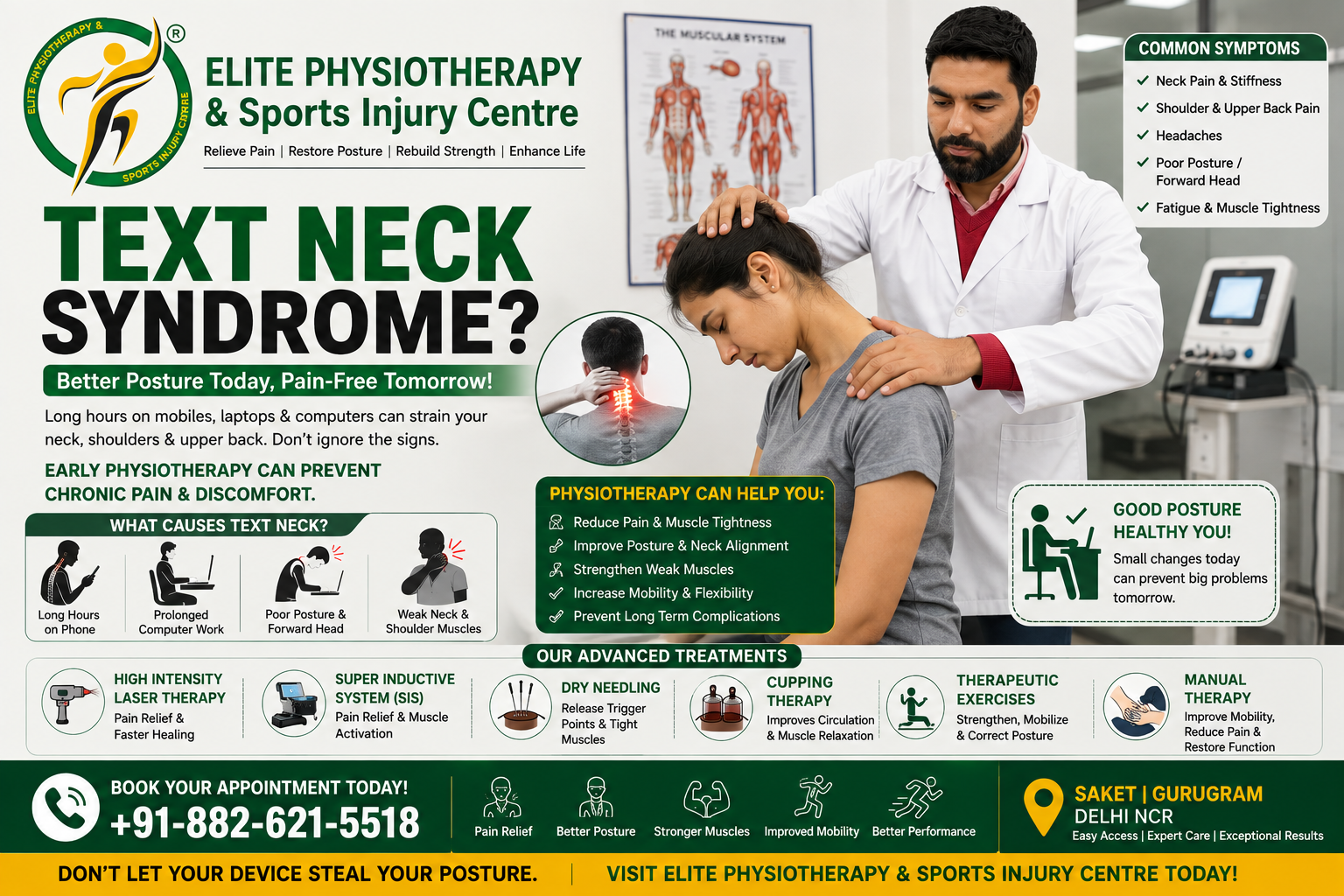
Text Neck Syndrome in Teenagers & Office Workers: The Complete Recovery Guide

  • Computers, laptops, tablets, and smartphones are becoming necessities in everyday life. But extended screen time has also led to a contemporary health issue called Text Neck Syndrome. Teens use their phones for leisure and study purposes for several hours every day. Similarly, office workers frequently spend a lot of time sitting in front of computers. As a result, bad posture puts undue strain on the upper back, shoulders, and neck. In this article, we will discuss text neck syndrome treatment
  • Fortunately, early intervention with Text Neck Syndrome Physiotherapy can prevent long-term consequences, enhance muscular strength, restore posture, and lessen pain. Our team at Elite Physiotherapy and Sports Injury Centre uses cutting-edge technologies, customized rehabilitation plans, and sophisticated diagnostic methods to deliver evidence-based physiotherapy. Whether you’re looking for physiotherapy in Saket, Delhi, or nearby.

What is Text Neck Syndrome?

  • Long-term forward head bending while staring at smartphones, tablets, computers, or other digital devices can result in text neck syndrome, a repetitive stress injury. The cervical spine and associated soft tissues are subjected to an increased mechanical strain as a result of this prolonged position.
  • The average weight of a human head is between 4.5 and 5.5 kilograms. However, the effective stress on the cervical spine increases significantly as the head goes forward.
Head PositionApproximate Load on Neck
Neutral (0°)5 kg
15° Forward12 kg
30° Forward18 kg
45° Forward22 kg
60° Forward27 kg
  • As a result, maintaining a slightly forward head posture for a few hours every day might result in joint dysfunction, ligament strain, muscle exhaustion, and persistent neck pain.
  • There is more than one illness associated with text neck syndrome. Rather, it is a confluence of cervical spine-related muscular, ligamentous, joint, and postural issues.

Why is Text Neck Becoming So Common?

  • Long-term device use is encouraged by modern lifestyles. Teens spend many hours per day playing games, using social media, and attending online classes. In a similar vein, office workers use computers for extended periods of time without proper ergonomic assistance.
  • Several factors contribute to this growing problem:
  • Increased smartphone use
  • Long computer working hours
  • Poor workstation ergonomics
  • Lack of physical activity
  • Weak postural muscles
  • Reduced awareness of correct posture
  • Continuous screen exposure without breaks
  • Remote work culture
  • Online education
  • As a result, physiotherapists now encounter Text Neck Syndrome more frequently than ever before.

Causes of Text Neck Syndrome

  • Poor Smartphone Posture
  • Prolonged Computer Work
  • Poor Laptop Position
  • Long Study Hours
  • Weak Postural Muscles
  • Lack of Exercise
  • Psychological Stress
  • Poor Ergonomics

Risk Factors

  • Certain individuals are more likely to develop Text Neck Syndrome.
  • These include:
  • Teenagers
  • College students
  • IT professionals
  • Graphic designers
  • Software engineers
  • Bank employees
  • Content creators
  • Call center executives
  • Gamers
  • Remote workers
  • Online teachers
  • Corporate professionals

The risk also increases with:

  • More than four hours of smartphone use daily
  • More than six hours of computer work
  • Sedentary lifestyle
  • Poor physical fitness
  • Obesity
  • Previous neck injury

How Does Text Neck Syndrome Develop?

  • Long-term neck flexion initially wears out the muscles. As a result, stabilizing muscles atrophy and overused muscles become taut.
  • Cervical joints are abnormally compressed as posture deteriorates. Overstretching of the ligaments results in altered movement patterns.
  • Over months or years, several changes may occur:
  • Forward head posture
  • Rounded shoulders
  • Reduced cervical lordosis
  • Joint stiffness
  • Myofascial trigger points
  • Muscle imbalance
  • Reduced cervical mobility
  • Decreased muscular endurance
  • Chronic pain sensitization
  • Without proper Text Neck Syndrome Physiotherapy, these changes may become progressively more difficult to reverse.

Clinical Features of Text Neck Syndrome

  1. Neck Symptoms ( Neck pain, Neck stiffness, Pain after prolonged phone use, Morning stiffness, Reduced neck mobility)
  2. Shoulder Symptoms (Shoulder tightness, Upper trapezius pain, Scapular discomfort, Burning sensation between the shoulder blades)
  3. Headache
  4. Postural Changes (Forward head posture, Rounded shoulders, Increased thoracic kyphosis, Elevated shoulders, Scapular winging in some individuals)
  5. Neurological Symptoms (Tingling in the arms, Hand numbness, Reduced grip strength, Arm heaviness)
  6. Functional Limitations (Difficulty studying, Reduced work productivity, Pain while driving, Difficulty reading, Poor concentration, Sleep disturbance, Reduced sports performance)

Possible Complications if Left Untreated

  • Chronic neck pain
  • Persistent forward head posture
  • Cervical disc degeneration
  • Cervical radiculopathy
  • Cervicogenic headaches
  • Shoulder impingement
  • Thoracic outlet symptoms
  • Myofascial pain syndrome
  • Reduced work efficiency
  • Poor athletic performance
  • Sleep disturbances
  • Recurrent episodes of neck stiffness

Physiotherapy Management of Text Neck Syndrome

  • At Elite Physiotherapy and Sports Injury Centre, our Team follows an evidence-based rehabilitation approach. We combine hands-on therapy, corrective exercises, ergonomic education, movement retraining, and advanced physiotherapy technologies to achieve long-term recovery. Patients looking for physiotherapy Delhi, physiotherapy Saket, or physiotherapy near me receive personalized treatment plans designed to restore function and improve quality of life.
  1. Pain Management During the Acute Phase
    Cervical mobility exercises
    Soft tissue relaxation
    Heat therapy for muscle tightness when appropriate
    Cold therapy if acute inflammation is present
    Gentle stretching within pain-free limits
  2. Manual Therapy
    Soft Tissue Mobilization
    Myofascial Release
    Joint Mobilization
    Thoracic Spine Mobilization
    Suboccipital Release
  3. Stretching Program
    Upper Trapezius Stretch
    Levator Scapulae Stretch
    Sternocleidomastoid Stretch
    Scalene Stretch
    Pectoralis Major Stretch
    Pectoralis Minor Stretch
    Thoracic Extension Stretch
  4. Deep Cervical Flexor Training
    Supine chin nods.
    Pressure biofeedback exercises.
    Head lift progression.
    Functional sitting exercises.
    Standing posture exercises.
  5. Scapular Stabilization Exercises
    Scapular setting.
    Scapular retraction.
    Wall slides.
    Prone Y exercises.
    Prone T exercises.
    Serratus punches.
    Dynamic hugging.
    Resistance band rows.
  6. Postural Correction Training
    Chin tuck without excessive neck extension.
    Gentle scapular retraction and depression.
    Relaxed shoulder positioning.
    Neutral lumbar posture.
    Balanced weight distribution while standing.
    Maintaining the ears in line with the shoulders.
  7. Motor Control Retraining
    Coordinated activation of deep cervical flexors.
    Proper timing of scapular stabilizers.
    Smooth cervical movements.
    Controlled transitions between sitting and standing.
    Functional movement during daily tasks.
  8. Strengthening Program
  9. Breathing Retraining
  10. Proprioception and Balance Training
  11. Functional Rehabilitation
  12. Advanced Physiotherapy Modalities
    High-Intensity Laser Therapy (HILT)
    Super Inductive System (SIS)
    Dry Needling
    Cupping Therapy
    Extracorporeal Shock Wave Therapy (ESWT)

When Should You Visit a Physiotherapist?

  • Neck pain lasting more than one week.
  • Recurrent headaches related to posture.
  • Pain during computer work.
  • Pain while using a smartphone.
  • Restricted neck movement.
  • Tingling or numbness in the arm.
  • Weakness in the upper limb.
  • Difficulty maintaining upright posture.
  • Persistent shoulder tightness.

Conclusion

  • Due to increased screen usage and bad posture, text neck syndrome has emerged as one of the most prevalent musculoskeletal issues among teens and office workers. Fortunately, pain can be effectively reduced, normal movement can be restored, posture can be improved, and long-term consequences can be avoided with early diagnosis and evidence-based physiotherapy.
  • Our team at Elite Physiotherapy and Sports Injury Centre offers complete Text Neck Syndrome Physiotherapy using advanced technologies like High-Intensity Laser Therapy (HILT), Super Inductive System (SIS), Dry Needling, and Cupping Therapy when clinically indicated, as well as individualized rehabilitation, ergonomic education, manual therapy, and progressive exercise prescription. People in Delhi NCR can confidently return to work, education, sports, and daily life with our patient-centered approach.
  • If you are looking for expert physiotherapy Delhi, physiotherapy Saket, elite rehabilitation, or physiotherapy near me, visit Elite Physiotherapy and Sports Injury Centre and let our Team help you restore healthy posture and pain-free movement.