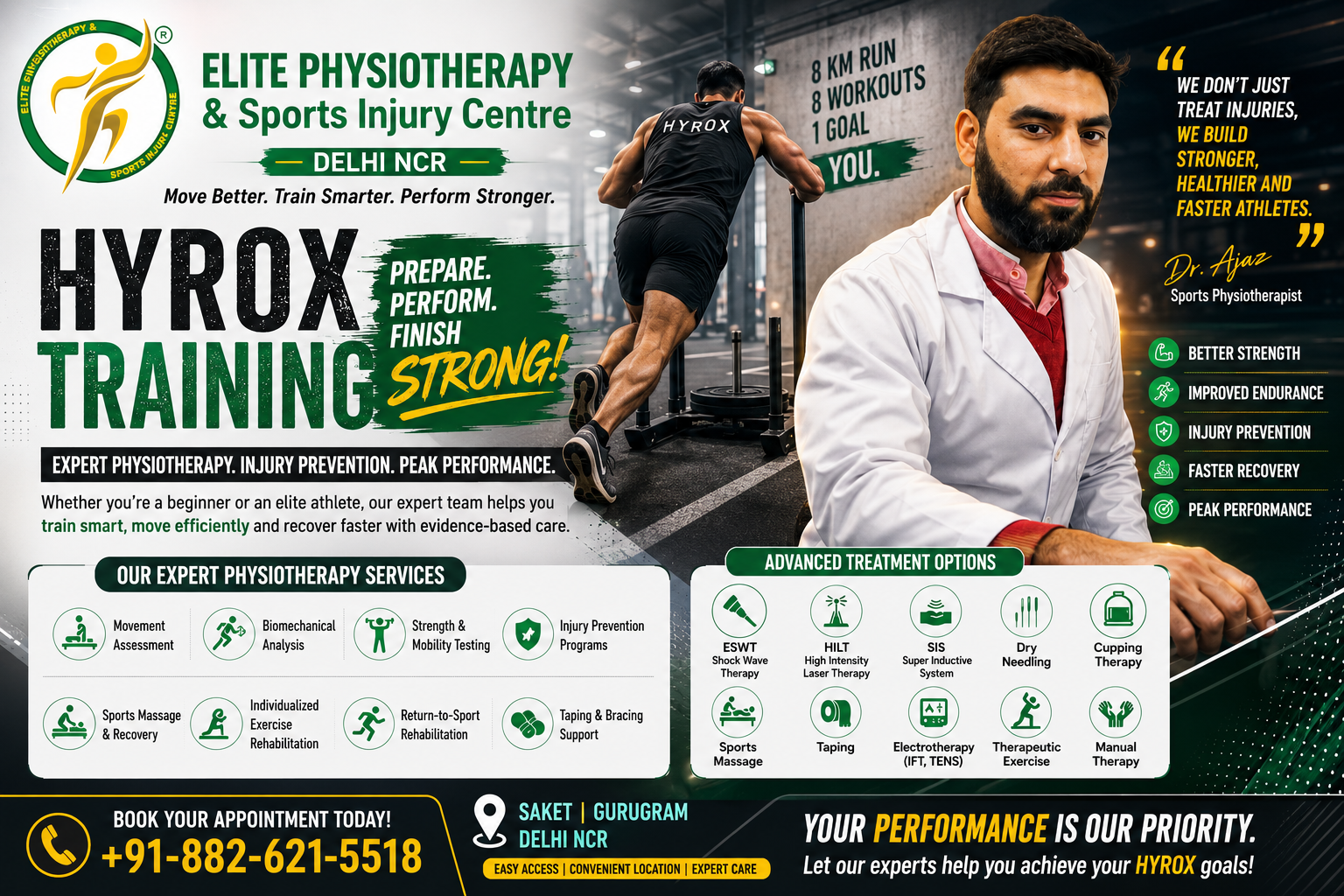
One of the fitness trends that is expanding the fastest in the world is HYROX training. HYROX blends running with practical strength exercises that nearly anyone can learn, in contrast to many fitness competitions that require extremely specific talents. Because of this, it draws both novices, recreational gym patrons, endurance athletes, and professional athletes.
HYROX Training offers an organized method to develop endurance, strength, power, and resilience, regardless of your objective—improving general fitness, getting ready for your first HYROX event, or competing at a high level. Additionally, athletes may track their development over time and compete on an even playing field regardless of location because all official races adhere to the same standardized format worldwide.
Accessibility is another factor contributing to HYROX’s explosive rise. HYROX does not require advanced technical abilities, in contrast to obstacle races or sport-specific tournaments. Rather, they concentrate on strengthening their functional strength, cardiovascular endurance, and basic movement patterns. As a result, people with diverse athletic backgrounds can take part with assurance.
Furthermore, HYROX exercise simultaneously develops several aspects of fitness. Instead of concentrating just on running or lifting weights, athletes learn how to manage tiredness while performing strenuous functional exercises. The physical demands of many sports and daily activities are remarkably similar to this mix.
But it takes more than just running farther or lifting bigger weights to get ready for HYROX. Equally crucial are intelligent programming, steady advancement, appropriate recuperation, and injury avoidance techniques. Athletes can benefit from evidence-based training techniques and physiotherapy advice.
What is HYROX Training?
A organized fitness training program called HYROX Training was created to get participants ready for the official HYROX fitness race. It blends functional strength exercises done in a set order with endurance jogging.
In contrast to conventional gym exercises that might primarily concentrate on cardiovascular or strength training, HYROX tests a variety of physical skills in a single event, such as:
Cardiovascular endurance
Muscular strength
Functional fitness
Power
Grip endurance
Core stability
Mental resilience
Movement efficiency
Since every HYROX event follows the same standardized race format worldwide, athletes can compare their race times across different cities and countries.
History of HYROX
Christian Toetzke, a seasoned sports event planner, and Moritz Münste, a two-time Olympic gold medallist in field hockey, created HYROX in Germany in 2017.
Their goal was to establish a worldwide fitness championship that would unite functional fitness with endurance racing. Regardless of where they competed, they desired an event where competitors could fairly compare their performances.
HYROX has the exact same race structure in every event worldwide, in contrast to obstacle races that alter course design annually.
Purpose of HYROX Training
Preparing athletes for the particular physical demands of a HYROX race is the main objective of HYROX training.
Nonetheless, this training approach is beneficial even for those who do not intend to compete.
HYROX Training aims to improve:
Cardiovascular endurance
During extended periods of exercise, athletes learn to sustain a high work rate.
Functional strength
Instead than focusing on discrete muscle training, exercises replicate real-life movement patterns.
Running economy
Effective running technique becomes crucial since running makes up half of the entire race distance.
Muscular endurance
Participants improve their capacity to maintain performance by regularly engaging in taxing workouts while exhausted.
Movement efficiency
Improved movement quality lowers wasteful energy use and boosts productivity.
Mental toughness
HYROX teaches athletes how to retain good training technique while working beyond exhaustion.
Competition Format
One of HYROX’s greatest strengths is its standardized race format.
Every official event consists of:
Component
Requirement
Total Running Distance
8 km
Number of Runs
Eight 1-km runs
Functional Stations
8
Race Environment
Indoor
Format
Standardized Worldwide
Every athlete switches between one functional exercise station and running.
This implies that participants never work out at two stations in a row.
Rather, a one-kilometer run separates each station.
The circulatory and muscular systems are constantly put to the test by this alternating arrangement.
Race Categories
HYROX offers several divisions so athletes of different fitness levels can participate.
Category
Suitable For
Open
Beginners and recreational athletes
Pro
Experienced competitors with heavier loads
Doubles
Two athletes sharing the workout stations
Relay
Four athletes completing different sections
Adaptive
Athletes with physical impairments (at select events)
How Does a HYROX Race Work?
One of the most unique aspects of HYROX is its predictable race sequence.
Every participant completes:
Run 1 km
Workout Station
Run 1 km
Workout Station
Until all eight exercise stations are finished, this process is repeated.
The race requires constant switching between high-intensity functional activities and endurance jogging. Athletes must therefore effectively manage their energy in order to sustain performance throughout the competition.
Sequence of Events
The official HYROX race follows this exact order:
Order
Activity
1
1 km Run
2
SkiErg
3
1 km Run
4
Sled Push
5
1 km Run
6
Sled Pull
7
1 km Run
8
Burpee Broad Jump
9
1 km Run
10
RowErg
11
1 km Run
12
Farmer’s Carry
13
1 km Run
14
Sandbag Lunges
15
1 km Run
16
Wall Balls
Every athlete, regardless of age group or location, completes the same sequence.
Why the Running Matters
A common misconception among novices is that HYROX is primarily a strength competition. In actuality, a significant amount of the race time is spent jogging.
Cumulative weariness is produced by the repeated one-kilometer runs. Because of this, even though the exercise is technically straightforward, each consecutive workout station feels increasingly difficult.
As a result, successful athletes train for aerobic capacity, effective pacing, and seamless transitions between running and functional motions in addition to strength.
The Eight Functional Workout Stations
Each station targets different physical qualities, making HYROX a comprehensive test of overall fitness.
SkiErg
The motion of cross-country skiing is replicated by the SkiErg. It requires synchronized, rhythmic movement and mainly tests the upper body, core, and cardiovascular system.
Sled Push
A heavily loaded sled is pushed over a certain distance by athletes. Strength, power, core stability, and powerful leg drive are required for this station.
Sled Pull
Using a rope, participants pull the sled in their direction while keeping their bodies still. Coordination, posterior chain muscles, and grip strength are all crucial.
Burpee Broad Jump
This exercise blends a forward jump with a burpee. Because it tests strength, endurance, and full-body coordination, it is among the most physically taxing stations.
RowErg
The rowing machine works the arms, legs, hips, and back while building cardiovascular endurance. Effective rowing technique helps save energy for the remainder of the race.
Farmer’s Carry
Heavy kettlebells are carried over a certain distance by athletes. Grip, shoulders, core, and general postural stability are all strengthened by this exercise.
Sandbag Lunges
Weighted walking lunges assess muscular endurance, hip stability, lower-limb strength, and balance. To lessen needless strain on the lower back and knees, proper technique is crucial.
Wall Balls
Athletes must repeatedly squat while tossing a medicine ball to a target at the final station. Here, fatigue is typically at its peak, therefore breathing control and movement efficiency are crucial.
Benefits of HYROX Training
There is much more to HYROX training than just getting ready for a workout. It is a comprehensive training program that builds strength, speed, mobility, endurance, and mental toughness. Instead than concentrating on just one aspect of fitness, it challenges the complete body by combining running with functional activities. HYROX Training can produce quantifiable outcomes whether your objective is to compete, lose weight, or improve your health.
Improves Cardiovascular Fitness
Builds Functional Strength
Supports Fat Loss
Enhances Athletic Performance
Improves Functional Fitness
Develops Mental Toughness
Improves Injury Resilience
Who Can Participate in HYROX?
Accessibility is one of HYROX’s best features.
Participants do not require advanced technical ability to begin, in contrast to many competitive sports.
Every year, people with different levels of fitness successfully finish HYROX races. They can be:
Beginners
Recreational Gym-Goers
Runners
Cross-Training Athletes
Team Events
Professional Athletes
How to Train for HYROX
There is more to getting ready for a HYROX event than just lifting big weights and running vast distances. Rather, effective athletes integrate mobility, strength, endurance, functional fitness, and recuperation into a planned training regimen. While lowering the risk of injury, performance can be enhanced by adhering to evidence-based training methods.
Training volume and intensity are progressively increased in the best HYROX training programs. As a result, novices should refrain from taking on too much at once. A stepwise strategy increases general fitness while enabling the body to adjust safely.
Common Mistakes Beginners Make
Although many novice athletes are enthusiastic, passion is insufficient on its own. Preventing typical errors can enhance development and lower the chance of harm.
Running Too Fast During Every Session
Ignoring Strength Training
Skipping Mobility
Increasing Training Volume Too Quickly
Poor Exercise Technique
Neglecting Recovery
Using the Wrong Footwear
Ignoring Early Signs of Pain
Injury Risks During HYROX Training
Because HYROX Training incorporates repetitive functional strength workouts with high-volume jogging, it is physically taxing. Training can be both safe and successful if it is progressed appropriately and proper technique is maintained. However, the risk of injury may rise if training load is increased too quickly, if poor movement mechanics are used, or if recuperation is neglected.
Athletes can identify early warning indicators and seek proper treatment before a minor issue develops into a long-term setback by being aware of common injuries like:
Knee Pain
Shoulder Injuries
Low Back Pain
Achilles Tendinopathy
Shin Splints
Plantar Fasciitis
Muscle Strains
Role of Physiotherapy in HYROX Training
HYROX players can enhance their movement efficiency, lower their risk of injury, recover safely, and prepare for competition with the aid of sports physiotherapy. Physiotherapists evaluate the complete movement system to find variables that may affect performance and injury risk rather than just treating pain.
Evidence-based physiotherapy at Elite Physiotherapy and Sports Injury Centre helps both novice and seasoned athletes train with confidence by combining clinical evaluation with customized rehabilitation and performance training.
Injury Prevention
Prevention is always better than treatment.
A physiotherapist can identify:
Muscle weakness
Joint stiffness
Poor movement patterns
Training errors
Recovery deficits
Addressing these issues early may reduce the likelihood of overuse injuries.
At Eite Physiotherapy & Sports Injury Centre we do:
One of the most thorough and satisfying fitness regimens on the market right now is HYROX Training. It promotes cardiovascular fitness, muscular strength, power, mobility, coordination, and mental resilience in a single training regimen by fusing functional strength exercises with endurance running.
Strength and stamina are not the only factors that influence success in HYROX. Rather, it relies on good recovery, increasing overload, balanced preparation, and constant focus on movement quality. Whether you are an experienced athlete striving for a personal best or a novice getting ready for your first race, adhering to an organized training plan and honoring recovery principles can help you reach your maximum potential.
Realizing that pain should never be disregarded is equally crucial. Your body may require a professional evaluation if you have ongoing pain, restricted movement, or recurrent injuries. Early intervention can stop minor issues from developing into significant setbacks.
Our skilled sports physiotherapists at Elite Physiotherapy and Sports Injury Centre offer evidence-based treatment specifically designed to meet the needs of HYROX athletes. We help athletes safely prepare, recover, and maximize long-term performance through comprehensive movement analysis, biomechanical assessment, strength testing, mobility evaluation, individualized rehabilitation, and contemporary treatment options like Extracorporeal Shock Wave Therapy (ESWT), High-Intensity Laser Therapy (HILT), Super Inductive System (SIS), Dry Needling, Cupping Therapy, Sports Massage, Sports Taping, and customized exercise rehabilitation—when clinically appropriate.