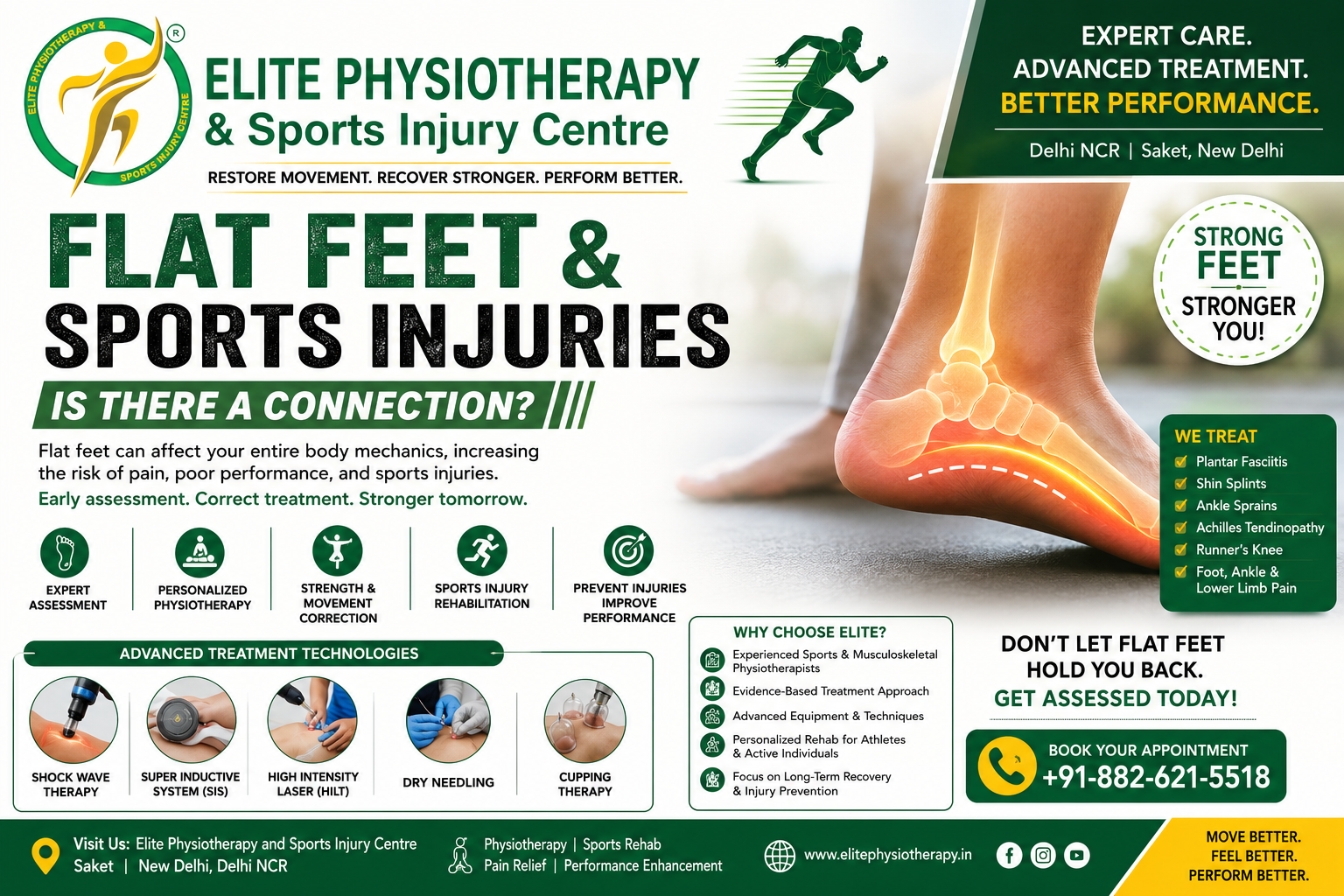
For balance, speed, power, and injury avoidance, athletes rely on strong and effective foot mechanics. However, flat feet and sports injuries are two conditions that are frequently disregarded but can have an impact on athletic performance.
The human body is built on its feet. The foot is the starting point for every running step, jump, landing, and direction shift. The way pressures pass through the ankle, knee, hip, and spine alters when the foot’s natural arch collapses.
Many athletes who have flat feet continue to work out without being properly evaluated. Changes in movement patterns can eventually put more strain on joints, tendons, and muscles. This could be a factor in lower limb injuries, plantar fasciitis, knee issues, shin pain, and recurrent ankle sprains.
We assist athletes in regaining foot function, enhancing mobility quality, and safely returning to sports with cutting-edge evaluation methods and evidence-based physiotherapy.
What Are Flat Feet?
Pes planus, another name for flat feet, is a condition in which the foot’s medial longitudinal arch is diminished or entirely flattened.
When walking, running, or jumping, the inside side of the foot typically has a natural arch that helps absorb shock. Additionally, this arch appropriately distributes body weight throughout the foot.
When engaging in weight-bearing tasks, those with flat feet roll their feet excessively inward. We refer to this motion as excessive pronation.
Pronation is typical to some extent since it aids in impact absorption. Excessive pronation, however, might interfere with normal biomechanics and put more strain on nearby structures.
Poor foot mechanics and frequent loading might raise the risk of injury in sports. Thus, it’s critical for athletes, coaches, and other professionals to comprehend the connection between flat feet and sports injuries.
How Flat Feet Can Affect Sports Performance
The foot is the first point of contact with the ground. During sports activities, it controls force absorption and energy transfer.
When the arch collapses, several biomechanical changes may occur:
Excessive Foot Pronation
Altered Lower Limb Alignment
Reduced Shock Absorption
Increased Muscle Fatigue
Causes of Flat Feet
Genetic Factors
Ligament Laxity
Weak Foot Muscles
Posterior Tibial Tendon Dysfunction
Sports-Related Overuse
Improper Footwear
Increased Body Weight
Clinical Features and Symptoms of Flat Feet
Foot Pain
Ankle Instability
Lower Limb Pain
Early Muscle Fatigue
Reduced Sports Performance
Common Sports Injuries Associated With Flat Feet
Plantar Fasciitis
Shin Splints (Medial Tibial Stress Syndrome)
Achilles Tendinopathy
Runner’s Knee
Ankle Sprains
Why Physiotherapy Is Important for Flat Feet
Many individuals think that supportive shoes are all that are needed for flat feet. On the other hand, the goal of physiotherapy is to increase the foot’s functional ability.
Physiotherapy’s objective is to:
Improve arch control
Strengthen supporting muscles
Correct movement patterns
Reduce pain
Prevent recurring sports injuries
Improve athletic performance
Our method at Elite Physiotherapy and Sports Injury Centre incorporates advanced technology, exercise rehabilitation, manual treatment, and sports-specific training.
Physiotherapy Management for Flat Feet
Pain Management and Tissue Healing Physiotherapists use a combination of:
Manual therapy
Soft tissue techniques
Mobility exercises
Electrotherapy when required
Advanced physiotherapy modalities
Foot Strengthening Exercises Short Foot Exercise Toe Yoga Exercise Towel Curl Exercise Resistance Band Exercises
Calf Muscle Strengthening Double Leg Heel Raise Seated Calf raise
Balance and Proprioception Training Single Leg Standing Balance Board Training
Hip and Core Strengthening
Movement Correction and Biomechanical Training
Advanced Physiotherapy Modalities Shock Wave Therapy Super Inductive System High Intensity Laser Therapy Dry Needling Therapy Cupping Therapy
Prevention Strategies for Flat Feet Related Sports Injuries
Regular Foot and Movement Assessment
Maintain Foot Muscle Strength
Improve Ankle Mobility
Wear Appropriate Sports Footwear
Follow Progressive Training Load
Improve Recovery Practices
When Should You Consult a Physiotherapist?
Repeated ankle sprains
Persistent heel pain
Pain during running
Shin discomfort
Reduced sports performance
Difficulty maintaining balance
Lower limb fatigue
Conclusion
The relationship between flat feet and sports injuries is often underestimated. While flat feet may not always cause problems, poor foot control can influence the entire movement chain.
A collapsed arch may affect ankle stability, knee alignment, hip control, and athletic performance.
The right approach is not only supporting the foot but improving overall movement quality through targeted rehabilitation.
At Elite Physiotherapy and Sports Injury Centre, Delhi NCR, we provide advanced physiotherapy solutions for athletes and individuals dealing with foot-related problems. Our experienced physiotherapists combine detailed assessment, exercise rehabilitation, and modern technologies to help patients recover faster and perform better.
If you are searching for physiotherapy near me, physiotherapy Delhi, or physiotherapy Saket, visit Elite Physiotherapy and Sports Injury Centre for expert care and personalized treatment.
Your performance starts from your foundation. Build stronger feet. Move better. Perform stronger.