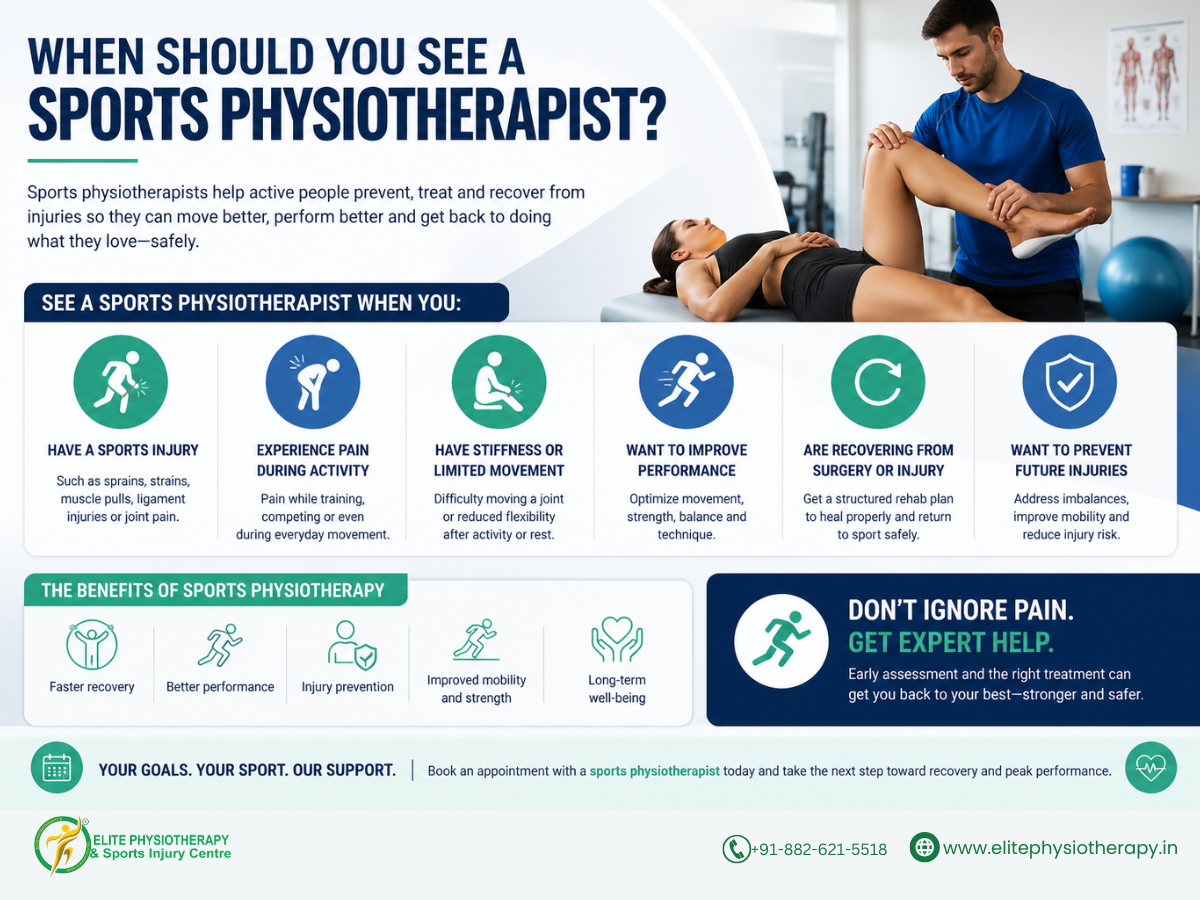
Many athletes put off getting help until their pain gets worse. Early sports physiotherapy advice, however, might avoid severe injuries and prolonged recuperation. Early intervention, in our opinion at Elite Physiotherapy & Sports Injury Centre, promotes improved performance and a quicker recovery. It could be time to take action if you frequently look for physiotherapy near me.
Hidden issues can be found with prompt sports physiotherapy consultation. Additionally, it enhances long-term results and decreases downtime. Expert care is important whether you are a fitness enthusiast or a professional athlete in Gurugram or Delhi.
What Is a Sports Physiotherapy Consultation?
Movement, discomfort, and performance are all thoroughly evaluated during a sports physiotherapy appointment. It emphasizes return-to-play preparedness, rehabilitation, and injury prevention.
Physiotherapists evaluate functional movement, biomechanics, strength, and flexibility. They provide a personalized rehabilitation program according to your goals and sport.
When Should You See a Sports Physiotherapist?
You should not wait for severe pain. Instead, seek help when:
Pain lasts more than 3–5 days
Recurrent injuries affect performance
Reduced strength or flexibility appears
Joint instability or locking occurs
Pain during or after training persists
Post-surgery rehabilitation is needed
Performance plateaus despite training
Early sports physiotherapy consultation improves outcomes and prevents chronic injury.
Common Causes That Need Sports Physiotherapy
Several factors lead to sports injuries:
Overuse and repetitive stress
Poor biomechanics and posture
Muscle imbalance or weakness
Improper warm-up or recovery
Sudden increase in training load
Previous unresolved injuries
Therefore, a sports physiotherapy consultation helps identify the exact cause, not just symptoms.
At Elite Physiotherapy & Sports Injury Centre we do
Pain Reduction and Tissue Healing
Inflammation and pain must first lessen. We employ both modern techniques and manual therapy. This promotes healing and better blood flow.
Mobility Restoration
Muscle tenseness and joint stiffness are then addressed. Normal movement patterns are restored by mobilization and stretching procedures.
Strength and Stability Training
Then, specific exercises enhance joint stability and muscular strength. This phase increases resilience and guards against reinjury.
Neuromuscular Control
Coordination must be restored by athletes. Control and reaction time are enhanced by proprioception exercises and balance training.
Sport-Specific Rehabilitation
Lastly, exercises imitate athletic motions. This gets athletes ready for a safe comeback to competition.
A planned consultation for sports physical therapy guarantees that every stage is customized.