Rotator Cuff Injury: The Silent Shoulder Problem Athletes Ignore

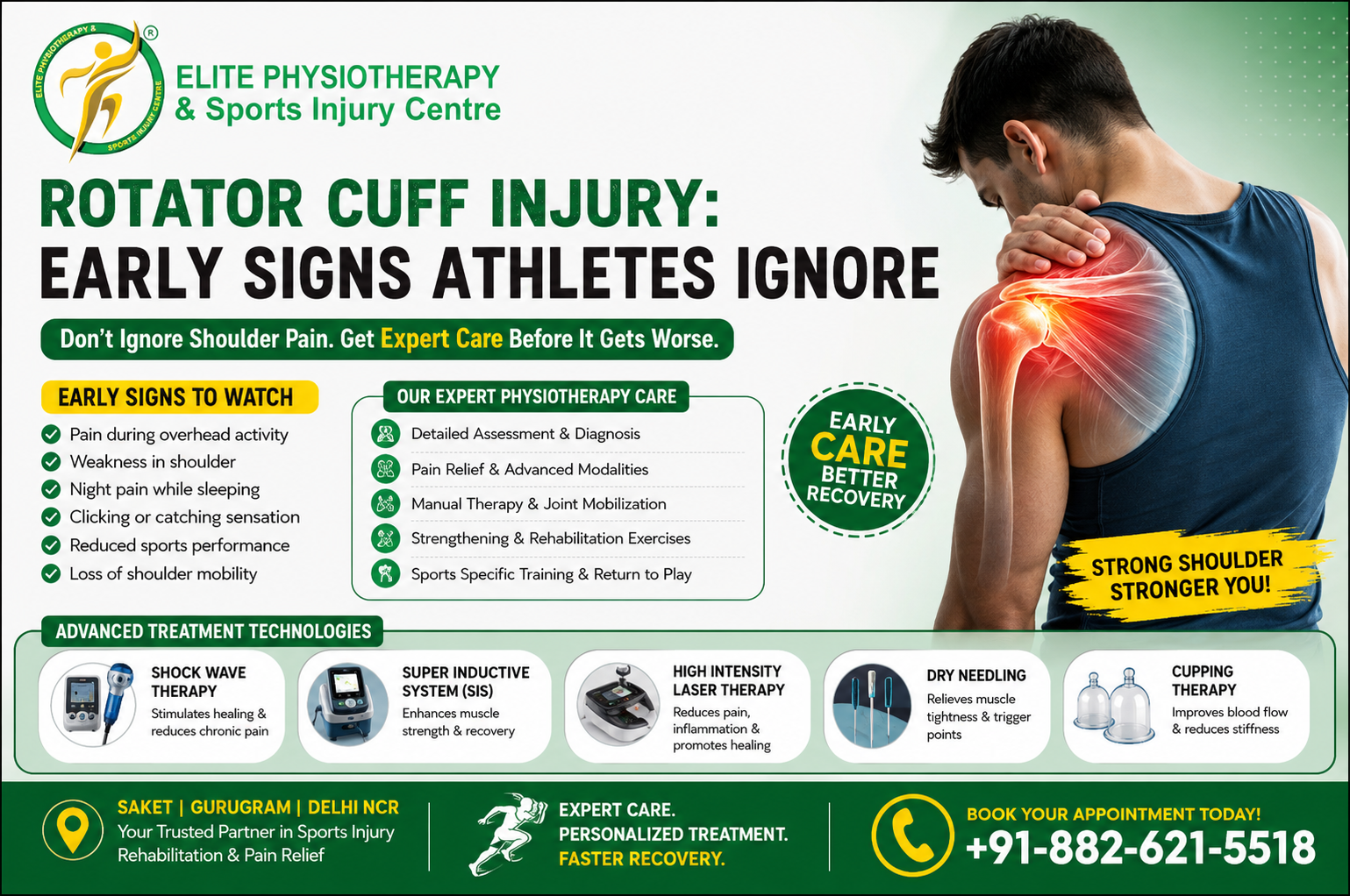
Rotator Cuff Injury Physiotherapy: Early Signs Athletes Ignore

  • Athletes who engage in repetitive overhead motions frequently sustain shoulder problems. Sports that put a lot of strain on the shoulder joint include wrestling, swimming, cricket, tennis, badminton, weightlifting, and throwing. Rotator cuff injuries are among the most often disregarded of these injuries.
  • Despite early shoulder soreness, many athletes keep up their training. They frequently view discomfort as typical muscle soreness. Ignoring these warning indicators, however, can eventually harm shoulder structures and impair athletic performance.
  • Physiotherapy for rotator cuff injuries is crucial for early diagnosis, pain control, strength restoration, and a safe return to sports. We at Elite Physiotherapy and Sports Injury Centre offer athletes in Delhi NCR cutting-edge sports physiotherapy treatments. Instead of only treating symptoms, our method concentrates on determining the underlying cause of shoulder issues.
  • One of the human body’s most movable joints is the shoulder. However, the stability that muscles and tendons provide is necessary for this motion. During strong motions, the rotator cuff group keeps the shoulder under control. Weakness, inflammation, or tears may occur when these muscles are overworked.
  • Minor shoulder issues can be prevented from developing into serious injuries with early physical therapy intervention.

What is a Rotator Cuff Injury?

  • When one or more rotator cuff muscles or tendons become irritated, inflamed, strained, or torn, it results in a rotator cuff injury.
  • The four muscles that surround the shoulder joint are called the rotator cuff. These muscles aid in shoulder movements and offer dynamic stability.
  • The following are the four rotator cuff muscles:
  1. Supraspinatus
  2. Infraspinatus
  3. Teres Minor
  4. Subscapularis
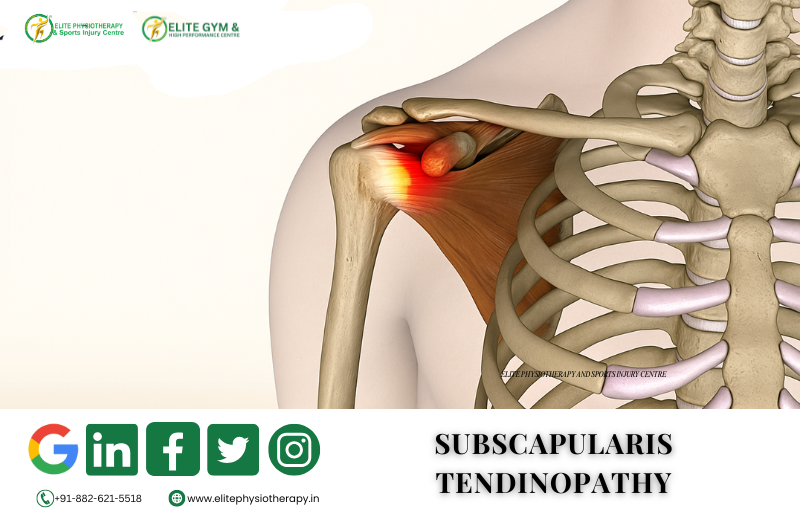
  • Internal rotation and anterior shoulder stability are produced by the subscapularis.
  • These muscles work together to firmly attach the shoulder blade to the upper arm bone. They enable athletes to maintain exact shoulder control while producing strength.
  • Injury may result from abrupt overload, inadequate mechanics, or recurrent stress on these tissues.

Why Do Athletes Ignore Rotator Cuff Injury Symptoms?

  • Athletes often delay treatment because early rotator cuff problems may appear mild.
  • Common reasons include:
    • Pain appears only during specific movements.
    • Athletes believe pain will disappear with rest.
    • Performance remains normal initially.
    • Shoulder discomfort is confused with muscle fatigue.
    • Competition schedules prevent proper recovery.
    • Athletes continue training through pain.
  • However, repeated stress without proper rehabilitation can increase tendon damage.
  • A small irritation can progress into:
    • Chronic tendinopathy
    • Shoulder impingement
    • Partial tendon tear
    • Complete tendon rupture
    • Loss of sports performance
  • Therefore, early assessment by a sports physiotherapist is important.

Causes of Rotator Cuff Injury

  • Rotator cuff injuries develop due to multiple factors. In athletes, repeated shoulder stress is the most common reason.
  1. Repetitive Overhead Activity
  2. Sudden Increase in Training Load
  3. Poor Shoulder Mechanics
  4. Muscle Imbalance
  5. Previous Shoulder Injury
  6. Age-Related Tendon Changes

Types and Classification of Rotator Cuff Injuries

  1. Rotator Cuff Tendinitis
    This is an early-stage injury where the tendon becomes irritated and inflamed.
  • Features include:
    • Mild pain during activity
    • Discomfort after training
    • Pain while lifting the arm
  • Early physiotherapy can usually resolve this condition effectively.
  1. Rotator Cuff Tendinopathy
    Tendinopathy occurs due to long-term repetitive stress.
  • The tendon undergoes structural changes.
  • Symptoms may include:
    • Persistent shoulder pain
    • Reduced strength
    • Poor exercise tolerance
  • Athletes commonly develop this condition due to repeated training loads.
  1. Partial Thickness Tear
    In a partial tear, some tendon fibers are damaged while the tendon remains partially attached.
  • Symptoms include:
    • Pain during overhead activity
    • Weakness
    • Difficulty performing sports movements
  1. Full Thickness Tear
    A complete tear occurs when the tendon separates completely.
  • Common features include:
    • Significant weakness
    • Difficulty lifting the arm
    • Reduced sports performance
    • Possible need for surgical consultation
  1. Acute Rotator Cuff Injury
    This occurs suddenly due to trauma.
  • Examples:
    • Fall on an outstretched arm
    • Heavy weightlifting injury
    • Sudden forceful shoulder movement
  1. Chronic Rotator Cuff Injury
    This develops gradually due to repetitive overload.
  • Common in:
    • Professional athletes
    • Throwing athletes
    • Weightlifters
    • Racquet sport players

Early Signs of Rotator Cuff Injury Athletes Should Not Ignore

  1. Shoulder Pain During Overhead Movements
  2. Pain at Night
  3. Weakness During Shoulder Movements
  4. Clicking or Catching Sensation
  5. Reduced Performance
  6. Loss of Shoulder Mobility
  7. Persistent Shoulder Discomfort After Training

Complications of Untreated Rotator Cuff Injury

  1. Chronic Tendon Degeneration
  2. Shoulder Impingement Syndrome
  3. Rotator Cuff Tear Progression
  4. Muscle Atrophy
  5. Reduced Athletic Performance

Physiotherapy Management of Rotator Cuff Injury

  • Physiotherapy for rotator cuff injuries aims to lessen discomfort, increase shoulder mobility, restore muscular strength, improve shoulder stability, and assist athletes in safely resuming their sport.
  • Our approach to sports physiotherapy at Elite Physiotherapy and Sports Injury Centre, Delhi NCR, is centered on determining the true cause of injury. We do more than just treat pain. By addressing muscle imbalance, movement errors, and sports-specific constraints, we enhance shoulder function.
  • The physiotherapist designs a personalized treatment plan after a detailed assessment.
  1. Guided Activity Modification
  2. Adjusting training intensity
  3. Soft Tissue Mobilization
  4. Joint Mobilization
  5. Mobility Exercises
  6. Isometric Rotator Cuff Exercises
  7. Resistance Band Exercises
  8. Progressive Strength Training
  9. Scapular Stabilization Training
  10. Proprioception and Neuromuscular Training
  11. Perturbation training

Advanced Physiotherapy Modalities for Rotator Cuff Injury

Return to Sports After Rotator Cuff Injury

  • Before returning, athletes should demonstrate:
  • Full pain-free shoulder movement
  • Restored rotator cuff strength
  • Good scapular control
  • Sport-specific confidence
  • Ability to tolerate training load

Why Choose Elite Physiotherapy and Sports Injury Centre?

  • At Elite Physiotherapy and Sports Injury Centre, we provide advanced physiotherapy in Delhi NCR for athletes and active individuals.
  • Our approach combines:
    • Sports injury assessment
    • Evidence-based physiotherapy
    • Advanced rehabilitation techniques
    • Athlete-specific exercise programs
    • Modern pain management technologies
  • Whether you are searching for physiotherapy near me, physiotherapy Saket, or expert sports rehabilitation in Delhi NCR, our team provides personalized care focused on long-term recovery.

Importance of Early Physiotherapy Intervention

  • Early physiotherapy helps:
    • Reduce pain
    • Restore shoulder mobility
    • Improve muscle activation
    • Prevent worsening of injury
    • Restore sports performance
  • Delaying treatment may increase rehabilitation duration.
  • At Elite Physiotherapy and Sports Injury Centre, our goal is to help athletes return stronger and safer.

Final Conclusion

  • Athletes frequently have rotator cuff problems, but many choose to disregard early warning indicators. If appropriate care is not given, mild shoulder discomfort might progressively worsen into a dangerous problem.
  • Recovery results can be greatly enhanced by early diagnosis and organized treatment for rotator cuff injuries.
  • We offer cutting-edge sports physiotherapy solutions at Elite Physiotherapy and Sports Injury Centre in Delhi-NCR, tailored to each athlete’s needs.
  • Our expert team combines detailed assessment, exercise-based rehabilitation, and advanced treatment techniques to help you recover faster and return to your sport confidently.
  • If you are searching for physiotherapy near me, physiotherapy Delhi, or physiotherapy Saket, visit Elite Physiotherapy and Sports Injury Centre for professional sports injury care.
  • Your shoulder strength matters. Start your recovery journey with Elite Physiotherapy and Sports Injury Centre today.

Strong Shoulders, Strong Performance

Shoulder Health Program for Overhead Sports

  • Excellent shoulder strength, stability, and coordination are required for overhead sports. Cricket, volleyball, badminton, swimming, tennis, and javelin players frequently put a lot of strain on their shoulder joints. The likelihood of discomfort and harm consequently rises dramatically.
  • A Shoulder Health Program for Overhead Sports is therefore crucial. It enhances performance while shielding athletes from harm.
  • We create structured shoulder programs for athletes at Elite Physiotherapy and Sports Injury Center. These programs combine clinical evaluation, remedial exercise, and cutting-edge physiotherapy technology.
  • This article explains the concept, causes, symptoms, diagnostic techniques, and physiotherapy treatment of shoulder issues in overhead athletes.

What is a Shoulder Health Program for Overhead Sports?

  • An organized physiotherapy method called the Shoulder Health Program for Overhead Sports is intended to safeguard and enhance shoulder function.

It emphasizes four key elements:

  • Shoulder mobility
  • Rotator cuff strength
  • Scapular stability
  • Neuromuscular control
  • When throwing, serving, smashing, and bowling, above athletes produce tremendous forces. As a result, specific training and injury prevention techniques are needed for their shoulders.

At Elite Physiotherapy and Sports Injury Centre, the program includes:

  • Movement assessment
  • Corrective exercise therapy
  • Strength and conditioning integration
  • Advanced physiotherapy modalities
  • Return-to-sport training

As a result, athletes develop strong, stable, and injury-resistant shoulders.

Why Overhead Athletes Develop Shoulder Problems

Shoulder injuries result from repetitive stress and biomechanical faults. Several factors contribute to these problems.

  1. Repetitive Overhead Movements
  • Repeated throwing or smashing creates micro-trauma in shoulder structures.
  • Gradually, this may lead to inflammation or tendon injury.
  1. Rotator Cuff Weakness
  • Weak rotator cuff muscles fail to stabilize the humeral head. Consequently, abnormal joint mechanics develop.
  1. Scapular Dyskinesia
  • Poor scapular movement disrupts shoulder biomechanics. This condition increases impingement risk.
  1. Limited Shoulder Mobility
  • Restricted internal rotation or thoracic mobility increases stress on shoulder tissues.
  1. Poor Kinetic Chain Function
  • The shoulder depends on force from the legs and core. Weak hips or trunk overload the shoulder.
  1. Training Errors
  • Sudden increases in workload often trigger shoulder injuries in athletes.

Common Shoulder Conditions in Overhead Athletes

  • A structured Shoulder Health Program for Overhead Sports addresses multiple shoulder pathologies.

Common conditions include:

  • Rotator cuff tendinopathy
  • Shoulder impingement syndrome
  • SLAP lesions
  • Biceps tendinitis
  • Glenohumeral instability
  • Labral injuries
  • Scapular dyskinesia
  • Internal impingement

These conditions frequently occur among cricketers, volleyball players, swimmers, and racket-sport athletes.

Clinical Features and Symptoms

  • Shoulder pain during overhead activity
  • Weakness during throwing or serving
  • Reduced ball speed or power
  • Clicking or catching sensation
  • Limited shoulder range of motion
  • Shoulder fatigue during training
  • Pain while sleeping on the affected side
  • Furthermore, some athletes report decreased sports performance before pain begins.

Therefore, early physiotherapy assessment is crucial.

Physiotherapy Management

  • The foundation of treatment is an organized Shoulder Health Program for Overhead Sports. Elite Physiotherapy and Sports Injury Centre uses a progressive sports medicine approach to recovery. Restoring strength, mobility, and functional performance are the main goals of the therapy.

Phase 1: Pain Reduction and Tissue Healing

  • Activity modification
  • Cryotherapy
  • Gentle mobility exercises
  • Soft tissue therapy
  • High-Intensity Laser Therapy
  • Super Inductive System Therapy
  • Shockwave Therapy
  • Dry Needling
  • Cupping Therapy

Phase 2: Mobility Restoration

  • Posterior capsule stretching
  • Thoracic spine mobility
  • Scapular mobility exercises
  • Sleeper stretch
  • Cross-body stretch
  • Thoracic extension mobilization

Phase 3: Rotator Cuff Strengthening

  • External rotation with resistance band
  • Internal rotation strengthening
  • Side-lying external rotation
  • Prone horizontal abduction

Phase 4: Scapular Stability Training

  • Scapular retraction drills
  • Serratus anterior activation
  • Wall slide exercises
  • Push-up plus

Phase 5: Kinetic Chain Integration

  • Core stability training
  • Hip strengthening
  • Dynamic balance exercises

Phase 6: Sports-Specific Training

  • Plyometric medicine ball throws
  • Deceleration training
  • Throwing mechanics correction
  • Sport-specific drills

Injury Prevention Strategies

  • Warm up properly before training
  • Maintain shoulder mobility
  • Strengthen rotator cuff muscles
  • Train the core and lower body
  • Monitor training workload

At Elite Physiotherapy and Sports Injury Centre, we offer athlete screening programs to prevent injuries.

Why Choose Elite Physiotherapy and Sports Injury Centre

Athletes require specialized sports physiotherapy care.

At Elite Physiotherapy and Sports Injury Centre, treatment focuses on performance-based rehabilitation.

Our approach includes:

  • Detailed biomechanical assessment
  • Evidence-based rehabilitation protocols
  • Advanced physiotherapy technologies
  • Individualized athlete-specific training

This comprehensive system ensures safe recovery and improved sports performance.

Conclusion

Athletes who perform overhead put a great deal of strain on their shoulders. Injuries may occur regularly if sufficient care is not provided.

As a result, an organized shoulder health program for overhead sports is crucial.

Optimal recovery is ensured by early physiotherapy evaluation, focused rehabilitation, and cutting-edge treatment modalities.

We at Elite Physiotherapy and Sports Injury Centre assist athletes in developing shoulder strength, stability, and resilience. Peak athletic performance and injury healing are our objectives.

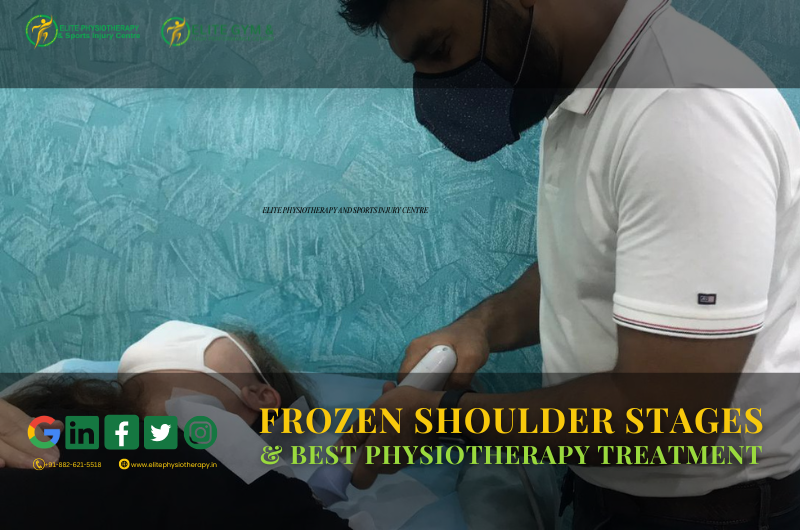
Frozen Shoulder Stages & Best Physiotherapy Treatment

Regain Movement with the Right Frozen Shoulder Physiotherapy Treatment

  • A major problem may be indicated by shoulder stiffness that gets worse over several months. Early pain is often disregarded by patients. However, recovery is challenging when care is delayed. When administered at the appropriate time, frozen shoulder physical therapy is the most successful treatment.
  • This guide will assist you in understanding everything if you’re looking for physiotherapy in Saket, Delhi, or nearby.

What is Frozen Shoulder?

  • Adhesive capsulitis, another name for frozen shoulder, is a painful shoulder ailment. It results in gradual mobility limitation and stiffness.
  • An inflammation develops in the shoulder capsule. It tightens and thickens later. Joint space thus decreases. Shoulder movements eventually become quite limited.
  • This illness progresses gradually. It moves forward in phases. As a result, early frozen shoulder physical therapy treatment greatly enhances results.

Stages of Frozen Shoulder

  • Understanding stages helps in planning proper physiotherapy management.

1. Freezing Stage (Painful Stage)

  • This stage lasts 6 weeks to 9 months.
  • Severe pain during movement
  • Night pain increases
  • Gradual loss of shoulder mobility
  • Difficulty combing hair or wearing clothes

2. Frozen Stage (Stiffness Stage)

  • This stage lasts 4 to 12 months.
  • Pain reduces slightly
  • Severe stiffness remains
  • External rotation is most restricted
  • Functional activities become difficult

3. Thawing Stage (Recovery Stage)

  • This stage may last 6 months to 2 years.
  • Gradual improvement in movement
  • Pain significantly reduces
  • Shoulder function slowly returns

Causes of Frozen Shoulder

  • Frozen shoulder can be primary or secondary.
  • Primary Frozen Shoulder
    • Occurs without clear injury. Common in:
    • Diabetes patients
    • Thyroid disorders
    • Females above 40 years
  • Secondary Frozen Shoulder
    • Occurs after:
    • Shoulder injury
    • Fracture
    • Surgery
    • Prolonged immobilization

Clinical Features and Symptoms

  • Patients commonly report:
  • Dull aching shoulder pain
  • Night pain
  • Restricted active and passive movements
  • Difficulty reaching overhead
  • Limited external rotation
  • Shoulder tightness
  • Capsular pattern restriction appears. External rotation is most limited. Abduction follows next. Internal rotation is least restricted.

Diagnosis and Physiotherapy Assessment

  • At Elite Physiotherapy and Sports Injury Centre, we follow a structured clinical examination.
  • Detailed History
  • Observation
  • Range of Motion Assessment
  • Special Physiotherapy Tests
    • Apley’s Scratch Test
    • External Rotation Lag Test
    • Neer’s and Hawkins-Kennedy Test
    • Joint Accessory Movement Testing

Best Frozen Shoulder Physiotherapy Treatment

  • At Elite Physiotherapy and Sports Injury Centre, Delhi NCR, we design stage-specific programs. Our approach combines evidence-based physiotherapy with advanced technology.
  • Pain Management in the Freezing Stage
    • Initially, we reduce inflammation and pain.
    • High Intensity Laser Therapy
    • Super Inductive System (SIS)
    • Shock Wave Therapy
    • Dry Needling
    • Cupping Therapy
  • Mobility Restoration in Frozen Stage
    • Joint Mobilization
    • Capsular Stretching
    • Muscle Energy Techniques
    • Scapular Stabilization
  • Strengthening in the Thawing Stage
    • We include:
    • Resistance band exercises
    • Closed chain exercises
    • Functional training
    • Proprioceptive drills

Why Choose Elite Physiotherapy in Delhi NCR?

If you are searching for:

  • Physiotherapy in Delhi & NCR, Elite Physiotherapy and Sports Injury Centre offers advanced care.
  • We combine:
    • Manual therapy
    • Shock Wave
    • Super Inductive System
    • High Intensity Laser
    • Dry Needling
    • Cupping
  • Our protocols are personalized. We monitor progress weekly. Most patients avoid surgery with structured Frozen Shoulder Physiotherapy Treatment.

Prevention Tips

  • Avoid prolonged immobilization
  • Start physiotherapy after injury
  • Maintain shoulder mobility
  • Control blood sugar

Conclusion

  • Although uncomfortable, frozen shoulder can be treated. Excellent outcomes are seen with stage-specific frozen shoulder physical therapy treatment.
  • With cutting-edge technology and practical experience, we at Elite Physiotherapy and Sports Injury Centre, Delhi NCR, offer top-notch care.
  • Avoid waiting for the stiffness to get worse. Schedule your evaluation right now. Restore your shoulder’s range of motion with professional physiotherapy.

Shoulder Instability: Glenohumeral Instability

What is Glenohumeral Instability?

  • An irregular movement or displacement of the humeral head from the glenoid fossa is referred to as glenohumeral instability. When the ligaments, labrum, and rotator cuff muscles – the shoulder’s supporting structures – fail to maintain correct alignment, instability results. Feelings of looseness, slippage, or even total dislocation of the shoulder are possible manifestations.
  • Athletes, Nonathletes, and those who engage in repetitive overhead activities frequently appear with this condition at Elite Physiotherapy and Sports Injury Centre. Careful evaluation and structured physiotherapy management can restore shoulder stability and prevent recurrence.

Causes of Glenohumeral Instability

  • Trauma or Injury: Shoulder dislocation or ligament damage may result from an abrupt fall or impact.
  • Repetitive Overuse: Sports like baseball, volleyball, and swimming that require frequent overhead motions put stress on the stabilizing tissues.
  • Muscle Imbalance: A weak rotator cuff or poor scapular stabilizer strength fails to provide adequate support to the humeral head.
  • Congenital Laxity: Some people are born with loose ligaments, which can cause instability in multiple directions.
  • Post-surgical Weakness: Inadequate rehabilitation following shoulder surgery may lead to instability.

Types of Glenohumeral Instability

  1. Traumatic instability: Is brought on by a direct injury that causes subluxation or dislocation.
  2. Atraumatic Instability: Repetitive microtrauma or widespread joint laxity can cause atraumatic instability.
  3. Multidirectional Instability (MDI): Instability occurring in multiple directions—anterior, posterior, or inferior—is called multidirectional instability (MDI).
  4. Unidirectional Instability: This type of instability, usually anterior, is limited to one direction.

Clinical Features and Symptoms

  • Pain when throwing or performing overhead movements
  • Feeling of the shoulder “slipping out” or “giving way”
  • Diminished range of motion and strength
  • Shoulder strain from repetitive tasks
  • Frequent subluxations or dislocations
  • A popping or clicking sound inside the joint

Diagnosis and Examination

  • A thorough clinical evaluation is essential to confirm glenohumeral instability. At Elite Physiotherapy and Sports Injury Centre, assessment includes detailed history, posture observation, and specific orthopedic tests.

Special Tests Used

  1. Apprehension Test: Anxiety experienced when the arm is externally rotated at 90° abduction suggests anterior instability.
  2. Relocation Test: Applying posterior pressure that reduces anxiety confirms anterior instability.
  3. Load and Shift Test: The therapist evaluates the anterior or posterior translation of the humeral head using the load and shift test.
  4. Sulcus Sign: A palpable sulcus or groove beneath the acromion indicates inferior laxity.
  5. Drawer Test: Assesses translation both anteriorly and posteriorly in relation to the opposing shoulder.
  • Additional investigations, like MRI or ultrasound, may help visualize labral tears, capsule laxity, or rotator cuff damage.

Physiotherapy Management of Glenohumeral Instability

  • Physiotherapy plays a vital role in restoring shoulder stability, mobility, and functional performance. At Elite Physiotherapy and Sports Injury Centre, physiotherapists tailor every treatment plan to the patient’s biomechanics, sport demands, and injury mechanism.

1. Pain Relief and Inflammation Control

2. Muscle Activation and Neuromuscular Control

  • Physiotherapists work to reactivate proprioceptive control, scapular stabilizers, and the rotator cuff.
  • By supporting neuromuscular stimulation, the Super Inductive System (SIS) enhances joint control without causing joint strain.
  • Physiotherapists gradually introduce specific exercises such as proprioceptive neuromuscular facilitation (PNF) patterns, scapular retraction, and isometric internal and external rotations.

3. Strengthening and Dynamic Stability

  • Strengthening activities start as soon as the pain goes away.
  • Physiotherapists focus on strengthening the rotator cuff, deltoid, serratus anterior, and trapezius muscles.
  • Physiotherapists use closed-chain exercises such as resistance band training, plank stabilizations, and wall push-ups to restore functional stability.
  • Cupping therapy increases local blood flow and tissue flexibility, while dry needling helps release trigger points that limit shoulder mechanics.

4. Functional and Sport-Specific Rehabilitation

  • Training advances to plyometric and sport-specific exercises as control increases.
  • To mimic actual activity, athletes engage in resistance rotations, overhead throwing drills, and reaction-based exercises.
  • To stop recurrence, the objective is to improve shoulder power, endurance, and coordination.

5. Postural and Ergonomic Correction

  • Maintaining long-term stability requires postural retraining.
  • To improve forward shoulder posture, exercises focus on scapular alignment and thoracic extension.
  • Stretching and manual therapy target taut muscles like the posterior capsule and pectoralis minor.

Conclusion

  • Glenohumeral instability can significantly affect performance and daily activities. However, patients can restore stability and self-assurance with an organized physiotherapy approach.
  • Our Team at Elite Physiotherapy and Sports Injury Centre provides a strong emphasis on evidence-based, individualized rehabilitation utilizing cutting-edge technology and practical treatment.
  • Physiotherapists design each rehabilitation program to help athletes and active individuals safely return to peak performance by restoring shoulder function and preventing future injuries.

Shoulder Pain: Subscapularis tendinopathy

What is Subscapularis Tendinopathy?

  • The major internal rotator of the shoulder and the humerus is connected by the tendon of the Subscapularis muscle. Degenerative changes (tendinosis) or inflammation (tendinitis) of this tendon are referred to as tendinopathy or Subscapularis tendinopathy. Put another way, under load, the tendon becomes uncomfortable, inflamed, and unable to function correctly. Structural alterations over time may result in decreased strength and a higher chance of tearing.
  • We consider subscapularis tendinopathy to be a component of the spectrum of rotator cuff dysfunction at Elite Physiotherapy and Sports Injury Centre. We customize care by integrating cutting-edge physiotherapy techniques with customized rehabilitation programs.

Causes & Risk Factors

  • Overuse: The subscapularis tendon is subjected to prolonged strain with repetitive internal rotation or overhead arm motions, such as throwing, swimming, or overhead lifting.
  • Impingement: Anterior shoulder or subcoracoid impingement can compress the tendon and accelerate its degeneration.
  • Acute trauma: The tendon may sustain damage from an abrupt forced external rotation, a fall onto an extended arm, or a dislocated shoulder.
  • Poor mechanics and muscular imbalance: Poor posture (rounded shoulders), scapular dyskinesis, or weak cuff muscles transfer weight to the subscapularis.
  • Age-related degeneration: Tendons become less able to mend as they become older, which increases the risk of tendinopathy or rips.

Classification

  • Although there isn’t a single, widely accepted “grading system” for subscapularis tendinopathy, the following classifications are applicable:
  1. Tendinitis: Tendinitis is an active, frequently acute, and reactive inflammation of the tendon.
  2. Tendinosis:  Tendinosis is a long-term degenerative alteration of the tendon structure that is frequently observed under continuous strain and lacks obvious inflammation.
  3. Tear/Rupture: A partial or complete rupture of the subscapularis tendon, usually following an acute injury or at a later stage. Partial thickness, full thickness upper 25%, upper 50%, and complete rupture are the three categories for tears.
  • Instead of using a strict classification, we at Elite Physiotherapy & Sports Injury Centre assess each case according to its severity (pain, load tolerance, imaging if necessary) and customize the course of action.

Clinical Features

  • Anterior shoulder pain, particularly in the armpit area or deep to the front of the shoulder.
  • Pain when reaching behind the back or when rotating internally against resistance.
  • The shoulder’s internal rotation is weak.
  • Pain or soreness at night while lying on the afflicted side.
  • In more severe situations, there may be a clicking or catching sound at the front of the shoulder.
  • Diminished functional capacity: unable to move objects up, reach behind the back (for example, to tuck a shirt), or execute internal rotation tasks.
  • Our skilled therapist will identify subtle indicators of compensatory tendencies, rotation weakness, and changed scapular mechanics during your visit to Elite Physiotherapy.

Diagnostic Methods / Tests / Examination

Special Physiotherapy Tests

  1. Belly-Press Test: The patient presses in while keeping the elbow forward by placing the palm on the abdomen. A positive result indicates subscapularis weakness or a lesion.
  2. Lift-Off Test: The patient flexes their elbow and places their hand behind their back or lumbar spine. Difficulty or pain while lifting the hand off indicates subscapularis involvement.
  3. Bear-Hug/Napoleon Test: (When appropriate) The hand is on the other shoulder; if the therapist is unable to remove it by external rotation, the integrity of the subscapularis is compromised.
  • Range of Motion and Strength Testing
  • Imaging & Investigations- Ultrasound, Ultrasound
  • At Elite Physiotherapy, we emphasise hands-on assessment first, reserving imaging for resistant cases or suspected tears that may require surgical referral.

Physiotherapy Management at Elite Physiotherapy & Sports Injury Centre

  • At our clinic, we design a phased, individualised rehabilitation programme for subscapularis tendinopathy. We combine conventional exercise therapy with advanced modalities—Shock Wave Therapy, Super Inductive System (SIS), High-Intensity Laser Therapy, Dry Needling, and Cupping—to optimise outcomes for athletes and active individuals.
  • Phase 1: Pain & Protection
  • Phase 2: Load Normalisation & Strengthening
  • Phase 3: Advanced Strengthening & Sports-Specific Training
  • Phase 4: Return to Sport / Maintenance

Personalised Approach for Elite Physiotherapy & Sports Injury Centre

  • As a sports-focused physiotherapist, our clinic specializes in athletes and active people. To maximize effective healing, we combine advanced modalities with hands-on and activity treatment. Physiotherapists manage each case of subscapularis tendinopathy uniquely, considering individual biomechanics, sport specificity, and load requirements. We monitor objective parameters (pain scale, internal rotation strength, and functional load) and modify the treatment as necessary.

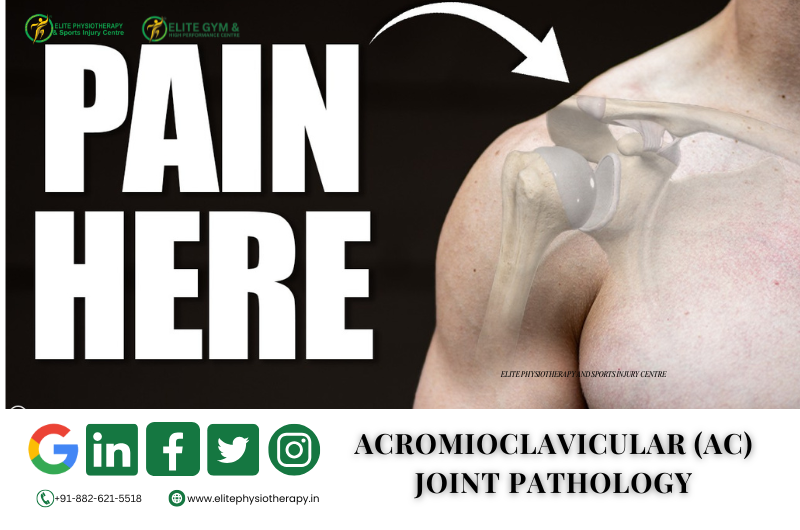
Shoulder Pain : Acromioclavicular (AC) Joint Pathology

Introduction

  • One of the body’s complex and dynamic joints is the shoulder. The Acromioclavicular (AC) joint is one of its structures that is essential for upper limb mobility and shoulder stability. Pain, weakness, and functional limitations may result from damage or degeneration to this joint, particularly in athletes and active people.
  • At Elite Physiotherapy & Sports Injury Centre, we specialize in the evaluation and treatment of AC joint disorders using cutting-edge physiotherapy modalities and evidence-based methods for a quicker and more long-lasting recovery.

What Is the AC Joint?

  • The clavicle and acromion, a portion of the scapula, are joined by the AC joint. During arm elevation, it permits regulated movement between the clavicle and scapula. The acromioclavicular and coracoclavicular ligaments support and stabilize the joint.
  • AC joint pathology, which includes inflammation, instability, and arthritis, can result from damage or degeneration of this joint.

Causes of AC Joint Pathology

  • Direct trauma to the shoulder, often from a fall or sports injury.
  • Repetitive overhead activities, seen in athletes such as weightlifters or throwers.
  • Degenerative changes due to aging or repetitive stress.
  • Postural imbalance and muscular dysfunction leading to altered biomechanics.
  • Previous dislocation or sprain that causes chronic instability.

Clinical Features / Symptoms

  1. Pain over the top of the shoulder.
  2. Palpable tenderness in the AC joint.
  3. Discomfort when doing cross-body or overhead motions.
  4. Deformity or swelling close to the joint.
  5. Weakness when it comes to pushing or lifting.
  6. Limited range of motion in the shoulder.

Physiotherapy Assessment and Special Tests

  1. Cross-Body Adduction Test – The therapist moves the arm across the body; pain over the AC joint indicates injury.
  2. AC Shear Test – Compression applied between the clavicle and scapula reproduces pain if the joint is involved.
  3. O’Brien’s Test – Differentiates AC joint pain from labral injuries.

Physiotherapy Management at Elite Physiotherapy and Sports Injury Centre

1. Pain and Inflammation Control

  1. Cryotherapy for inflammation control.
  2. Rest and avoidance of aggravating movements.
  3. Taping or support brace for stabilization.

2. Manual Therapy

  • Joint mobilization to improve AC and scapulothoracic rhythm.
  • Soft tissue release for upper trapezius, deltoid, and pectoralis tightness.
  • Scapular stabilization training to regain proper movement patterns.

3. Strengthening and Functional Training

  1. Rotator cuff and scapular stabilizers (serratus anterior, lower trapezius).
  2. Closed kinetic chain exercises to enhance joint control.
  3. Proprioceptive and neuromuscular retraining for shoulder stability.
  4. Functional drills to prepare athletes for sport-specific demands.

4. Postural and Biomechanical Correction

  • Stretching of tight muscles (pectoralis major/minor).
  • Strengthening of weak muscles (rhomboids, mid-trapezius).
  • Ergonomic advice for daily and sports activities.

5. Advanced Physiotherapy Modalities at Elite Physiotherapy

  1. Shock Wave Therapy
  2. Super Inductive System (SIS)
  3. High-Intensity Laser Therapy
  4. Dry Needling and Cupping

6. Rehabilitation and Return to Activity

  • A safe return to everyday or athletic activity is ensured by a gradual increase of mobility, strength, and functional exercises. To improve performance and stop recurrence, athletes undergo rehabilitation strategies tailored to their particular sport.

When to Seek Professional Help

  • Immediate physiotherapy evaluation is necessary if shoulder pain persists, lifting is difficult, or there is a noticeable deformity over the joint. Early intervention guarantees the best possible outcome and avoids long-term issues.

Conclusion

  • If left untreated, acromioclavicular joint disease can have a major impact on daily functioning and sports performance. Every treatment plan at Elite Physiotherapy and Sports Injury Centre is tailored following a thorough biomechanical evaluation. We strive for a quicker, safer, and more durable recovery by utilizing cutting-edge modalities and contemporary physiotherapy procedures.
  • One session at a time, let’s restore your shoulder’s strength and range of motion. Your shoulder requires professional attention.

Shoulder Pain: Shoulder Impingement Syndrome

What is Shoulder Impingement Syndrome?

Shoulder Impingement Syndrome occurs when the tendons or bursa within the shoulder joint are compressed during arm movement. Pain, inflammation, and limited motion are the results of this compression. Among athletes and active people, it is one of the most frequent causes of shoulder pain.

We specialize in treating shoulder impingement at Elite Physiotherapy and Sports Injury Centre using cutting-edge evaluation methods and contemporary physiotherapy treatments for a quicker recovery.

Causes of Shoulder Impingement

  1. Overuse from weightlifting, badminton, or swimming
  2. Shoulder rounding due to poor posture
  3. Weak scapular or rotator cuff muscles
  4. The subacromial space’s structural constriction
  5. Inappropriate lifting methods or biomechanics

Clinical Features and Symptoms

  • Severe pain when moving overhead
  • Sleeping on the afflicted side causes pain.
  • Weakness in reaching or lifting
  • A clicking or snagging feeling in the shoulder
  • Restricted range of motion in the shoulder

Diagnosis and Physiotherapy Assessment

A thorough clinical examination aids identification of impingement. Elite Physiotherapy’s physiotherapists conduct a thorough shoulder evaluation that includes:

  • Observation: Verifying muscular symmetry, scapular alignment, and posture
  • Palpation: Finding pain in the subacromial or rotator cuff area
  • Range of Motion (ROM): Evaluating shoulder mobility, both active and passive

Special Physiotherapy Tests

  1. Neer Impingement Test:
  2. Hawkins-Kennedy Test:
  3. Painful Arc Test:
  4. Empty Can Test:

Physiotherapy Management at Elite Physiotherapy and Sports Injury Centre

When treating Shoulder Impingement Syndrome, physiotherapy is essential. Pain relief, mobility restoration, and shoulder complex strengthening are the main goals of treatment at Elite Physiotherapy.

1. Pain and Inflammation Control

  • Shock Wave Therapy: Promotes healing in the rotator cuff tendons and aids in the breakdown of calcific deposits.
  • Super Inductive System (SIS): Uses high-intensity electromagnetic fields to induce deep muscle activation and modulate pain. It significantly lowers inflammation and speeds up tissue repair.
  • High-Intensity Laser Therapy (HILT): Deep tissue heating and cellular regeneration are two benefits of High-Intensity Laser Therapy (HILT). It quickly lessens pain and improves blood flow.
  • Dry needling: Eases tension in the muscles surrounding the shoulder and scapula and relieves myofascial trigger points.
  • Cupping therapyIncreases tissue mobility, decreases adhesions, and improves local blood circulation.

2. Manual Therapy and Joint Mobilization

Soft tissue techniques and joint mobilizations are used once pain has been managed.
To restore mobility, physiotherapists execute inferior and posterior glides of the glenohumeral joint.
Techniques for myofascial release and scapular stability are used to reduce tension and enhance movement patterns.

3. Strengthening Phase

  • External and internal rotations with resistance bands
  • Scapular retraction and depression drills
  • Prone Y, T, and W exercises for scapular stability
  • Closed-chain strengthening for shoulder control

4. Postural Correction and Biomechanical Training

A crucial component of rehabilitation is postural reeducation.
We concentrate on scapular alignment, thoracic extension mobility, and ergonomic adjustments for desk workers and athletes.
Athletes frequently employ video analysis and corrective exercises to maximize their movement patterns.

5. Functional and Sport-Specific Rehabilitation

Sport-specific exercises are incorporated after strength and mobility are restored.
This gives athletes the confidence to resume overhead exercises like lifting, swimming, and throwing.
For full functional rehabilitation, our physiotherapists combine proprioceptive and plyometric training.

Why Choose Elite Physiotherapy and Sports Injury Centre

At Elite Physiotherapy, every shoulder impingement case is evaluated through a detailed biomechanical and functional assessment.
Our treatment blends evidence-based physiotherapy with advanced modalities like Shock Wave, SIS, HILT, Dry Needling, and Cupping for superior results.
We aim for faster, pain-free recovery and safe return to sport and daily activity.

Conclusion

Shoulder Impingement Syndrome can severely affect performance and daily function if not managed properly.
Through precise assessment, modern physiotherapy techniques, and personalized care, Elite Physiotherapy and Sports Injury Centre ensures complete recovery and long-term prevention.

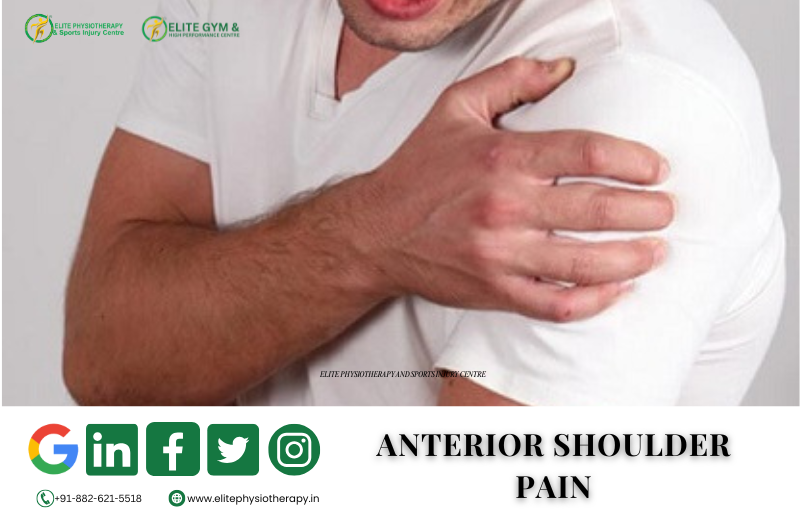
Anterior Shoulder Pain

Pain in the front of the shoulder joint is referred to as anterior shoulder pain. It frequently arises from irritation, inflammation, or damage to the structures surrounding the shoulder capsule, rotator cuff, or biceps tendon. Athletes, exercise fanatics, and even office professionals may experience this pain as a result of bad posture or repetitive strain.

At Elite Physiotherapy and Sports Injury Centre, we regularly treat athletes who suffer from anterior shoulder pain as a result of repetitive tension and muscular imbalance, particularly those who play overhead sports like badminton, swimming, and wrestling.

Causes of Anterior Shoulder Pain

Several musculoskeletal and soft-tissue conditions can lead to pain in the front of the shoulder, such as:

  • Biceps Tendonitis: Inflammation of the long head of the biceps tendon.
  • Subscapularis Tendinopathy: Overuse of the subscapularis muscle that causes discomfort is known as subscapularis tendinopathy.
  • Labral Tear (SLAP lesion): An injury to the superior labrum, where the biceps tendon attaches, is known as a labral tear (SLAP lesion).
  • Shoulder Impingement Syndrome: Compression of soft tissues during arm raising.
  • Acromioclavicular (AC) Joint Pathology: Pain radiating to the anterior aspect is known as acromioclavicular (AC) joint pathology.
  • Postural Dysfunction: Overload is caused by postural dysfunction, which includes a rounded shoulder position and scapular dyskinesia.

Clinical Features

Front shoulder pain, particularly while lifting or performing overhead tasks.

  • Weakness when flexing or rotating inside.
  • A catching or clicking feeling in the shoulder.
  • Nighttime discomfort, particularly when lying on the affected side.

Diagnostic Methods and Examination

A detailed clinical examination is essential for accurate diagnosis. Physiotherapists at Elite Physiotherapy perform a biomechanical assessment, posture analysis, and palpation to locate tenderness.

Special Tests Used:

  1. Speed’s Test: Evaluates the pathophysiology of the biceps tendon.
  2. Yergason’s Test: Verifies the biceps tendon’s integrity.
  3. The Hawkins-Kennedy Test detects impingement.
  4. Lift-Off Test: Identifies weakness in the subscapularis muscle.
  5. O’Brien’s Test: Labral involvement is evaluated using O’Brien’s Test.

Imaging tests like MRIs and ultrasounds are used if necessary to confirm the diagnosis and rule out more serious structural damage.

Physiotherapy Management at Elite Physiotherapy and Sports Injury Centre

At Elite Physiotherapy and Sports Injury Centre, physiotherapists provide personalized and evidence-based treatment for anterior shoulder pain. Our approach focuses on pain relief, restoring mobility, and improving shoulder stability through advanced physiotherapy techniques and modern modalities.

1. Pain Reduction and Inflammation Control

  • Shock Wave Therapy: Promotes tendon repair and breaks down scar tissue.
  • Super Inductive System (SIS):  Uses deep electromagnetic stimulation to improve blood flow and ease tense muscles.
  • High-Intensity Laser Therapy: Effectively reduces inflammation and encourages deep tissue repair.
  • Dry Needling and Cupping Therapy: Tight anterior shoulder muscles can have their knots released and their circulation improved with dry needling and cupping therapy.

2. Manual Therapy and Soft Tissue Mobilization

  • Glenohumeral joint mobilizations help relieve capsular tightness.
  • Myofascial release and trigger point therapy target overactive muscles like the pectoralis major and biceps.

3. Restoring Range of Motion (ROM)

Gentle stretching of the anterior capsule and strengthening of the posterior muscles restore balance.

Exercises include:

  • Pendulum swings
  • Shoulder external rotation with the theraband
  • Sleeper stretch
  • Scapular setting exercises

Progressive ROM work ensures pain-free functional mobility.

4. Strengthening and Stabilization

Rehabilitation focuses on the rotator cuff, scapular stabilizers, and core.
Key exercises include:

  • Resistance band external rotation
  • Prone Y, T, and W exercises
  • Scapular retraction drills
  • Closed-chain stability training (wall push-ups, weight shifts)

These exercises help build strength and prevent recurrence.

5. Neuromuscular Re-education

Retraining the shoulder’s movement pattern is essential once the pain subsides. We assist players in regaining shoulder control and stability during dynamic actions like grappling and throwing by using proprioceptive training and SIS.

6. Return to Sport or Activity

We create rehabilitation plans tailored to certain sports once full strength and mobility have returned. For instance, swimmers prioritize rotator cuff endurance and symmetry, whereas wrestlers concentrate on shoulder stability under load, and cricketers concentrate on overall shoulder integrity

Conclusion

If left untreated, anterior shoulder pain can severely restrict daily and athletic activities. In order to provide quicker, more durable healing, we at Elite Physiotherapy and Sports Injury Centre combine cutting-edge modalities like Shock Wave, SIS, High-Intensity Laser, Dry Needling, and Cupping Therapy with sophisticated diagnostic procedures.

Our individualized treatment programs help you return stronger and pain-free by addressing the underlying biomechanical reasons of your pain.

Visit Elite Physiotherapy and Sports Injury Centre right now for professional assessment and cutting-edge physiotherapy treatment if you’re dealing with chronic shoulder pain.

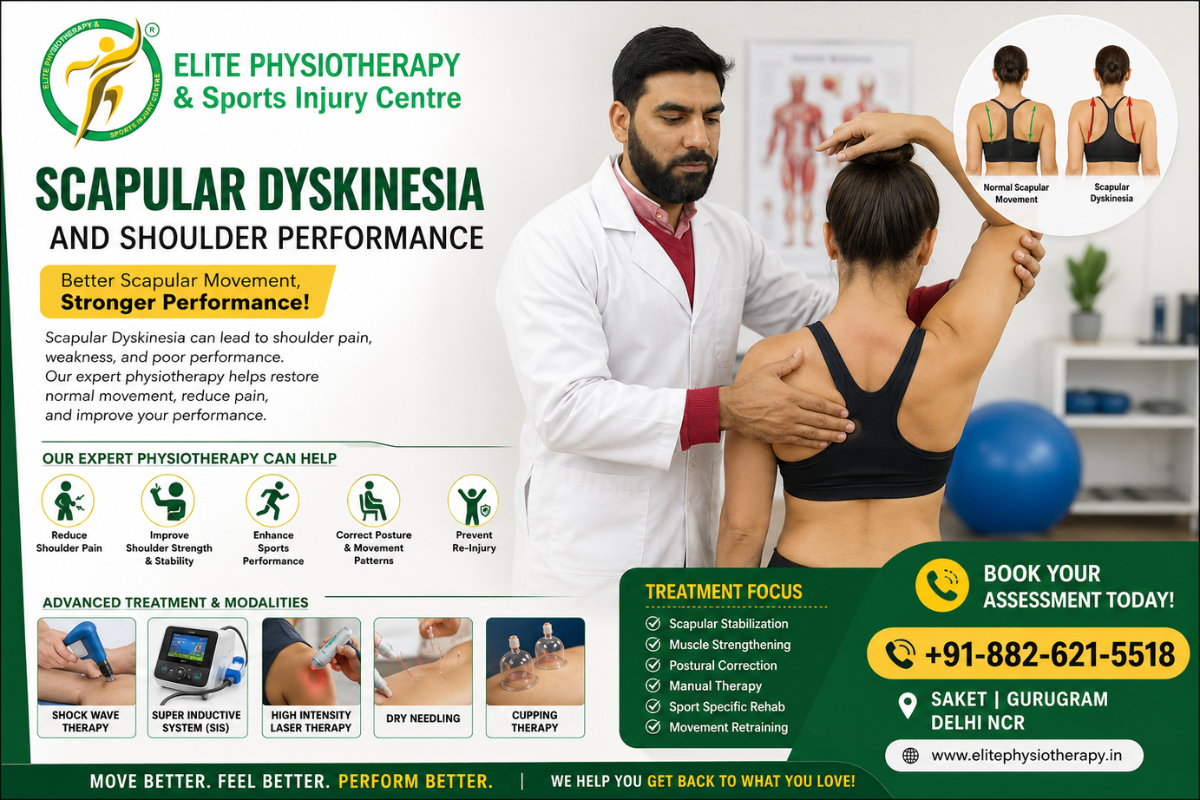
Scapular Dyskinesia: And Advanced Physiotherapy Management

Introduction

Often disregarded, scapular dyskinesia is a major contributor to shoulder pain, dysfunction, and problems with athletic performance. Using thorough evaluations and evidence-based physiotherapy treatments, we at Elite Physiotherapy and Sports Injury Centre are experts at diagnosing and treating this issue. For the best recovery, our clinic uses a combination of manual therapy, functional training, and premium modalities like Class 4 High-Intensity Laser, CRET Therapy, and Super Inductive System (SIS).

What is Scapular Dyskinesia?

When the shoulder blade (scapula) moves abnormally during shoulder motion, it is referred to as scapular dyskinesia. If left unchecked, this abnormal movement can cause pain, decreased mobility, and even rotator cuff damage by upsetting the entire shoulder complex.

Causes of Scapular Dyskinesia

  • Muscle imbalances (tightness or weakness in the rhomboids, trapezius, or serratus anterior)
  • Round shoulders and bad posture
  • Overuse injuries, particularly in sports involving overhead
  • Disorders that impact the spinal accessory nerves or the long thoracic nerve
  • Prior shoulder surgeries or injuries
  • Lack of scapular stability exercises and improper training methods

Signs and Symptoms

  • Visible asymmetry in scapular motion
  • Medial or inferior border prominence during arm movement
  • Shoulder pain, particularly during overhead activity
  • Muscle fatigue and tightness around the neck or upper back
  • Audible clicking or snapping in the scapula
  • Reduced shoulder strength or performance
  • Postural imbalance or winging of the scapula

Clinical Assessment at Elite Physiotherapy

At Elite Physiotherapy and Sports Injury Centre, we prioritize thorough assessment using functional and physical evaluation techniques:

  • We begin with postural inspection to assess static scapular positioning.
  • Dynamic Scapular Movement Tests
    • Scapular Assistance Test (SAT)
    • Scapular Retraction Test (SRT)
    • Wall Push-Up Test
    • Lateral Scapular Slide Test
  • These special tests help us pinpoint scapular dysfunction patterns.
  • We assess the strength and activation of the serratus anterior, trapezius, and rotator cuff muscles.
  • Athlete-specific or daily movement tasks are analyzed using video-assisted feedback for real-time correction.

Personalized Physiotherapy Management

At Elite Physiotherapy, we offer individualized care based on the goals, activity level, and condition of each patient. We don’t employ a phase-based or general strategy. Rather, we use a combination of manual therapy, corrective exercise, and technology-assisted rehabilitation to directly treat the underlying reasons.

1. Manual Therapy

  • Overactive muscles such as the levator scapulae or pectoralis minor might leak soft tissue.
  • Joint mobilizations for the scapulothoracic or thoracic spine
  • Trigger point and myofascial release therapy

2. Neuromuscular Re-Education

  • Training in proprioception to enhance neuromuscular control
  • Using closed-chain scapular control exercises to integrate kinetic chains

3. Corrective Exercise Program

  • Using body weight and elastic resistance to stabilize the scapula
  • Rhomboids, serratus anterior, and lower and middle trapezius strengthening
  • Exercises for correcting posture
  • Using eccentric loading in conjunction with tendon retraining

Why Choose Elite Physiotherapy for Scapular Dyskinesia?

In addition to having cutting-edge modalities, our center is fueled by extensive clinical knowledge. What sets us apart is this:

  • Thorough functional evaluation tailored to sportsmen and busy people
  • Protocols for evidence-based physical therapy that address the underlying problem
  • Sports physiotherapists with experience who have worked in elite rehabilitation
  • Integration of contemporary technology for a quicker and more durable recovery
  • Individualized sessions that guarantee complete focus and customized development

Final Thoughts

If left untreated, scapular dyskinesia can impair shoulder health and sports performance. Our goal at Elite Physiotherapy and Sports Injury Centre is to restore mobility, function, and balance through accurate diagnosis and skilled physiotherapy care. We use cutting-edge technology and individualized treatment to help you heal more quickly, safely, and robustly.

Schedule an evaluation at www.elitephysiotherapy.in right now if you or someone you know suffers from scapular instability or shoulder trouble.

Shoulder Labrum Injury: Physiotherapy Management at Elite Physiotherapy

Introduction

A shoulder labrum injury is a common yet often overlooked condition that can significantly impact shoulder stability, mobility, and performance. Using premium physiotherapy services and cutting-edge methods, we at Elite Physiotherapy and Sports Injury Centre in Delhi and Gurugram provide a thorough, cutting-edge, and individualized approach to treating labral injuries.

What is a Shoulder Labrum Injury?

The fibrocartilaginous rim that surrounds the glenoid shoulder socket is called the labrum. In addition to improving joint stability and deepening the socket, it serves as an anchor point for the biceps tendon and several ligaments. A labral tear, which is injury to this structure, can impair shoulder function, strength, and control.

Labral injuries commonly affect overhead athletes, weightlifters, and active individuals, often resulting from trauma, overuse, or degenerative changes.

Causes of Shoulder Labrum Injuries

For focused treatment, it is essential to comprehend the underlying cause. Typical reasons include:

  • Trauma: Being struck directly in the shoulder or falling on an outstretched arm.
  • Repetitive Overhead Activities: Baseball, swimming, tennis, and volleyball are among the sports that frequently include repetitive overhead activities.
  • Heavy Weight Lifting: Particularly when biomechanics are compromised.
  • Sudden Pulling Forces: A sudden pull on the arm.
  • Shoulder Dislocation: An anterior labrum rupture (Bankart lesion) is frequently the outcome of shoulder dislocation.

Mechanism of Injury

Usually, labral injuries are caused by:

  • Compression Forces: Compression forces include things like hitting the shoulder directly.
  • Torsional Stress: Twisting while the arm is stabilized.
  • Excessive Range of Motion: Excessive range of motion might cause the capsule to extend too much and tear the labrum.

Signs and Symptoms

  1. Deep, vague shoulder pain
  2. Clicking, popping, or grinding sensation
  3. Weakness or fatigue during activity
  4. Loss of range of motion
  5. A feeling of instability or looseness
  6. Pain with overhead movements or lifting

Types of Labrum Tears

  • SLAP Tear (Superior Labrum Anterior to Posterior): Common in athletes; affects the top of the labrum.
  • Bankart Lesion: Involves the anterior-inferior portion; often from dislocations.
  • Posterior Labral Tear: Seen in contact sports or due to repetitive strain.
  • Degenerative Labrum Tear: Often age-related or due to chronic wear and tear.

Diagnosis at Elite Physiotherapy

At Elite Physiotherapy and Sports Injury Centre, we emphasize accurate diagnosis using a combination of:

Physical Assessment

  • Apprehension and Relocation Test: Indicates instability and anterior labrum involvement.
  • O’Brien’s Active Compression Test: Detects SLAP tears.
  • Crank Test: Assesses labral integrity under rotation and compression.
  • Biceps Load Test II: Evaluates SLAP lesion with elbow flexion and resisted supination.

Functional Assessment

  • Evaluation of shoulder biomechanics
  • Scapular movement analysis
  • Postural and muscular imbalances
  • Sport-specific movement evaluation

When is Surgery Required?

Surgery may be considered when:

  • The tear is large and unresponsive to conservative management
  • There is a frequent shoulder dislocation
  • There is severe instability affecting daily and sports activities
  • Associated with significant rotator cuff or biceps tendon pathology
  • No improvement with at least 6–8 weeks of structured physiotherapy

At Elite, we aim to avoid surgery wherever possible by delivering targeted physiotherapy that promotes healing and restoration.

Physiotherapy Management at Elite Physiotherapy

We provide an evidence-based, sport-specific, non-surgical approach tailored to each patient’s lifestyle and athletic goals.

Pain Management

We begin by reducing pain and inflammation using:

  • Cryotherapy: Controlled cold therapy to reduce swelling
  • High-Intensity Class 4 Laser: Speeds up tissue healing and reduces pain
  • Super Inductive System (SIS): Stimulates deep tissue repair through magnetic field therapy

Manual Therapy Techniques

  • Joint Mobilization: To improve glenohumeral mechanics
  • Soft Tissue Mobilization: For surrounding muscles like the rotator cuff, deltoid, and scapular stabilizers
  • Myofascial Release: Enhances circulation and relieves tightness

Advanced Modalities

  • CRET Therapy: Promotes deep tissue healing by improving vascularity and cellular regeneration
  • Shockwave Therapy: Used with caution if coexisting calcific tendonitis is present, and used in case of chronic conditions.
  • Dry Needling and Taping: As needed to support tissue relaxation or stability

Corrective Exercise Prescription

  • Scapular stabilization and control
  • Rotator cuff strengthening
  • Neuromuscular control of the shoulder complex
  • Proprioceptive training
  • Postural correction and ergonomic education

Hydrotherapy

We may incorporate gentle aquatic exercises early in rehab to promote low-impact mobility and strengthening without overloading the joint.

What Makes Elite Physiotherapy Unique?

  • Expert Sports Physiotherapists with experience treating Olympic and national-level athletes
  • State-of-the-art Equipment, including Class 4 Laser, CRET, SIS, and advanced cryo-therapy units
  • Personalized Care with sport-specific rehabilitation goals
  • Detailed Assessment Protocols based on the latest clinical reasoning and hands-on experience
  • Holistic Approach addressing the root cause, not just the symptoms

Conclusion

A shoulder labrum injury can be frustrating and functionally limiting, especially for athletes and active individuals. The right physiotherapy strategy doesn’t just make recovery possible—it maximizes your potential to come back stronger than before.

At Elite Physiotherapy and Sports Injury Centre, we combine clinical expertise, cutting-edge modalities, and athlete-centric care to deliver lasting recovery and enhanced shoulder function.

If you’re experiencing persistent shoulder pain or instability, book your appointment today at www.elitephysiotherapy.in and take the first step towards pain-free, powerful shoulder performance.