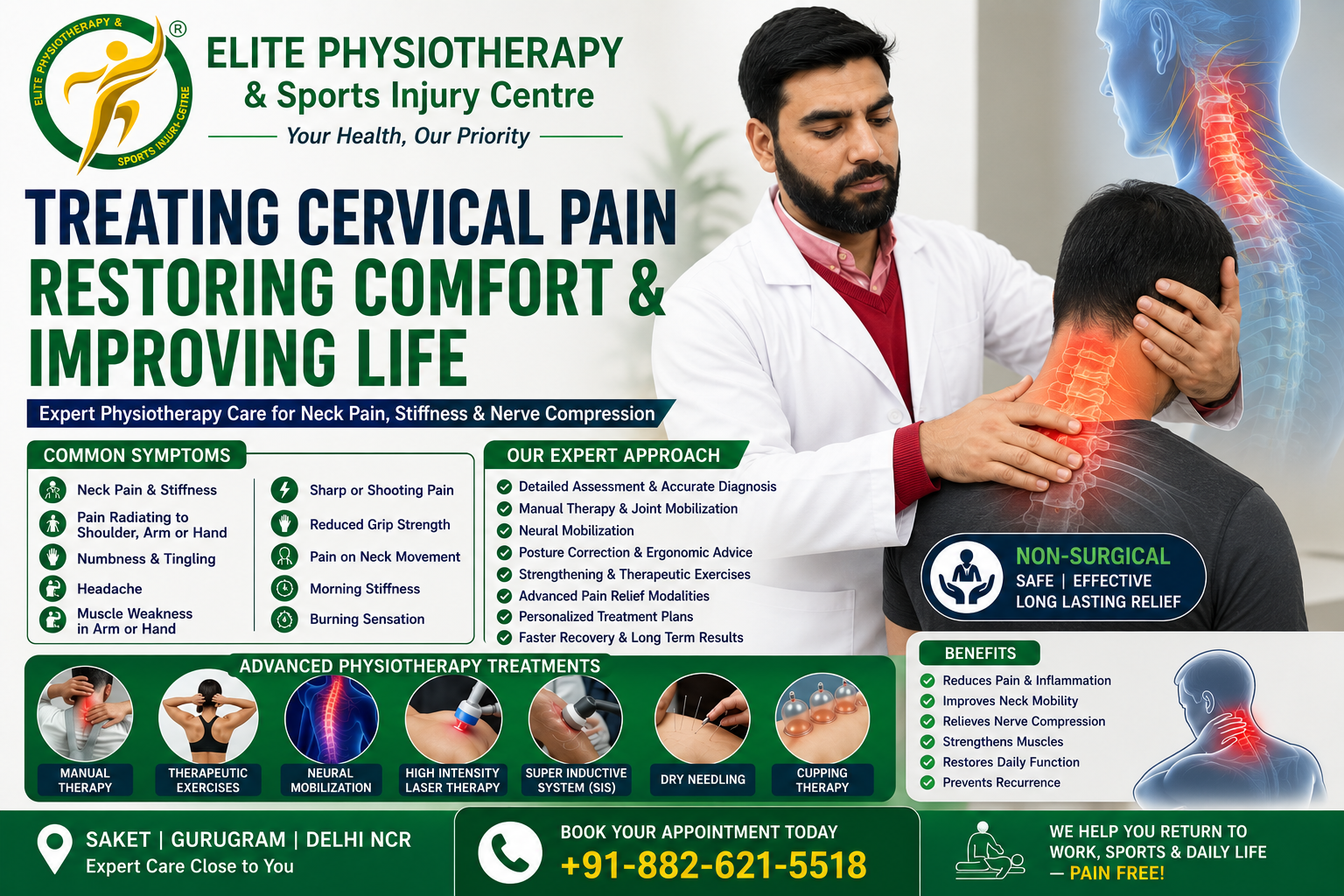
It can be concerning if neck pain extends to the fingers, arm, or shoulder. Fortunately, with the correct care, many people make a full recovery. One of the best non-surgical methods for easing pain, regaining strength, and facilitating a safe return to everyday activities is cervical radiculopathy physiotherapy. Our team at Elite Physiotherapy & Sports Injury Centre offers patients in Delhi NCR evidence-based rehabilitation programs. Whether you’re looking for physiotherapy, physiotherapy Saket, physiotherapy Delhi, premium physiotherapy, or physiotherapy near me, our individualized rehabilitation programs are designed to treat the underlying cause rather than just cover up symptoms.
Physiotherapy, in contrast to short-term pain management techniques, aims to improve spinal mobility, lessen nerve irritation, restore muscular strength, correct posture, and stop further occurrences. Early intervention frequently results in quicker healing.
What is Cervical Radiculopathy?
One or more nerves that exit the cervical spine can become compressed, irritated, or inflamed in cervical radiculopathy. The shoulders, arms, hands, and fingers get these nerves from the neck. Compression disrupts normal nerve function, which can result in pain, tingling, numbness, or weakness in the muscles.
The ailment is frequently referred to as a “pinched nerve in the neck.” Although this explanation is simple to comprehend, the real issue typically involves alterations surrounding the spinal nerve root. These alterations might happen immediately following trauma or prolonged stress, or they can evolve gradually with aging.
Certain parts of the upper limb receive feeling from each cervical nerve root. Additionally, each neuron regulates certain muscles. As a result, symptoms differ according on the level of the damaged nerve.
Excellent results are frequently obtained with cautious treatment. Surgery is only used in some situations where there are severe neurological deficits, compression of the spinal cord, or symptoms that do not go away after extensive rehabilitation.
Understanding the Cervical Spine
Seven vertebrae, numbered C1 through C7, make up the cervical spine. The head is supported by these vertebrae, which also provide an amazing range of mobility. An intervertebral disc, which serves as a shock absorber, is located between the majority of vertebrae.
Important structures include:
Cervical vertebrae
Intervertebral discs
Facet joints
Ligaments
Muscles
Neural foramina are tiny holes through which the spinal nerves emerge. Nerve compression may happen when these holes shrink or when surrounding tissues swell.
Appropriate coordination between muscles, joints, ligaments, and nerves is necessary for healthy movement. Over time, even a small imbalance might put more strain on cervical tissues.
How Cervical Radiculopathy Develops
When there is less room for a nerve root, the ailment typically manifests. The nerve is under more pressure and normal nerve conduction is disrupted when there is less room.
Compression may result from:
Bulging intervertebral discs
Herniated discs
Bone spurs
Degenerative arthritis
Thickened ligaments
Joint inflammation
Traumatic injury
Pain sensitivity is further increased by inflammatory substances secreted near the pinched nerve. As a result, symptoms could last even after the original mechanical compression subsides.
Patients may progressively experience muscle weakness, diminished coordination, and difficulties in daily activities if they are not well managed.
Causes of Cervical Radiculopathy
Cervical Disc Herniation
Cervical Spondylosis
Foraminal Stenosis
Degenerative Disc Disease
Acute Trauma
Poor Posture
Repetitive Occupational Stress
Sports-Related Causes
Signs and Symptoms
Neck pain that radiates into the shoulder, arm, forearm, or hand
Sharp, shooting, or electric shock-like pain
Burning pain along the arm
Tingling sensation (pins and needles)
Numbness in specific fingers
Muscle weakness in the shoulder or arm
Reduced grip strength
Difficulty lifting objects
Pain while turning the head
Increased pain during coughing or sneezing
Morning neck stiffness
Muscle tightness around the neck and shoulder
Reduced cervical range of motion
Arm fatigue during prolonged activities
Difficulty performing overhead work
Reduced hand coordination in severe cases
When Should You Seek Immediate Medical Attention?
Sudden loss of arm strength
Progressive muscle weakness
Difficulty walking
Loss of balance
Problems with bowel or bladder control
Severe trauma
Persistent night pain
Fever with neck pain
Unexplained weight loss
Signs of spinal cord compression
Physiotherapy Management of Cervical Radiculopathy
Pain Management During the Early Stage
Avoid prolonged neck flexion
Avoid repeated overhead activities
Limit heavy lifting temporarily
Maintain gentle neck movement
Avoid complete bed rest
Change posture regularly
Use appropriate neck support during prolonged sitting
Cervical radiculopathy can have a major impact on daily activities, sports, and employment. For the majority of patients, however, early diagnosis and evidence-based physical therapy can result in great outcomes.
Pain is lessened, function is restored, and recurrence is avoided with a thorough rehabilitation program that incorporates patient education, manual therapy, therapeutic exercise, neural mobilization, postural correction, and suitable advanced modalities.
Our team at Elite Physiotherapy & Sports Injury Centre focuses on determining the underlying cause of your symptoms and developing a personalized treatment plan to enable you to resume your regular activities with confidence.