Myths vs Reality: Physiotherapy Truths in India

Introduction

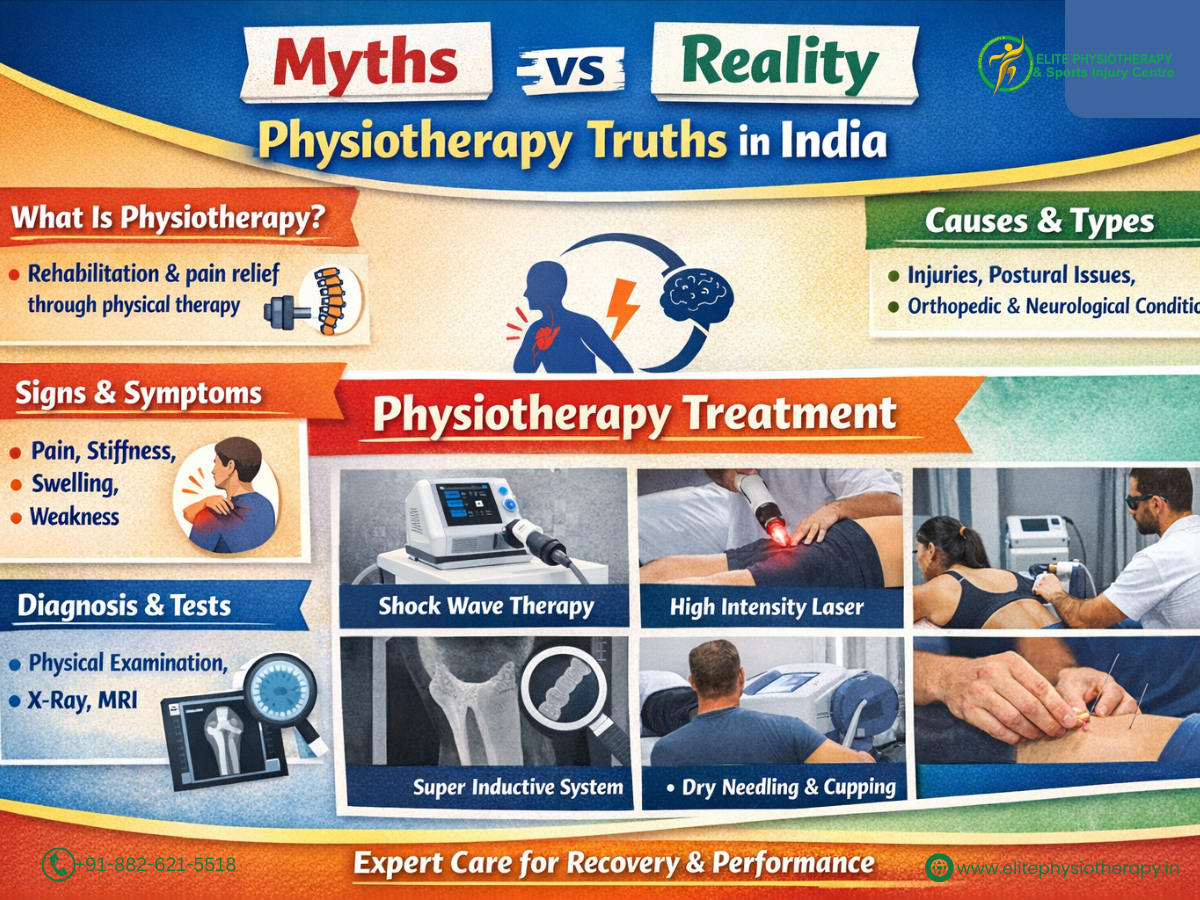
  • In India, physiotherapy is expanding quickly. However, a lot of individuals still hold antiquated beliefs about it. In India, these misconceptions about physical therapy frequently impede healing. Patients endure longer than necessary as a result. Evidence-based treatment is our main priority at Elite Physiotherapy and Sports Injury Centre in Delhi NCR. Our goal is to dispel these misconceptions and encourage quicker healing.
  • Common myths, their causes, and the facts will all be discussed in this article. Additionally, we will discuss advanced physiotherapy management and assessment techniques.

What Are Physiotherapy Myths?

  • False assumptions regarding treatment, recovery, and rehabilitation are known as physiotherapy myths. Through social media, word-of-mouth, and ignorance, these misconceptions proliferate.
  • A common misconception is that physiotherapy consists solely of massage and exercise. Modern physiotherapy, however, is far more sophisticated. It integrates clinical knowledge, science, and technology.

Common Causes of Physiotherapy Myths in India

  • Lack of awareness about modern physiotherapy
  • Dependence on unqualified practitioners
  • Delayed referrals from doctors
  • Cultural beliefs favoring rest over rehab
  • Misleading online information

Common Physiotherapy Myths

  1. Physiotherapy is Only for Pain Relief
  • Many believe physiotherapy is only for pain. In reality, it also improves strength, mobility, and performance.
  1. Complete Rest is Better Than Movement
  • This myth delays healing. Controlled movement actually speeds recovery.
  1. Surgery is the Only Solution
  • Most musculoskeletal problems can be managed conservatively with physiotherapy.
  1. Physiotherapy is Just Exercise
  • Physiotherapy includes manual therapy, electrotherapy, and advanced modalities.
  1. It Takes Too Long to Work
  • With correct diagnosis, recovery is often faster than expected.

Clinical Impact of These Myths

These myths can lead to:

  • Chronic pain conditions
  • Reduced mobility
  • Muscle weakness
  • Delayed recovery
  • Increased risk of surgery

Physiotherapy Management: Evidence-Based Approach

At our clinic in Delhi NCR, we focus on personalized care. Our treatment plans target the root cause, not just symptoms.

  1. Pain Management

We use advanced modalities to reduce pain and inflammation:

  • High Intensity Laser Therapy
  • Shock Wave Therapy
  • Super Inductive System (SIS)
  • Cupping Therapy
  • Dry Needling
  1. Manual Therapy

Manual techniques improve joint mobility and reduce stiffness.

  • Joint mobilization
  • Soft tissue release
  • Myofascial techniques
  1. Exercise Therapy

We design structured programs, including:

  • Strength training
  • Mobility exercises
  • Stability training
  • Sport-specific drills
  1. Functional Rehabilitation

We focus on real-life movements. For athletes, we include:

  • Agility drills
  • Plyometric training
  • Return-to-sport protocols
  1. Posture and Ergonomic Correction

Poor posture is a major cause of pain. We educate patients on:

  • Sitting posture
  • Workstation setup
  • Movement habits
  • Why Choose Elite Physiotherapy in Delhi NCR?
  • If you are searching for physiotherapy, Elite Physiotherapy offers:
    • Expert sports physiotherapy care
    • Advanced technologies like SIS and Laser
    • Personalized rehabilitation plans
    • Faster recovery outcomes

Conclusion

  • Myths about physiotherapy in India can exacerbate symptoms and postpone healing. However, results can be altered with awareness and appropriate care.
  • Pain alleviation is only one aspect of physiotherapy. It is a comprehensive system of rehabilitation. We guarantee precise diagnosis and cutting-edge care at Elite Physiotherapy and Sports Injury Center.
  • Don’t allow falsehoods to dictate how you heal. Recuperate more quickly by selecting evidence-based physical therapy.
Mobility Over Flexibility: The Athlete’s Real Performance Secret

Introduction

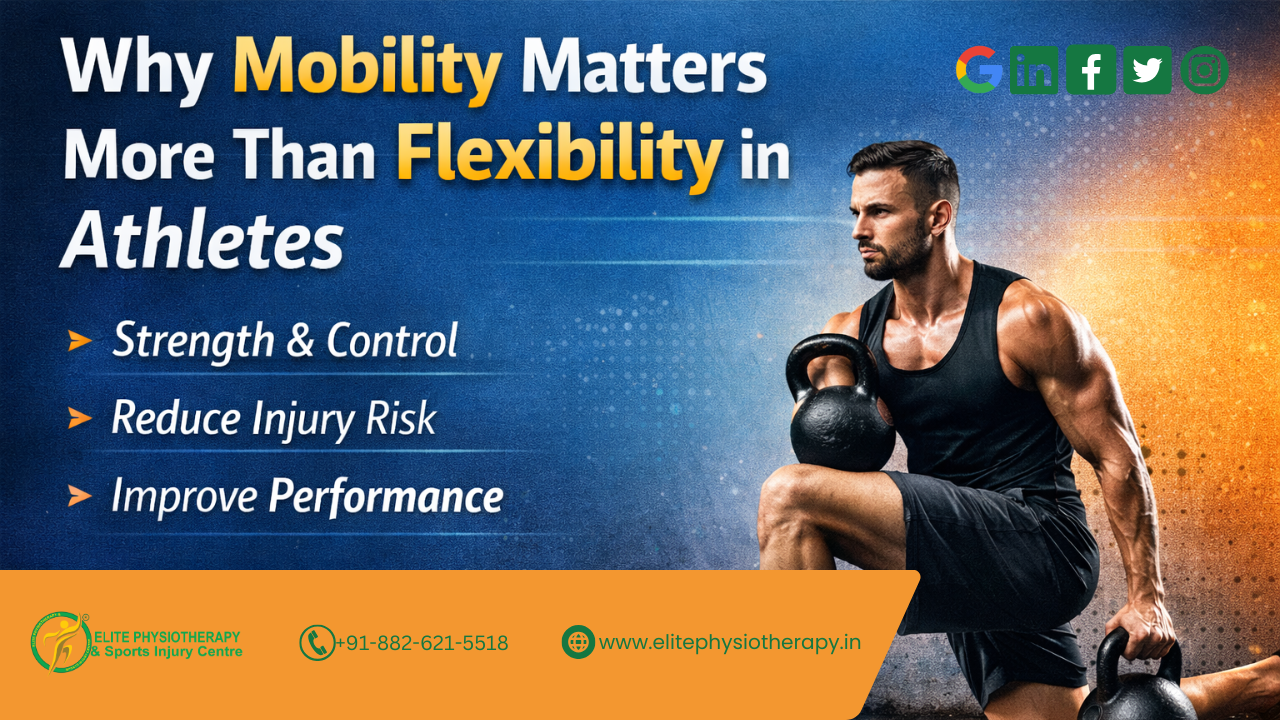
  • Many sportsmen think that flexibility is the only way to avoid injury. Athletic mobility training, however, is more crucial for performance and injury prevention, according to research and clinical experience.
  • Muscle length is a sign of flexibility. Mobility, on the other hand, refers to controlled movement across the entire range of motion. Thus, flexibility, strength, stability, and neuromuscular control are all components of mobility.
  • For athletes, this distinction is vital. If a flexible athlete’s joints lack stability and motor control, they may still sustain injuries.
  • We place a strong emphasis on athletic mobility training at Elite Physiotherapy and Sports Injury Centre in order to improve movement quality, boost performance, and lower injury rates.
  • Our Delhi NCR facility uses cutting-edge sports rehabilitation methods to offer sophisticated physiotherapy solutions. For individualized care, athletes looking for physiotherapy near me, physiotherapy Delhi, or physiotherapy Saket frequently come to our facility.

Understanding Athletic Mobility Training

What is Flexibility?

  • The capacity of muscles to passively lengthen is referred to as flexibility. Flexibility is typically increased via static stretching.
  • But flexibility by itself does not guarantee safe mobility. Excessive flexibility may raise the danger of injury if one lacks strength and control.

What is Mobility?

  • The ability of a joint to actively move through its whole range of motion with strength and control is referred to as mobility.
  • Athletic mobility training integrates:
    • Joint mobility
    • Muscle flexibility
    • Neuromuscular control
    • Stability
    • Functional strength
  • Therefore, mobility improves movement efficiency during sports.

Why Mobility Matters More Than Flexibility in Athletes

1. Mobility Improves Movement Control

  • Athletes must control joint movements during high-speed activities. Mobility training develops this control.

2. Mobility Enhances Strength Production

  • Proper joint positioning allows muscles to produce maximum force.

3. Mobility Reduces Injury Risk

  • Restricted mobility causes compensation patterns. These patterns increase stress on muscles and ligaments.

4. Mobility Improves Sports Performance

  • Athletes require coordinated movement for sprinting, jumping, throwing, and lifting.
  • Therefore, athletic mobility training is essential for optimal performance.

Causes of Poor Mobility in Athletes

  1. Muscle Tightness
  2. Joint Stiffness
  3. Previous Injuries
  4. Poor Movement Patterns
  5. Weak Stabilizing Muscles

Types of Mobility Limitations

  1. Joint Mobility Restriction
    • Capsular tightness limits joint movement.
  2. Muscle Mobility Restriction
    • Muscle stiffness reduces range of motion.
  3. Neural Mobility Restriction
    • Nerve tension may limit movement.
  4. Motor Control Dysfunction
    • The nervous system fails to control movement efficiently.

Clinical Signs of Poor Mobility in Athletes

  1. Limited joint range of motion
  2. Muscle tightness
  3. Recurrent injuries
  4. Poor squat mechanics
  5. Reduced athletic performance
  6. Joint stiffness during warm-up
  7. Pain during sports movements
  • Early identification is important to prevent chronic injuries.

Diagnostic Assessment in Physiotherapy

  • At Elite Physiotherapy and Sports Injury Centre, we perform a comprehensive sports assessment.
  • Our physiotherapy evaluation includes:
    • Postural analysis
    • Functional movement screening ( Squats, Lunges, etc)
    • Joint mobility assessment
    • Muscle flexibility testing
    • Neuromuscular control evaluation

Physiotherapy Management for Mobility Dysfunction

  • At Elite Physiotherapy and Sports Injury Centre, treatment focuses strongly on athletic mobility training and sports rehabilitation.
  • Our physiotherapy Delhi NCR programs are personalized for each athlete.

Mobility Restoration Through Physiotherapy

  1. Manual Therapy
    • Manual therapy restores joint movement.
    • Techniques include:
    • Joint mobilization
    • Soft tissue release
    • Myofascial release
    • These techniques reduce stiffness and restore joint mechanics.
  2. Mobility Exercise Programs
    • Athletes require progressive mobility training.
    • Important exercises include:
    • Dynamic hip mobility drills
    • Thoracic spine rotations
    • Ankle dorsiflexion mobility
    • Deep squat mobility exercises
    • These exercises restore functional movement patterns.
  3. Neuromuscular Control Training
    • Mobility must integrate with stability.
    • Therefore, athletes perform:
    • balance training
    • proprioception drills
    • reactive stability exercises
    • This improves motor control during sports movements.

Advanced Physiotherapy Modalities

  1. Shockwave Therapy
    • reduction of muscle stiffness
    • improved blood circulation
    • faster tissue repair
  2. Super Inductive System (SIS)
    • deep muscle activation
    • improved neuromuscular control
    • enhanced joint mobility
  3. High-Intensity Laser Therapy
    • pain relief
    • inflammation reduction
    • accelerated healing
  4. Dry Needling
    • muscle relaxation
    • improved mobility
    • reduced pain
  5. Cupping Therapy
    • Improve blood flow
    • fascial movement
    • muscle recovery

Performance-Based Rehabilitation

  • Our sports physiotherapy programs include:
    • Mobility drills
    • Strength training
    • Sports-specific movement training
    • Injury prevention programs
  • Athletes regain optimal movement before returning to sports.

Why Choose Elite Physiotherapy and Sports Injury Centre?

  • Athletes across Delhi NCR trust our clinic for professional sports rehabilitation.
  • We provide:
    • advanced sports physiotherapy
    • personalized treatment plans
    • modern rehabilitation equipment
    • athlete-focused mobility training
  • If you are searching for physiotherapy Delhi, physiotherapy Saket, or physiotherapy Gurgaon, visit Elite Physiotherapy and Sports Injury Centre.
  • Our mission is simple:
    Help athletes move better, perform stronger, and stay injury-free.

Common Injuries in Young Athletes & How Physiotherapy Helps

Introduction – Why Young Athlete Injury Physiotherapy Matters

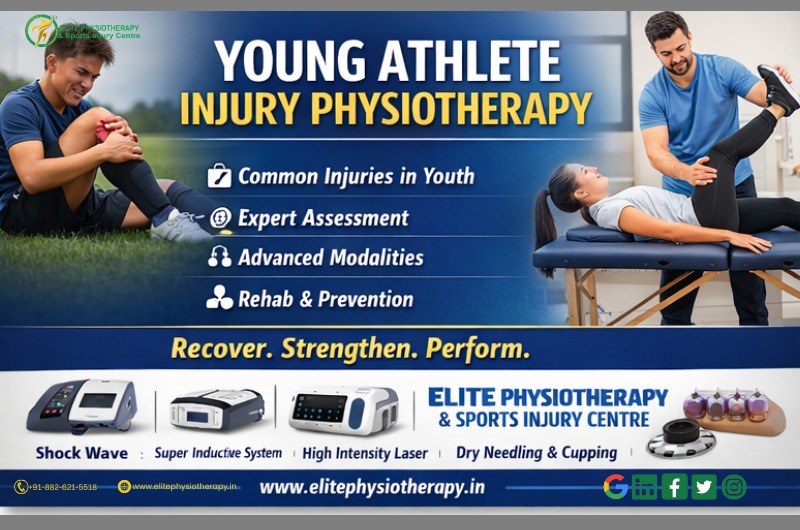
  • The number of young people participating in sports is rising quickly. However, the danger of injury is increased by early specialization and rigorous training. The goals of young athlete injury physical therapy include long-term athletic growth, prevention, and recuperation.
  • We frequently treat players from Delhi NCR’s schools and academies at Elite Physiotherapy and Sports Injury Centre. Many injuries are caused by overload, poor motor control, and insufficient recuperation rather than weakness.
  • Early physiotherapy intervention enhances biomechanics, preserves growth structures, and allows athletes to safely resume sports. For both performance and injury prevention, systematic Young Athlete Injury Physiotherapy becomes crucial.
  • Specialized sports rehabilitation should always come first when parents are looking for physiotherapy near me, physiotherapy Delhi, or physiotherapy Saket.

What Are Common Injuries in Young Athletes?

  • Muscles, ligaments, tendons, and developing bones are all affected by injuries sustained by young sportsmen. During adolescence, growth plates continue to be susceptible. As a result, rather than a single event, repeated stress frequently results in harm.
  • Usually, these injuries take time to heal. Ignoring early symptoms, however, could result in long-term issues.

Types and Classification of Common Youth Sports Injuries

1. Overuse Injuries

  • These occur due to repetitive loading without adequate recovery.
  • Examples include:
    • Osgood–Schlatter disease
    • Sever’s disease
    • Patellar tendinopathy
    • Stress reactions

2. Acute Traumatic Injuries

  • These happen suddenly during sport activity.
  • Examples include:
    • Ankle sprains
    • Wrist injuries
    • Ligament tears
    • Muscle strains

3. Growth Plate Injuries

  • Young bones contain softer cartilage areas. Excess stress can disturb normal growth.

4. Postural and Movement Dysfunction Injuries

  • Poor mechanics increase joint stress and reduce performance efficiency.

Causes Behind Youth Sports Injuries

  • Several contributing factors exist. Usually, injuries result from multiple causes working together.
    • Sudden increase in training volume
    • Early sport specialization
    • Poor warm-up routines
    • Muscle imbalance
    • Weak core stability
    • Improper footwear or equipment
    • Limited recovery and sleep
    • Incorrect technique

Clinical Features and Symptoms

  • Persistent joint pain during activity
  • Swelling or stiffness
  • Reduced range of motion
  • Tenderness near growth areas
  • Limping or altered running pattern
  • Decreased performance
  • Pain after training sessions

Role of Young Athlete Injury Physiotherapy

  • Physiotherapy does more than pain relief. It rebuilds safe movement patterns and athletic confidence.

1. Pain Reduction and Tissue Healing

  • First, therapists protect wounded tissues and manage inflammation. Healing is accelerated by controlled loading without producing stress.

2. Mobility Restoration

  • Performance is limited by joint stiffness. Normal movement is safely restored through manual therapy and guided mobility exercises.

3. Strength Correction

  • Recurrence of injuries is frequently caused by weak stabilizing muscles. Joint protection is enhanced by progressive strengthening.

4. Neuromuscular Control Training

  • Young athletes need to retrain their movements to be more efficient. Drills that focus on balance and coordination enhance body awareness.

5. Sport-Specific Rehabilitation

  • Rehabilitation progresses toward running, agility, and skill training. This ensures safe return to sport.

Advanced Modalities Used at Elite Physiotherapy

Detailed Physiotherapy Treatment Approach

Phase 1 – Protection and Pain Control

  • Therapists reduce load while maintaining gentle mobility. Education prevents harmful movements.

Phase 2 – Mobility and Activation

  • Gradual stretching restores flexibility. Muscle activation exercises rebuild neuromuscular control.

Phase 3 – Strength Development

  • Progressive resistance training targets weak kinetic chain areas. Core stability becomes a major focus.

Phase 4 – Dynamic Control

  • Athletes practice jumping, cutting, and landing mechanics. Movement retraining prevents reinjury.

Phase 5 – Return to Sport

  • Sport-specific drills simulate match situations. Objective testing confirms readiness.
  • This structured approach defines successful Young Athlete Injury Physiotherapy.

Injury Prevention Strategies for Young Athletes

  • Prevention remains the strongest advantage of physiotherapy.
  • Proper warm-up protocols
  • Strength and conditioning programs
  • Load monitoring
  • Flexibility training
  • Recovery planning
  • Technique correction
  • Elite Physiotherapy integrates prevention programs for academies across Delhi NCR.

Why Choose Elite Physiotherapy and Sports Injury Centre?

  • Our clinic combines sports science with clinical expertise.
  • Personalized rehabilitation programs
  • Advanced sports physiotherapy technology
  • Athlete-focused assessment methods
  • Evidence-based treatment protocols
  • Experienced sports physiotherapists
  • If you are searching for physiotherapy Delhi, physiotherapy Saket, or physiotherapy near me, Elite provides specialized youth athlete care.

Conclusion

  • Young athletes require organized recovery rather than just rest. Long-term issues are avoided with early intervention.
  • Long athletic careers, improved performance, and a safe recovery are all guaranteed by young athlete injury physiotherapy.
  • We at Elite Physiotherapy and Sports Injury Centre assist young athletes in Delhi NCR with more intelligent training, quicker recovery, and improved performance.

Soft Tissue Mobilization: The Elite Touch for Muscles & Movement

Healing Begins With Hands

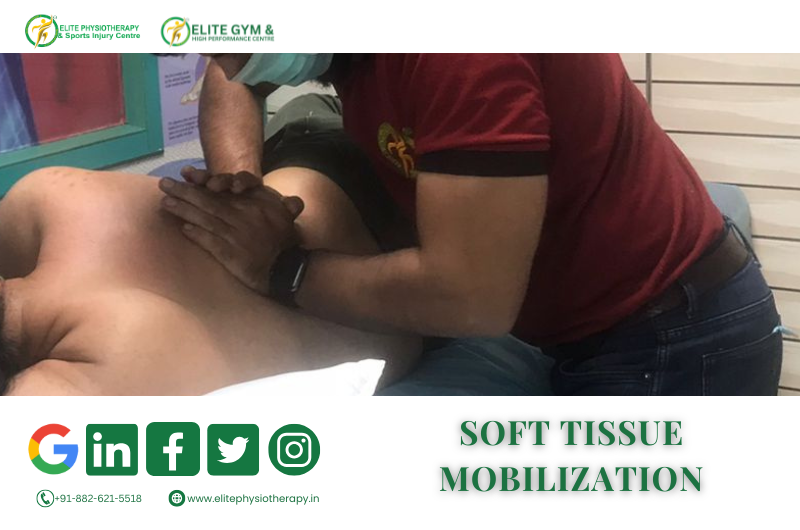
  • A potent manual therapy that works on muscles, fascia, and connective tissues is called soft tissue mobilization, or STM. It promotes healing, increases movement, and reduces discomfort. STM is an essential component of comprehensive rehabilitation at Elite Physiotherapy & Sports Injury Centre.

What is Soft Tissue Mobilization?

  • Our Skillful physiotherapists use movement, stretching, and regulated pressure.
  • Tight muscles are released, scar tissue is broken down, and tissue elasticity is restored.
  • In order to enhance function and lessen discomfort, it focuses on muscles, tendons, ligaments, and fascia.

Why STM Matters in Recovery

  • Soft tissues often tighten after injury, surgery, or overuse.
  • This tightness can reduce motion and cause pain.
  • STM helps by:
    • Breaking down adhesions that limit motion
    • Reducing muscle tension and knots
    • Improving blood flow to injured areas
    • Supporting faster and safer recovery
  • By manually working on soft tissues, we restore normal movement and support functional healing.

Who Benefits From Soft Tissue Mobilization?

  • STM helps many conditions, including:
    • Muscle strains and sprains
    • Post-surgical stiffness
    • Sports injuries with tight muscles
    • Chronic muscle tension
    • Restricted range of motion
  • Athletes and regular people looking for pain treatment and increased mobility make up the clientele of Elite Physiotherapy & Sports Injury Centre. Our strategy is tailored to your injury and objectives.

STM at Elite Physiotherapy: Personalized & Precise

  • At Elite Physiotherapy & Sports Injury Centre, we deliver STM with:
  • Tailored Assessment
    • We begin with a detailed evaluation.
    • This helps us identify exactly where tension, scar tissue, or restricted movement exists.
  • Expert Hands-On Care
    • Our therapists apply precise manual techniques.
    • Pressure and movement are customized to your tissue response and comfort.
  • Integrated Rehabilitation
    • STM is combined with stretching, strengthening, and movement training.
    • This ensures sustained improvement and functional recovery.
  • Advanced Modalities Support
  • Where needed, we pair STM with therapies like:
  • These advanced options accelerate healing and optimize results.⁠

What Happens During an STM Session?

  • A typical session includes:
  • Warm-up & Evaluation
    • The therapist feels tissue response and muscle behaviour.
  • Targeted Manual Release
    • Precise hands-on techniques soften knots and adhesions.
  • Movement & Stretching
    • Guided movement to reinforce tissue change.
  • Functional Integration
    • Muscles are retrained with corrective and strengthening tasks.
  • This structured approach ensures faster gains and lasting change.

Why Choose Elite Physiotherapy & Sports Injury Centre?

  • In India, Elite Physiotherapy has led the way in comprehensive rehabilitation.
  • To accomplish outcome-driven healing, we combine scientific accuracy with compassionate care.
  • Here’s what sets us apart:
    • Personalized plans based on clinical assessment
    • Expert therapists experienced in sports and orthopaedics
    • Combined manual therapies and modern modalities
    • Seamless care across clinics and home visits
    • Rehabilitation for athletes, professionals, and everyday people
    • Commitment to movement, mobility, and recovery

STM: Results You Can Feel

  • Reduced pain
  • Improved mobility
  • Better muscle performance
  • Faster recovery
  • Enhanced athletic output
  • With consistent STM and guided exercises, everyday tasks and sports movement become easier and pain-free.

Conclusion: A Soft Tissue Revolution at Elite

  • Soft Tissue Mobilization is more than a massage.
  • It is a therapeutic cornerstone that prepares your tissues for mobility, strength, and performance.
  • At Elite Physiotherapy & Sports Injury Centre, STM is thoughtfully applied as part of a complete recovery system.
  • Your body deserves the elite advantage – start your healing today.

Preventive Physiotherapy for Athletes: A Comprehensive Guide

Introduction

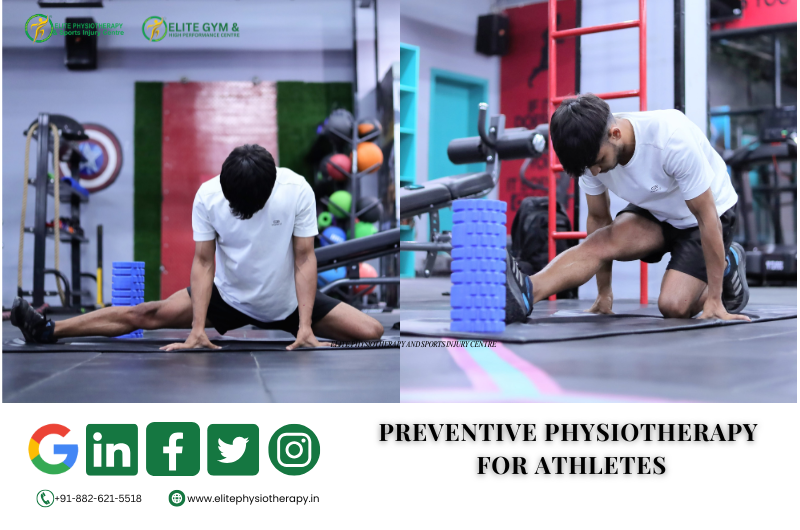
  • Although athletes put in a lot of training, prevention frequently triumphs over treatment. Preventive physiotherapy enhances performance while lowering the chance of injury. We at Elite Physiotherapy & Sports Injury Centre support a proactive, all-encompassing strategy. Our mission is to help athletes maximize lifespan, prevent downtime, and maintain optimal fitness.

Why Preventive Physiotherapy Matters

Reduces Injury Risk

  • Preventive physiotherapy identifies imbalance, weakness, and mobility restrictions. By addressing them, athletes avoid overuse injuries or sudden trauma.

Enhances Performance

  • With targeted exercises and correct movement patterns, athletes improve strength, power, and agility. This leads to better sport-specific performance.

Speeds Recovery

  • Even before an injury happens, preventive techniques boost tissue resilience. Thus, if microtrauma occurs, recovery is faster and more efficient.

Promotes Longevity

  • A body conditioned through prevention ages better. Athletes can sustain high-level training longer and with fewer setbacks.

Holistic Wellness

  • Preventive physiotherapy is not just physical. It also supports mental well-being, as reduced injury anxiety lets athletes focus more on training.

Core Pillars of Preventive Physiotherapy

  • At Elite Physiotherapy, we base our preventive programs on several foundational pillars:

Assessment & Screening

  • We start with a thorough evaluation of the musculoskeletal system.
  • We check for joint stability, postural problems, and movement dysfunction.
  • We can identify risk regions early with the use of functional movement testing.

Biomechanical Correction

  • We employ corrective exercises and manual treatment.
  • To lessen negative compensations, we retrain movement patterns.
  • For sport-specific requirements, we concentrate on alignment, balance, and stability.

Strength & Conditioning

  • Strength training specific to the athlete’s sport is what we recommend.
  • To prevent overuse injuries, we distribute the strain throughout our muscles.
  • We incorporate exercises for flexibility, core stability, and plyometrics.

Neuromuscular Training

  • We focus on coordination and proprioception.
  • We employ exercises such as reactive tasks, agility ladder, and single-leg balance.
  • These exercises enhance joint control under pressure unique to a particular sport.

Flexibility & Mobility

  • Maintaining joint health requires regular mobility exercises.
  • We employ manual therapy, foam rolling, and dynamic stretching.
  • This flexibility reduces the possibility of sprains and strains.

Recovery & Load Management

  • We teach athletes how to recover, rest, and sleep.
  • We use objective measures and felt exertion to track training loads.
  • To avoid overload, we facilitate transitions between training phases.

High-End Modalities

  • At Elite, we leverage advanced tools like Super Inductive System (SIS), Class IV Laser, and Extracorporeal Shockwave Therapy.
  • These modalities enhance tissue health, boost recovery, and reduce micro-injury risk.

Sport-Specific Training

  • We create training exercises that replicate the demands of sports.
  • We combine neuromuscular work, strength training, and conditioning.
  • This guarantees a direct correlation between training and competition performance.

Education & Behavior Change

  • We instruct athletes on how to properly warm up, cool down, and take care of themselves.
  • We advise them to pay attention to their bodies and report any early discomfort.
  • We develop behaviors that promote long-term health and injury prevention.

Preventive Physiotherapy in Action: Elite’s Approach

  • At Elite Physiotherapy & Sports Injury Centre, our preventive physiotherapy program for athletes includes the following:
  1. Initial Consultation: We evaluate past injuries, weaknesses, and biomechanics.
  2. Tailored Program: We develop a strategy that incorporates neuromuscular, strength, and mobility training.
  3. Modern Tools: We employ shockwave therapy, high-intensity lasers, SIS, and more.
  4. On-Field Simulation: During physiotherapy sessions, we use drills tailored to particular sports.
  5. Frequent Re-Evaluation: We review and modify the plan every eight to twelve weeks.
  6. Education Workshops: We conduct workshops on self-monitoring, load management, recuperation, and warm-ups.

Real-World Benefits for Athletes

Fewer Downtime Days

  • Athletes who follow preventive physiotherapy sustain fewer injuries. Thus, they stay in the game.

Better Consistency

  • With fewer injuries and better load management, training consistency improves. This directly boosts performance.

Confidence & Mental Strength

  • When athletes know they have a support system, they feel more confident in pushing their limits.

Sustainable Career

  • Preventive care helps build resilience. This supports longer careers and peak performance even in later years.

Who Should Consider Preventive Physiotherapy

  • Preventive physical therapy is beneficial for:
  • Professional athletes who work out every day
  • Recreational athletes who want to reduce their risk of injury
  • Young athletes learning the fundamentals of movement
  • Athletes returning to sports who wish to prevent re-injury
  • Anyone with a history of musculoskeletal problems or overuse

Tips for Athletes to Maximize Prevention

  1. Warm-up smart: Always start with a quality, dynamic warm-up.
  2. Balance your training: Don’t ignore mobility or neuromuscular work.
  3. Prioritize rest: Sleep and recovery are your best injury prevention tools.
  4. Be consistent: Preventive exercises are not one-time—they must be regular.
  5. Seek expert help: Consult a physiotherapist for personalized advice.
  6. Use recovery modalities: Consider using SIS, laser, or other advanced tools.
  7. Track load: Use training logs or wearable data to monitor stress.

Why Choose Elite Physiotherapy & Sports Injury Centre

  • From “injury to peak performance,” our approach to recovery is comprehensive.
  • Strength, conditioning, and sport-specific training are all offered at our Sports Performance Center.
  • We provide cutting-edge treatments like hydrotherapy, shockwave, Class-IV laser, and SIS.
  • Experienced sports physiotherapists committed to performance, recuperation, and prevention make up our team.
  • We prioritize long-term athlete wellness over rehabilitation.

Conclusion

  • For athletes who wish to succeed, preventive physiotherapy is a need, not a luxury. You create a robust, high-performing body by integrating evaluation, biomechanical correction, strength training, neuromuscular work, and state-of-the-art modalities. To safeguard your current and future on the field, we at Elite Physiotherapy & Sports Injury Centre combine science, expertise, and passion. Invest in prevention now to ensure that you perform at your best tomorrow.

Fixed Flexion Deformity Explained: What Stops Your Joint from Straightening?

Introduction

A painful joint disorder that impairs functional mobility, particularly in athletes and active people, is called fixed flexion deformity (FFD). Using cutting-edge tools and customized rehabilitation plans, we at Elite Physiotherapy and Sports Injury Centre are experts in the thorough and sophisticated physiotherapy care of FFD. Our method restores range of motion and improves quality of life by combining advanced modalities with comprehensive functional evaluations.

What Is Fixed Flexion Deformity?

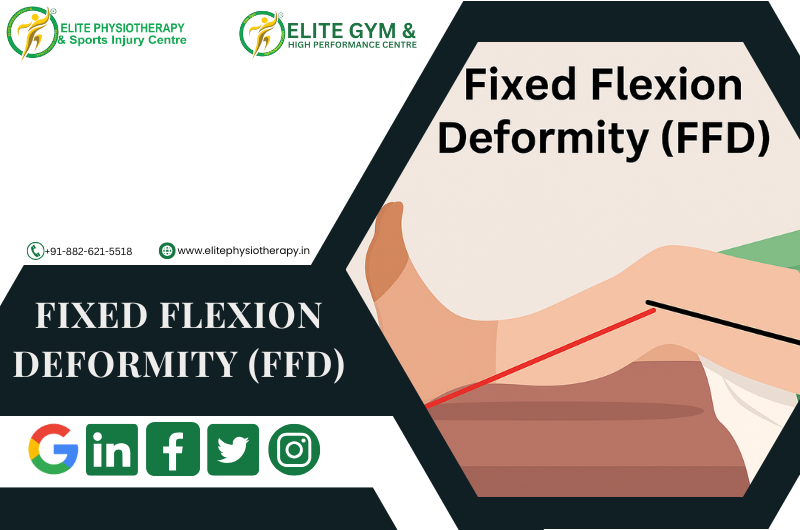
Fixed Flexion occurs when soft tissue or bone limitations prevent a joint, especially the knee or elbow, from being fully extended. This condition is referred to as Fixed Flexion Deformity. Even with outside help, the joint in this situation cannot fully extend and stays in a partially flexed position.

Causes of Fixed Flexion Deformity

  • Prolonged joint immobilization (post-injury or surgery)
  • Muscle imbalances or tightness, especially hamstring or biceps contractures
  • Joint effusion or intra-articular swelling
  • Fibrosis or adhesions in periarticular structures
  • Post-traumatic arthritis or osteoarthritis
  • Neurological disorders causing spasticity or contractures
  • Congenital conditions or developmental joint abnormalities

Usually, FFD develops gradually. For example, if the joint is kept in a flexed position for a long period of time following an injury, the soft tissues will adapt by shortening. Extension is limited throughout time by fibrotic alterations in the muscles, ligaments, and joint capsules. Incomplete healing or inadequate rehabilitation can also make the illness worse.

Clinical Features and Symptoms

  • Unable to completely straighten the affected joint
  • Stiffness in the joints, particularly after rest or in the morning
  • Pain or discomfort when exercising or lifting weights
  • Functional restriction,s whether it comes to lifting, running, or walking
  • Changes in the lower limb FFD gait pattern
  • Muscle atrophy brought on by inactivity
  • Joint malformation that is visible in more advanced cases

Diagnosis at Elite Physiotherapy and Sports Injury Centre

Effective therapy at our clinic is based on a precise diagnosis. For every patient, we employ a mix of functional and physical evaluations.

Physical Assessment Includes:

  • Active and passive range of motion are measured goniometrically.
  • Checking for fibrosis, tightness, and tenderness
  • Muscle testing by hand to detect imbalances or weakness
  • Assessment of joint play to determine capsular limitations

Special Physiotherapy Tests:

Advanced Physiotherapy Management at Elite Physiotherapy

At Elite Physiotherapy, our Team is committed to treating the underlying cause rather than just the symptoms. To deliver safe and efficient care, we integrate functional rehabilitation, manual therapy, and state-of-the-art modalities.

1. Manual Therapy Techniques

  • Myofascial release to target soft tissue restrictions
  • Joint mobilization to improve capsular elasticity
  • Soft tissue manipulation for fibrosis breakdown
  • Muscle energy techniques to lengthen shortened muscles

2. Stretching and Mobility Exercises

  • Prolonged low-load static stretching using positioning aids
  • Active-assisted and passive stretching exercises
  • Functional movement training to integrate improved ROM
  • Proprioceptive neuromuscular facilitation (PNF) for neuromuscular control

3. Strengthening Exercises

  • Isometric and eccentric strengthening for antagonist muscles
  • Closed-chain exercises to improve joint stability
  • Functional retraining to restore gait or upper limb function

4. High-End Modalities for FFD Management

CRET Therapy (Capacitive and Resistive Electric Transfer)

  • Promotes deep tissue heating
  • Reduces fibrosis and improves elasticity
  • Enhances cellular metabolism and tissue regeneration

Super Inductive System (SIS)

  • Stimulates neuromuscular activation
  • Breaks pain-spasm-pain cycle
  • Improves joint mobility and motor control

High-Intensity Class 4 Laser Therapy

  • Penetrates deep tissues to reduce inflammation and fibrosis
  • Stimulates collagen remodeling
  • Accelerates healing of soft tissue structures

Shockwave Therapy (if fibrosis is present)

  • Used carefully in chronic cases with soft tissue calcifications
  • Stimulates neovascularization and tissue regeneration
  • Breaks down adhesions and scar tissue

Hydrotherapy

  • Useful for early mobility training in chronic FFD
  • Reduces joint loading while promoting ROM
  • Aids in functional muscle activation

Personalized Care at Elite Physiotherapy

We are aware that each patient is unique. Our FFD treatment regimens are therefore completely tailored and modified following goals, progress, and response. We guarantee the following at Elite Physiotherapy and Sports Injury Centre:

  • Individualized care from skilled physiotherapists
  • Frequent monitoring of functional progress
  • Resolving the contributing biomechanical issues
  • Support for athletic and ergonomic training
  • Exercise regimen at home with professional supervision

When to Seek Help

Consult us right away if you observe a gradual loss of extension or joint stiffness that doesn’t go away with rest. Early intervention lowers the chance of lifelong malformation and greatly improves results.

Final Thoughts

Fixed Flexion Deformity restricts performance, confidence, and independence in addition to affecting joints. Elite Physiotherapy & Sports Injury Centre enables patients to regain full mobility and resume optimal performance through a targeted, evidence-based, and comprehensive physiotherapy approach. We are the premier option for managing FFD in Delhi and NCR due to our cutting-edge physiotherapy solutions and extensive clinical expertise.

Book your consultation today and take the first step toward a pain-free, mobile future.

In-Season vs Off-Season Physio Care: What Athletes Must Know

Introduction

Physiotherapy is an essential component of your performance cycle, whether you’re a football player in top competition mode or a cricket player preparing for a game. Since sports demands change during the season, so too must your physiotherapy care, according to Elite Physiotherapy and Sports Injury Centre.

This article explains the differences between off-season and in-season physiotherapy and how our clinic’s individualized care guarantees that you’re not only injury-free but also constantly improving.

Why Seasonal Physio Planning Matters

Every stage of an athlete’s year, including pre-season, transition, off-season, and in-season, has its own set of demands on recuperation. Neglecting this may result in:

  • Overtraining-related injuries
  • Persistent exhaustion
  • plateau in performance
  • Poor recovery in between contests

Our seasonally appropriate physiotherapy method aligns your body with your training objectives.

In-Season Physio Care: Precision + Recovery = Performance

Goals of In-Season Physiotherapy:

  • Maintain performance and strength
  • Prevent injuries through regular screening
  • Accelerate recovery between matches
  • Address any acute pains or strains early
  • Ensure optimal joint and muscle mobility

Our In-Season Care Approach Includes:

1. Weekly Functional & Physical Screening:

Early detection of tightness, fatigue, or compensation patterns using special tests (e.g., Y-Balance, hop tests, resisted muscle testing, movement control screens).

2. Recovery Modalities:

We apply high-end physiotherapy tools such as:

3. Sport-Specific Manual Therapy:

Targeted myofascial release, taping, and joint mobilization tailored to specific sports.

4. Match-Ready Activation Sessions:

Pre-game neuromuscular facilitation, agility drills, and serratus/gluteal priming.

5. Education on Load Management:

Athletes learn how to monitor fatigue, hydration, recovery windows, and manage training intensity smartly.

Off-Season Physio Care: Build the Foundation, Fix the Flaws

The off-season is a fantastic time to make changes. At this point, players need to address chronic imbalances, past injuries, and underlying movement inefficiencies.

Goals of Off-Season Physiotherapy:

  • Injury rehabilitation and prevention
  • Mobility and flexibility restoration
  • Strengthening weak links (core, hips, scapula)
  • Functional capacity enhancement
  • Prehab for the upcoming season

Our Off-Season Protocol Includes:

1. Full Body Biomechanical Assessment:

We perform functional movement screens, postural analysis, and gait assessments to detect hidden dysfunctions.

2. Corrective Training + Strength Programs:

Targeted programs are designed to:

  • Improve core stability
  • Restore joint mobility (shoulder, hip, ankle)
  • Build neuromuscular control and symmetry

3. Modalities for Chronic Issues:

  1. CRET (Capacitive-Resistive Energy Transfer) for deep tissue healing
  2. Dry Needling + Electrotherapy for chronic trigger points
  3. Laser + IASTM (Instrument Assisted Soft Tissue Mobilization) for scar remodeling

4. Performance Enhancement Training:

Integration of agility, proprioception, plyometric drills, and sport-specific mechanics.

Prehab is as Crucial as Rehab

Most injuries we see in the in-season have roots in:

  • Poor recovery in off-season
  • Skipping prehab
  • Uncorrected movement dysfunction

That’s why at Elite Physiotherapy, we push the concept of “Prehab Before Play.” Every athlete—elite or amateur—benefits from a structured physiotherapy plan across all seasons.

Why Choose Elite Physiotherapy and Sports Injury Centre

  • Sports-specialized physiotherapists with national & international experience
  • Advanced modalities like Class 4 Laser, CRET, SIS, and Hydrotherapy
  • Tailored athlete-centric protocols
  • Functional and physical assessments based on the latest clinical frameworks
  • Emphasis on holistic recovery: mobility, strength, neuromuscular control, and education

Conclusion: Let Your Physio Plan Match Your Sports Season

Your body isn’t under the same pressure all year, so your physiotherapy shouldn’t be either. Whether you’re defending your title or rebuilding after a tough season, Elite Physiotherapy is your performance partner every step of the way.

TR-Therapy

Revolutionizing Rehabilitation with TR-Therapy

At Elite Physiotherapy and Sports Injury Centre, we take pride in continuing to lead the way in medical innovation by providing innovative treatments that transform recovery and rehabilitation. One of the most cutting-edge techniques we use is TR-Therapy, a novel therapy designed to speed up recovery, lessen discomfort, and increase general mobility. Modern technology and individualized treatment are flawlessly combined in this therapy, guaranteeing each patient receives the best possible outcomes.

What is TR-Therapy?

Targeted Radiofrequency Therapy, or TR-Therapy for short, is a non-invasive therapeutic approach that uses high-frequency electromagnetic energy to encourage deep tissue repair. In contrast to conventional treatments, TR-Therapy induces regulated hyperthermia (deep heating) by penetrating deeply into muscles, ligaments, and connective tissues. Significant pain reduction, enhanced circulation, and a quicker recovery are all made possible by this special mechanism. The versatility of TR-Therapy, which can be utilized with or without thermal effects, makes it ideal for a variety of injuries and medical disorders.

How TR-Therapy Works?

A closer look into TR-Therapy’s process reveals that it uses a combination of ergonomic applicators and sophisticated radiofrequency radiation to give targeted treatment:

  1. Capacitive Mode: This mode concentrates on soft tissues and the skin, targeting superficial tissues. It’s perfect for ailments like small sprains or inflammations that need to be treated at the surface level.
  2. Resistive Mode: The resistive mode targets deeper structures, such as tendons, joints, and muscles. It works especially well for joint stiffness, deep muscle injuries, and persistent pain.
  3. Dynamic Impedance Control: During therapy, a state-of-the-art function called Dynamic Impedance Control continuously analyzes tissue impedance. This guarantees the best possible energy delivery, modifying in real time for optimal efficacy and comfort.

Patients frequently report feeling a calming warmth that eases tension and relaxes muscles during therapy. TR-Therapy’s combination of thermal and physical impacts makes it both fun and effective.

Applications of TR-Therapy at Elite Physiotherapy and Sports Injury Centre

At our center, we include TR-Therapy into all-encompassing treatment programs to address a variety of ailments. Here are a few of the most important uses:

1. Management of Chronic Pain

The quality of life can be greatly impacted by chronic pain, particularly in regions like the shoulders, neck, or lower back. Deep tissue relaxation, a reduction in muscle tension, and long-term pain relief are all benefits of TR-Therapy. For people with ailments like frozen shoulder, cervical spondylosis, or lumbar pain, this makes it a great choice.

2. Improved Muscle Regeneration

Active people and athletes frequently have small tears, overuse injuries, and muscular weariness. TR-Therapy increases oxygen delivery to tissues and circulation, which speeds up muscle recovery. This therapy helps patients return to optimum performance more quickly, whether they are recovering from strenuous training sessions or treating sports-related injuries.

3. Edema and Post-Traumatic Swelling

Edema and swelling can impede the healing process for those recovering from surgery or trauma. The non-thermal application of TR-Therapy efficiently lowers inflammation and encourages lymphatic drainage, which speeds up healing and increases mobility.

4. Myofascial Pain Syndrome

Widespread pain and stiffness can be caused by trigger points in muscles and fascia. TR-Therapy precisely targets these regions, relieving tension and reestablishing regular muscular function. This is particularly helpful for ailments like tennis elbow, IT band dysfunction, and plantar fasciitis.

5. Tendon and Joint Rehabilitation

Rest and rehabilitation must frequently be carefully balanced in cases of joint and tendon injuries. The focused approach of TR-Therapy guarantees efficient therapy without overtaxing the afflicted area. Because of this, it is the preferred treatment for tendinitis, ligament sprains, and arthritis.

Why Choose Elite Physiotherapy and Sports Injury Centre?

Elite Physiotherapy & Sports Injury Centre was founded in 2008 and has been at the forefront of revolutionizing rehabilitation and physiotherapy in India. What sets us apart is this:

  • Holistic Rehabilitation: Our method helps patients get back to their regular activities or sports after receiving therapeutic treatment. We place a strong emphasis on result-oriented healing, making sure that patients not only recover but also perform at their best.
  • Cutting Edge Facilities: We provide our patients with the newest developments in medical technology thanks to our state-of-the-art physiotherapy equipment, which includes TR-Therapy systems.
  • Tailored Care Plans: Each patient at Elite Physiotherapy is given a customized treatment plan based on their unique requirements, objectives, and recovery schedules. To optimize benefits, TR-Therapy is smoothly included into these plans.
  • Sports Physiotherapy Expertise: We have years of expertise treating athletes and active people, and our focus is on improving athletic performance and treating sports injuries.

Experience the Difference

At Elite Physiotherapy and Sports Injury Centre, we combine knowledge, technology, and compassion to provide unmatched care. TR-Therapy is evidence of our dedication to quality and innovation in rehabilitation. TR-Therapy can be extremely beneficial whether you’re trying to improve your athletic performance, manage a chronic illness, or recover from an injury.

Stop by our office today to learn more about how you can include TR-Therapy in your healing process. Allow us to assist you in starting along the path to an active and pain-free life.

Cryotherapy

Cryotherapy: A Modern Approach to Recovery and Healing at Elite Physiotherapy and Sports Injury Centre

We at Elite Physiotherapy and Sports Injury Centre are committed to providing cutting-edge therapies to improve sports performance, manage pain, and speed up recovery. Cryotherapy, a ground-breaking method of wellness and rehabilitation, is one of our cutting-edge treatments. The benefits and science of cryotherapy, including the use of cryoair and cryobaths, are discussed in this article along with how these therapies are included into our treatment plans.

What is Cryotherapy?

Cold treatment, also known as cryotherapy, uses extremely low temperatures to treat patients. This technique has been used for many years to lessen pain, promote healing, and reduce inflammation. By narrowing blood vessels and lowering nerve activity in the afflicted location, cryotherapy helps to reduce swelling and relieve pain.

Cryo baths and cryo air are the two main types of cryotherapy that we use at Elite Physiotherapy. Both approaches work well, and how they are used will rely on the patient’s particular requirements.

Cryo Bath: Submersion Therapy for Full-Body Recovery

Cryo baths, also called ice baths, involve submerging the body (or specific body parts) in cold water, typically maintained between 10°C and 15°C. Many athletes and injury-recovering patients employ this type of hydrotherapy.

Benefits of Cryo Baths:

  1. Reduces Muscle Soreness: After training or competition, athletes frequently choose cryo baths because they are a very effective way to relieve delayed onset muscle soreness (DOMS).
  2. Improves Circulation: The cold water makes blood vessels contract; these vessels then expand as the body temperature returns to normal, increasing blood flow and eliminating waste products from metabolism.
  3. Reduces Inflammation: Cryo baths hasten the healing process by lowering swelling in strained or injured muscles.
  4. Enhances Mental Recovery: The shock of cold water triggers the release of endorphins, elevates mood, and lowers stress levels.

At Elite Physiotherapy, we provide personalized cryo bath treatments to guarantee each patient’s utmost comfort and efficiency. Our cryo baths fulfill your specific needs, whether you are recovering from intense physical activity or a sports injury.

Cryo Air: Targeted Cooling for Precision Therapy

Cryoair therapy targets specific body parts by delivering cooled, dry air through specialized equipment. Without the requirement for submersion in water, the air temperature can drop as low as -30°C to -60°C, producing a powerful cooling effect.

Benefits of Cryo Air Therapy:

  1. Localized Treatment: For sprains, tendinitis, or joint pain, cryo air is perfect for focusing on certain wounds or trouble spots.
  2. Comfortable and Non-Invasive: Patients who are sensitive to cold or wet circumstances may find cryo-air therapy to be a comfortable alternative to ice packs or cryo baths because it does not require direct contact with water.
  3. Fast Recovery: Usually lasting five to fifteen minutes, sessions provide quick results.
  4. Enhances Skin and Tissue Health: The deep cooling promotes the formation of collagen and increases skin suppleness, which is advantageous for the healing process following surgery.

Our cutting-edge cryo-air equipment at Elite Physiotherapy enables accurate temperature control and application, guaranteeing that patients receive the best care possible for their conditions.

Why Choose Cryotherapy at Elite Physiotherapy?

At Elite Physiotherapy and Sports Injury Centre, we provide unmatched care by fusing state-of-the-art technology with our extensive expertise. The purpose of our cryotherapy treatments is to:

  • Accelerate Recovery: Cryotherapy can help you get back to your activities more quickly, whether you’re an athlete or someone who has chronic pain.
  • Enhance Performance: Frequent cryotherapy procedures can maximize general physical performance, decrease weariness, and increase circulation.
  • Personalized Care: After evaluating each patient’s health, we suggest the best cryotherapy technique, whether cryo air, cryo bath, or a combination of the two.

What to Expect During Your Session

Our skilled specialists will walk you through each step of the cryotherapy procedure when you visit Elite Physiotherapy. We make sure the water temperature for cryo baths is both comfortable and efficient, and we modify the time to fit your demands and tolerance. Our professionals apply focused relief using cold air therapy by concentrating on the afflicted area using handheld instruments.

Conclusion

In the fields of sports medicine and rehabilitation, cryotherapy is revolutionary. Elite Physiotherapy and Sports Injury Centre proudly provides this cutting-edge treatment to our patients. Cryotherapy can be a potent complement to your treatment strategy, whether you’re trying to manage chronic pain, recover from an accident, or enhance your athletic performance.

Make an appointment for cryotherapy with us right now to discover the life-changing advantages of cold therapy. Allow us to provide you with the knowledge and attention you need to reach your performance and recovery goals.

Super Inductive System (SIS)

Super Inductive System (SIS): Revolutionizing Physiotherapy at Elite Physiotherapy and Sports Injury Centre

New technologies are changing how injuries are handled and treated in the dynamic field of physiotherapy. The Super Inductive System (SIS), a cutting-edge therapeutic device that blends cutting-edge technology with tried-and-true medical principles to provide unmatched results, is a ground-breaking development. We at Elite Physiotherapy and Sports Injury Centre are proud of being at the forefront of contemporary physiotherapy procedures, and integrating SIS into our practice demonstrates our dedication to giving our patients the finest care possible.

What is the Super Inductive System (SIS)?

The Super Inductive System (SIS) is a noninvasive technology with a wide range of applications that activates neuromuscular structures, improves circulation, and promotes cellular repair. It is an indispensable tool for treating a variety of musculoskeletal conditions. SIS is a revolutionary therapeutic device that uses high-intensity electromagnetic fields to stimulate deep tissue healing and pain relief.

Key Features of SIS:

  1. High-frequency electromagnetic fields: SIS can precisely target tissues since it operates at frequencies between 1 Hz and 150 Hz.
  2. Painless and Non-Invasive: The treatment is completely non-invasive, guaranteeing patient security and comfort.
  3. Versatility: From severe injuries to persistent pain, SIS can treat a wide range of ailments.
  4. Quick Results: After just a few sessions, many patients see a significant improvement.
  5. Customizable Treatments: The system enables therapists to modify treatment plans following each patient’s requirements.

How SIS Works

High-intensity electromagnetic pulses that activate nerve terminals and cause deep muscular spasms are the basis of SIS. These electromagnetic fields are:

  • Boost Blood Circulation: Increased blood flow lowers inflammation and improves tissue healing.
  • Encourage Pain Relief: By interfering with pain signals, electromagnetic waves offer both short-term and long-term pain relief.
  • Promote Bone Healing: SIS is useful in treating osteoporosis and fractures because it promotes osteogenesis.
  • Strengthen Muscles: SIS helps strengthen weak muscles by causing involuntary contractions.

Applications of SIS in Physiotherapy

Elite Physiotherapy and Sports Injury Centre uses The Super Inductive System to treat a variety of ailments, such as:

  1. Chronic Pain: For ailments including fibromyalgia, arthritis, and back pain, SIS offers substantial relief.
  2. Sports Injuries: SIS improves performance and speeds up recovery from sprains, strains, and ligament tears.
  3. Neurological Disorders: The neuromuscular stimulation that SIS provides is beneficial for conditions including paralysis, neuropathy, and spasticity.
  4. Post-Surgical Rehabilitation: SIS reduces the production of scar tissue and promotes a quicker recovery.
  5. Osteoporosis and Bone Fractures: The system is perfect for boosting skeletal health because of its bone-healing capabilities.

Benefits of SIS at Elite Physiotherapy and Sports Injury Centre

To get better results, we at Elite Physiotherapy and Sports Injury Centre have included SIS into our treatment plans. For our patients, SIS is revolutionary for the following reasons:

  • Personalized Care: Every SIS treatment plan is tailored to our patients’ particular need.
  • Faster Recovery: SIS shortens recovery times by boosting the body’s natural healing processes.
  • All-inclusive Solutions: SIS ensures a comprehensive approach to recovery by enhancing other therapy techniques.
  • Expert Guidance:  Our team of skilled physiotherapists has received extensive training on how to optimize the advantages of SIS.

Why Choose Elite Physiotherapy and Sports Injury Centre for SIS Therapy?

One of the most reputable names in cutting-edge physiotherapy care is Elite Physiotherapy and Sports Injury Centre. We guarantee that our patients receive top-notch care by utilizing cutting-edge technology like SIS. We are the go-to place for physiotherapy and sports injury care because of our dedication to quality and patient-centered approach.

Experience the Future of Physiotherapy Today

The Super Inductive System is a revolutionary instrument that expands the potential of physical therapy; it is more than just a technological advancement. Let the professionals at Elite Physiotherapy and Sports Injury Centre use SIS treatment to help you restore your health and vitality if you’re struggling with pain, an injury, or a chronic disease.

For additional information on how the Super Inductive System may support your healing process, get in touch with us right now. Discover the physiotherapy of the future, where compassionate treatment and state-of-the-art technology coexist.