Skip to content
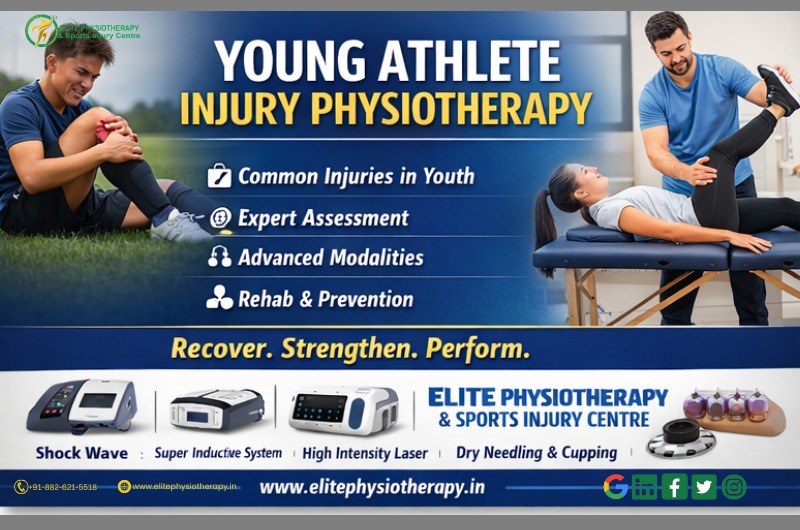
Introduction – Why Young Athlete Injury Physiotherapy Matters
- The number of young people participating in sports is rising quickly. However, the danger of injury is increased by early specialization and rigorous training. The goals of young athlete injury physical therapy include long-term athletic growth, prevention, and recuperation.
- We frequently treat players from Delhi NCR’s schools and academies at Elite Physiotherapy and Sports Injury Centre. Many injuries are caused by overload, poor motor control, and insufficient recuperation rather than weakness.
- Early physiotherapy intervention enhances biomechanics, preserves growth structures, and allows athletes to safely resume sports. For both performance and injury prevention, systematic Young Athlete Injury Physiotherapy becomes crucial.
- Specialized sports rehabilitation should always come first when parents are looking for physiotherapy near me, physiotherapy Delhi, or physiotherapy Saket.
What Are Common Injuries in Young Athletes?
- Muscles, ligaments, tendons, and developing bones are all affected by injuries sustained by young sportsmen. During adolescence, growth plates continue to be susceptible. As a result, rather than a single event, repeated stress frequently results in harm.
- Usually, these injuries take time to heal. Ignoring early symptoms, however, could result in long-term issues.
Types and Classification of Common Youth Sports Injuries
1. Overuse Injuries
- These occur due to repetitive loading without adequate recovery.
- Examples include:
- Osgood–Schlatter disease
- Sever’s disease
- Patellar tendinopathy
- Stress reactions
2. Acute Traumatic Injuries
- These happen suddenly during sport activity.
- Examples include:
- Ankle sprains
- Wrist injuries
- Ligament tears
- Muscle strains
3. Growth Plate Injuries
- Young bones contain softer cartilage areas. Excess stress can disturb normal growth.
4. Postural and Movement Dysfunction Injuries
- Poor mechanics increase joint stress and reduce performance efficiency.
Causes Behind Youth Sports Injuries
- Several contributing factors exist. Usually, injuries result from multiple causes working together.
- Sudden increase in training volume
- Early sport specialization
- Poor warm-up routines
- Muscle imbalance
- Weak core stability
- Improper footwear or equipment
- Limited recovery and sleep
- Incorrect technique
Clinical Features and Symptoms
- Persistent joint pain during activity
- Swelling or stiffness
- Reduced range of motion
- Tenderness near growth areas
- Limping or altered running pattern
- Decreased performance
- Pain after training sessions
Role of Young Athlete Injury Physiotherapy
- Physiotherapy does more than pain relief. It rebuilds safe movement patterns and athletic confidence.
1. Pain Reduction and Tissue Healing
- First, therapists protect wounded tissues and manage inflammation. Healing is accelerated by controlled loading without producing stress.
2. Mobility Restoration
- Performance is limited by joint stiffness. Normal movement is safely restored through manual therapy and guided mobility exercises.
3. Strength Correction
- Recurrence of injuries is frequently caused by weak stabilizing muscles. Joint protection is enhanced by progressive strengthening.
4. Neuromuscular Control Training
- Young athletes need to retrain their movements to be more efficient. Drills that focus on balance and coordination enhance body awareness.
5. Sport-Specific Rehabilitation
- Rehabilitation progresses toward running, agility, and skill training. This ensures safe return to sport.
Advanced Modalities Used at Elite Physiotherapy
Detailed Physiotherapy Treatment Approach
Phase 1 – Protection and Pain Control
- Therapists reduce load while maintaining gentle mobility. Education prevents harmful movements.
Phase 2 – Mobility and Activation
- Gradual stretching restores flexibility. Muscle activation exercises rebuild neuromuscular control.
Phase 3 – Strength Development
- Progressive resistance training targets weak kinetic chain areas. Core stability becomes a major focus.
Phase 4 – Dynamic Control
- Athletes practice jumping, cutting, and landing mechanics. Movement retraining prevents reinjury.
Phase 5 – Return to Sport
- Sport-specific drills simulate match situations. Objective testing confirms readiness.
- This structured approach defines successful Young Athlete Injury Physiotherapy.
Injury Prevention Strategies for Young Athletes
- Prevention remains the strongest advantage of physiotherapy.
- Proper warm-up protocols
- Strength and conditioning programs
- Load monitoring
- Flexibility training
- Recovery planning
- Technique correction
- Elite Physiotherapy integrates prevention programs for academies across Delhi NCR.
Why Choose Elite Physiotherapy and Sports Injury Centre?
- Our clinic combines sports science with clinical expertise.
- Personalized rehabilitation programs
- Advanced sports physiotherapy technology
- Athlete-focused assessment methods
- Evidence-based treatment protocols
- Experienced sports physiotherapists
- If you are searching for physiotherapy Delhi, physiotherapy Saket, or physiotherapy near me, Elite provides specialized youth athlete care.
Conclusion
- Young athletes require organized recovery rather than just rest. Long-term issues are avoided with early intervention.
- Long athletic careers, improved performance, and a safe recovery are all guaranteed by young athlete injury physiotherapy.
- We at Elite Physiotherapy and Sports Injury Centre assist young athletes in Delhi NCR with more intelligent training, quicker recovery, and improved performance.
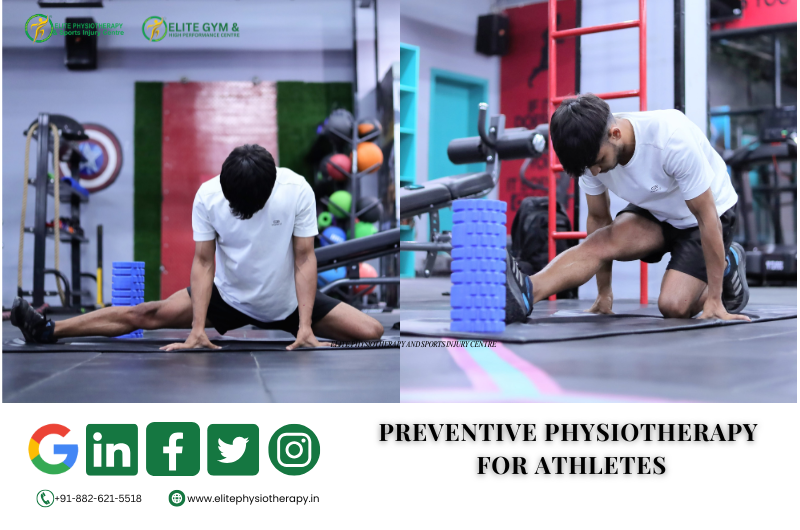
Introduction
- Although athletes put in a lot of training, prevention frequently triumphs over treatment. Preventive physiotherapy enhances performance while lowering the chance of injury. We at Elite Physiotherapy & Sports Injury Centre support a proactive, all-encompassing strategy. Our mission is to help athletes maximize lifespan, prevent downtime, and maintain optimal fitness.
Why Preventive Physiotherapy Matters
Reduces Injury Risk
- Preventive physiotherapy identifies imbalance, weakness, and mobility restrictions. By addressing them, athletes avoid overuse injuries or sudden trauma.
Enhances Performance
- With targeted exercises and correct movement patterns, athletes improve strength, power, and agility. This leads to better sport-specific performance.
Speeds Recovery
- Even before an injury happens, preventive techniques boost tissue resilience. Thus, if microtrauma occurs, recovery is faster and more efficient.
Promotes Longevity
- A body conditioned through prevention ages better. Athletes can sustain high-level training longer and with fewer setbacks.
Holistic Wellness
- Preventive physiotherapy is not just physical. It also supports mental well-being, as reduced injury anxiety lets athletes focus more on training.
Core Pillars of Preventive Physiotherapy
- At Elite Physiotherapy, we base our preventive programs on several foundational pillars:
Assessment & Screening
- We start with a thorough evaluation of the musculoskeletal system.
- We check for joint stability, postural problems, and movement dysfunction.
- We can identify risk regions early with the use of functional movement testing.
Biomechanical Correction
- We employ corrective exercises and manual treatment.
- To lessen negative compensations, we retrain movement patterns.
- For sport-specific requirements, we concentrate on alignment, balance, and stability.
Strength & Conditioning
- Strength training specific to the athlete’s sport is what we recommend.
- To prevent overuse injuries, we distribute the strain throughout our muscles.
- We incorporate exercises for flexibility, core stability, and plyometrics.
Neuromuscular Training
- We focus on coordination and proprioception.
- We employ exercises such as reactive tasks, agility ladder, and single-leg balance.
- These exercises enhance joint control under pressure unique to a particular sport.
Flexibility & Mobility
- Maintaining joint health requires regular mobility exercises.
- We employ manual therapy, foam rolling, and dynamic stretching.
- This flexibility reduces the possibility of sprains and strains.
Recovery & Load Management
- We teach athletes how to recover, rest, and sleep.
- We use objective measures and felt exertion to track training loads.
- To avoid overload, we facilitate transitions between training phases.
High-End Modalities
- At Elite, we leverage advanced tools like Super Inductive System (SIS), Class IV Laser, and Extracorporeal Shockwave Therapy.
- These modalities enhance tissue health, boost recovery, and reduce micro-injury risk.
Sport-Specific Training
- We create training exercises that replicate the demands of sports.
- We combine neuromuscular work, strength training, and conditioning.
- This guarantees a direct correlation between training and competition performance.
Education & Behavior Change
- We instruct athletes on how to properly warm up, cool down, and take care of themselves.
- We advise them to pay attention to their bodies and report any early discomfort.
- We develop behaviors that promote long-term health and injury prevention.
Preventive Physiotherapy in Action: Elite’s Approach
- At Elite Physiotherapy & Sports Injury Centre, our preventive physiotherapy program for athletes includes the following:
- Initial Consultation: We evaluate past injuries, weaknesses, and biomechanics.
- Tailored Program: We develop a strategy that incorporates neuromuscular, strength, and mobility training.
- Modern Tools: We employ shockwave therapy, high-intensity lasers, SIS, and more.
- On-Field Simulation: During physiotherapy sessions, we use drills tailored to particular sports.
- Frequent Re-Evaluation: We review and modify the plan every eight to twelve weeks.
- Education Workshops: We conduct workshops on self-monitoring, load management, recuperation, and warm-ups.
Real-World Benefits for Athletes
Fewer Downtime Days
- Athletes who follow preventive physiotherapy sustain fewer injuries. Thus, they stay in the game.
Better Consistency
- With fewer injuries and better load management, training consistency improves. This directly boosts performance.
Confidence & Mental Strength
- When athletes know they have a support system, they feel more confident in pushing their limits.
Sustainable Career
- Preventive care helps build resilience. This supports longer careers and peak performance even in later years.
Who Should Consider Preventive Physiotherapy
- Preventive physical therapy is beneficial for:
- Professional athletes who work out every day
- Recreational athletes who want to reduce their risk of injury
- Young athletes learning the fundamentals of movement
- Athletes returning to sports who wish to prevent re-injury
- Anyone with a history of musculoskeletal problems or overuse
Tips for Athletes to Maximize Prevention
- Warm-up smart: Always start with a quality, dynamic warm-up.
- Balance your training: Don’t ignore mobility or neuromuscular work.
- Prioritize rest: Sleep and recovery are your best injury prevention tools.
- Be consistent: Preventive exercises are not one-time—they must be regular.
- Seek expert help: Consult a physiotherapist for personalized advice.
- Use recovery modalities: Consider using SIS, laser, or other advanced tools.
- Track load: Use training logs or wearable data to monitor stress.
Why Choose Elite Physiotherapy & Sports Injury Centre
- From “injury to peak performance,” our approach to recovery is comprehensive.
- Strength, conditioning, and sport-specific training are all offered at our Sports Performance Center.
- We provide cutting-edge treatments like hydrotherapy, shockwave, Class-IV laser, and SIS.
- Experienced sports physiotherapists committed to performance, recuperation, and prevention make up our team.
- We prioritize long-term athlete wellness over rehabilitation.
Conclusion
- For athletes who wish to succeed, preventive physiotherapy is a need, not a luxury. You create a robust, high-performing body by integrating evaluation, biomechanical correction, strength training, neuromuscular work, and state-of-the-art modalities. To safeguard your current and future on the field, we at Elite Physiotherapy & Sports Injury Centre combine science, expertise, and passion. Invest in prevention now to ensure that you perform at your best tomorrow.