What Is Myofascial Release?
- Myofascial Release (MFR) is a specialized hands-on physiotherapy technique. It focuses on limitations in the fascia that surrounds joints and muscles. A continuous network of connective tissue is called fascia. Pain and restricted movement are the results of fascia tightening. As a result, MFR restores normal biomechanics and tissue glide.
- MFR is a key component of treatment at Elite Physiotherapy and Sports Injury Center. We incorporate it into individualized treatment plans.
Why Do Myofascial Restrictions Develop?
- Fascial tightness is caused by a number of reasons.
- First, Repetitive motions overwork the tissues.
- Second, bad posture causes fascial tension to change.
- Thirdly, adhesions are a result of prior injuries.
- Additionally, dehydration and stress also have an impact on fascia health.
- Sports injuries often accelerate these changes.
Types and Classification of Myofascial Dysfunction
Myofascial problems present in different forms.
- Myofascial Trigger Points
- These nodules are localized and hyperirritable.
- They cause referred pain patterns.
- Fascial Adhesions
- These involve tissue layers sticking together.
- They reduce muscle extensibility.
- Global Fascial Tightness
- This affects movement chains.
- It commonly appears in chronic pain conditions.
Clinical Features and Symptoms
- Patients may describe a variety of symptoms.
- Pain can be painful, mild, or deep.
- After repose, stiffness increases.
- It feels weighty or constrained to move.
- It is possible for muscle weakness to occur without nerve injury.
- Athletes frequently observe a drop in performance.
Physiotherapy Management of Myofascial Restrictions
- Physiotherapy remains the gold standard for MFR.
- Treatment focuses on pain relief and tissue normalization.
1. Manual Myofascial Release
- Clinicians apply gentle, sustained pressure.
- Clinicians progressively release the tissues.
- This enhances neural input and circulation.
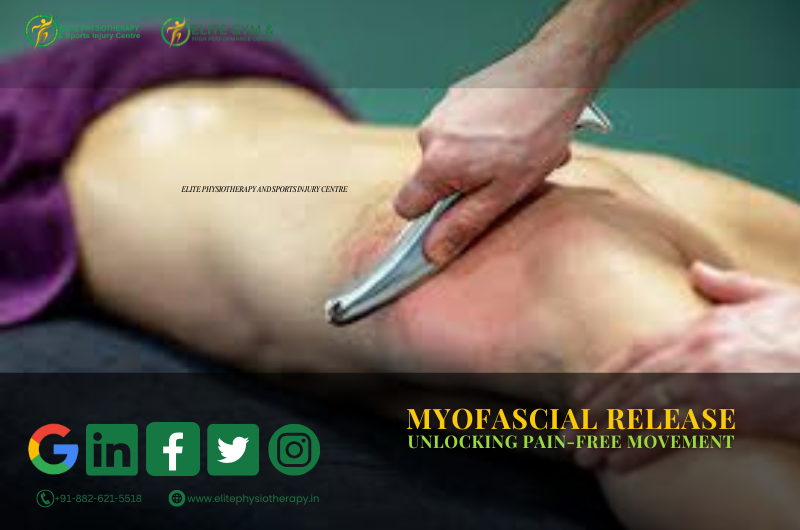
2. Instrument Assisted Myofascial Release
- Special tools improve precision.
- They enhance depth control and lessen the strain on therapists.
3. Stretching and Mobility Training
- Active and assisted stretches follow the release.
- This keeps the lengthened tissue intact.
4. Corrective Exercise Therapy
- Strengthening restores muscle equilibrium.
- Movement retraining prevents recurrence.
5. Advanced Modalities at Elite Physiotherapy
- Shock Wave Therapy
- Super Inductive System (SIS)
- High Intensity Laser Therapy
- Dry Needling
- Cupping Therapy
Why Choose Elite Physiotherapy and Sports Injury Centre?
- We at Elite Physiotherapy provide physiotherapy care that is grounded in evidence.
- Every program is athlete-focused and goal-oriented.
- Cutting-edge technologies support expert clinical abilities.
- Patients in Delhi NCR have faith in our outcomes.