17 Nov 2026 · 6 min read
Female Hijama Therapist in Saket, Delhi and Gurgaon: What to Expect
Cupping · Wet cupping · Women’s Health
Image: Female hijama therapist performing wet cupping at Elite Physiotherapy, Saket and Gurugram
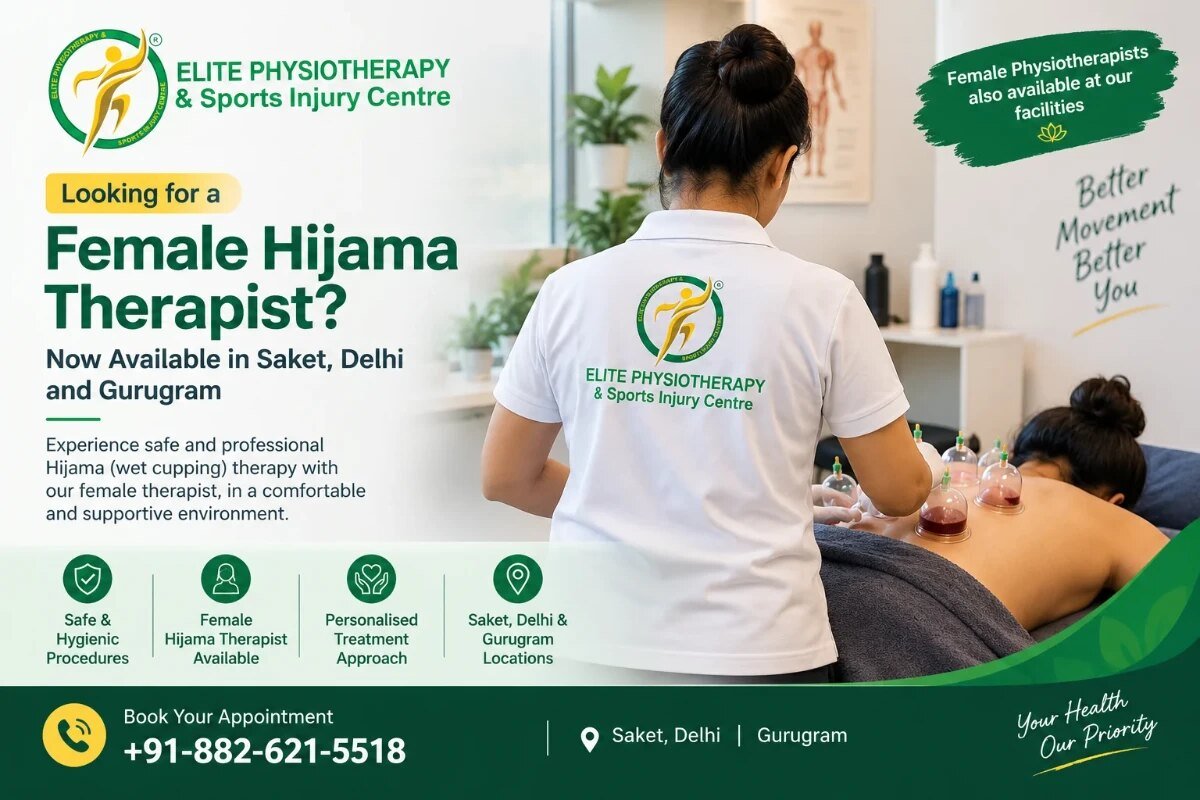
Looking for a female hijama therapist in Saket, Delhi or Gurgaon? At Elite Physiotherapy and Sports Injury Centre, women can book hijama with a female therapist at our Saket and Sector 70, Gurugram clinics. Our approach puts patient comfort, privacy, hygiene and proper screening first.
- Hijama (wet cupping) is a traditional therapy that combines cup suction with very small superficial skin scratches.
- A female hijama therapist is available in Saket, Delhi and Sector 70, Gurugram.
- Every session starts with a health and safety screening; hijama is not suitable for everyone.
- It is a complementary therapy and does not replace medical diagnosis or treatment.
What is hijama therapy?
Hijama is a traditional form of cupping therapy. Specially designed cups create suction over selected areas of the body. In wet hijama, the therapist makes tiny superficial scratches on the skin and the suction draws a small amount of blood into the cup.
Dry cupping uses suction without breaking the skin. Both are different from dry needling, which uses fine needles to target specific muscle tissue.
People often choose cupping for back pain, muscle tightness and other musculoskeletal complaints, while others choose it for traditional or personal wellbeing reasons. At Elite, patient safety, a proper clinical assessment and informed decision-making come first. Read more about cupping therapy for muscle recovery.
Why choose a female hijama therapist?
Privacy and comfort can shape how you experience treatment. Because hijama involves close contact and exposure of areas such as the back, shoulders or neck, many women prefer a female practitioner.
We offer this choice at our Saket, Delhi and Sector 70, Gurugram clinics. Before booking, you are welcome to discuss your expectations and any concerns. Throughout treatment, our team prioritises dignity, privacy and clear communication. Please confirm the therapist's availability, appointment time and exact location when booking.
A female physiotherapist is also available at our clinics to assess movement problems and plan rehabilitation for women who prefer female-led physiotherapy care.
Potential benefits of cupping and hijama
Responses vary from person to person, and research on cupping is still limited. Some people report:
- Short-term pain relief: some people with musculoskeletal pain, such as neck or lower back pain, report less discomfort for a period after cupping.
- Relief from muscle tightness: many people describe their muscles feeling looser and less tense after a session.
- Complementary support during rehabilitation: cupping can sit alongside exercise and physiotherapy, never instead of them, when a clinician considers it appropriate.
Who may consider cupping therapy?
Adults with uncomplicated muscle or joint pain may consider cupping as an add-on treatment. Suitability depends on your symptoms, medical history and the method used.
Persistent shoulder pain, lower back pain, neck pain or restricted movement should first be assessed by a physiotherapist, because these symptoms can have different causes that need specific treatment.
How is hijama suitability assessed?
Assessment combines medical screening, a physical examination and an informed discussion of your options. At Elite Physiotherapy and Sports Injury Centre, it may include:
- Detailed history: your symptoms, how long you have had them, what helps or aggravates them, and your goals for treatment.
- Medical and safety screening: medicines (especially blood thinners), bleeding problems, anaemia, pregnancy, diabetes, heart conditions, fainting episodes and recent illness.
- Skin and general health check: the treatment area must be free of wounds, infection, inflammation, moles of concern and fragile skin.
- Musculoskeletal examination: movement, strength and tender areas, to decide whether physiotherapy, cupping or both are appropriate, or whether a medical referral is needed.
- Informed consent and treatment plan: what will happen, expected sensations and skin marks, possible side effects and alternatives, before you agree to treatment.
Hygiene and safety during hijama
Wet cupping breaks the skin, so infection control is essential. Treatment should use single-use sterile blades, clean or disposable cups, gloves, skin disinfection and safe disposal of clinical waste. Ask your therapist about these steps; a professional clinic will be happy to explain them.
How should you prepare for hijama?
- Tell your therapist about all your medicines and medical conditions, including anaemia, allergies, blood thinners and any history of fainting.
- Never stop a prescribed medicine without speaking to the doctor who prescribed it.
- Have a light meal and drink water beforehand, unless you have been advised otherwise.
- Follow the preparation advice your practitioner gives you.
- Hijama should not be performed on inflamed, infected or injured skin.
- Make sure you understand the procedure before giving consent, and ask about discomfort, expected skin marks and alternatives.
Aftercare
Keep the treated area clean and covered as advised, avoid very strenuous exercise, hot baths and swimming for the rest of the day, and stay hydrated. Contact the clinic or a doctor if you notice increasing redness, swelling, warmth, discharge or fever, which can be signs of infection.
Why choose Elite Physiotherapy and Sports Injury Centre?
Elite offers physiotherapy-led care focused on functional recovery and individual needs, including sports rehabilitation, musculoskeletal assessment and selected advanced treatments. We understand that patients have different preferences about who treats them and how, which is why women can book hijama with a female therapist in Saket, Delhi and Sector 70, Gurugram, subject to appointment confirmation.
Our team assesses before treating, which helps decide when exercise, physiotherapy, a medical referral or a complementary approach is most suitable. Whether you are an athlete, an active adult or someone living with everyday muscle or joint pain, we aim to give you individual advice. Visit our Saket clinic or Sector 70, Gurugram clinic, or book hijama with a female therapist.
Frequently asked questions
Is a female hijama therapist available in Saket and Gurgaon?
Yes. Women can book hijama (wet cupping) with a female therapist at our Saket, Delhi clinic and at our Sector 70, Gurugram clinic. Please confirm the therapist's availability and timing when you book.
Does hijama hurt?
Most people feel a pulling sensation from the cups and brief, mild discomfort from the small superficial scratches. Your therapist will explain each step and you can ask to pause at any time.
Will hijama leave marks?
Yes, circular marks where the cups were placed are expected. They usually fade over several days to about two weeks. Tell your therapist if you have an event coming up or tend to scar.
Who should not have hijama?
Hijama may not be suitable if you are pregnant, have a bleeding disorder, take blood thinners, have anaemia, active skin infection or broken skin at the site, poorly controlled diabetes, or feel unwell. These are checked during screening, and your therapist may advise dry cupping, physiotherapy or a medical opinion instead.
How do I book hijama with a female therapist?
Use the female hijama page or the booking page on our website, call +91 88266 27027, or message us on WhatsApp and mention that you would like a female therapist.
This article is general information from our physiotherapy team. It does not replace an individual assessment by a physiotherapist or doctor.